
Coimbra Old Cathedral History: A Medieval Portuguese Treasure
Table of Contents
Coimbra, Portugal, holds countless stories within its ancient walls. One of its most captivating landmarks is the Sé Velha, or Coimbra Old Cathedral. This magnificent structure tells the long and detailed history of Coimbra Old Cathedral. It stands as a powerful testament to medieval Portuguese architecture and faith.
The cathedral’s solid granite walls have witnessed centuries of change. Its construction began in the 12th century, shortly after Portugal’s foundation. It quickly became a vital center for the burgeoning kingdom. This guide explores its remarkable origins and enduring legacy.
The Birth of Sé Velha: A Royal Foundation
The story of Coimbra Old Cathedral begins in the 12th century. Portugal had recently gained its independence from Leon. King Afonso Henriques, the first king of Portugal, played a crucial role. He ordered the construction of a grand cathedral.

Work on the Sé Velha officially began around 1162. It replaced an earlier Mozarabic church on the same strategic hill. This new cathedral symbolized the triumphant Christian Reconquista. It firmly established Coimbra as a significant religious and political center.
Master Robert, a French architect, initially oversaw the project. He brought Romanesque techniques from across the Pyrenees. Local master Pedro then continued the work. The blend of influences is evident in its robust design.
Its strategic location on the city’s highest point was deliberate. It offered both spiritual solace and defensive capabilities. The cathedral was consecrated in 1184, though construction continued for decades. It embodied the new nation's strength and devotion.
Romanesque Masterpiece: Architecture of Sé Velha
The Coimbra Old Cathedral is a prime example of Romanesque architecture. Its design emphasizes solidity and defense. Thick granite walls and battlements define its exterior. These features give it a distinct fortress-like appearance.
Few windows pierce its heavy stone façade. This design choice provided both security and structural integrity. The austere exterior contrasts with its richly decorated main portal. This portal features intricate carvings of saints and biblical scenes.
Inside, the cathedral boasts a basilica plan with three naves. Robust columns support a barrel vault ceiling. The overall effect is one of solemnity and grandeur. Light enters dimly, creating a meditative atmosphere.
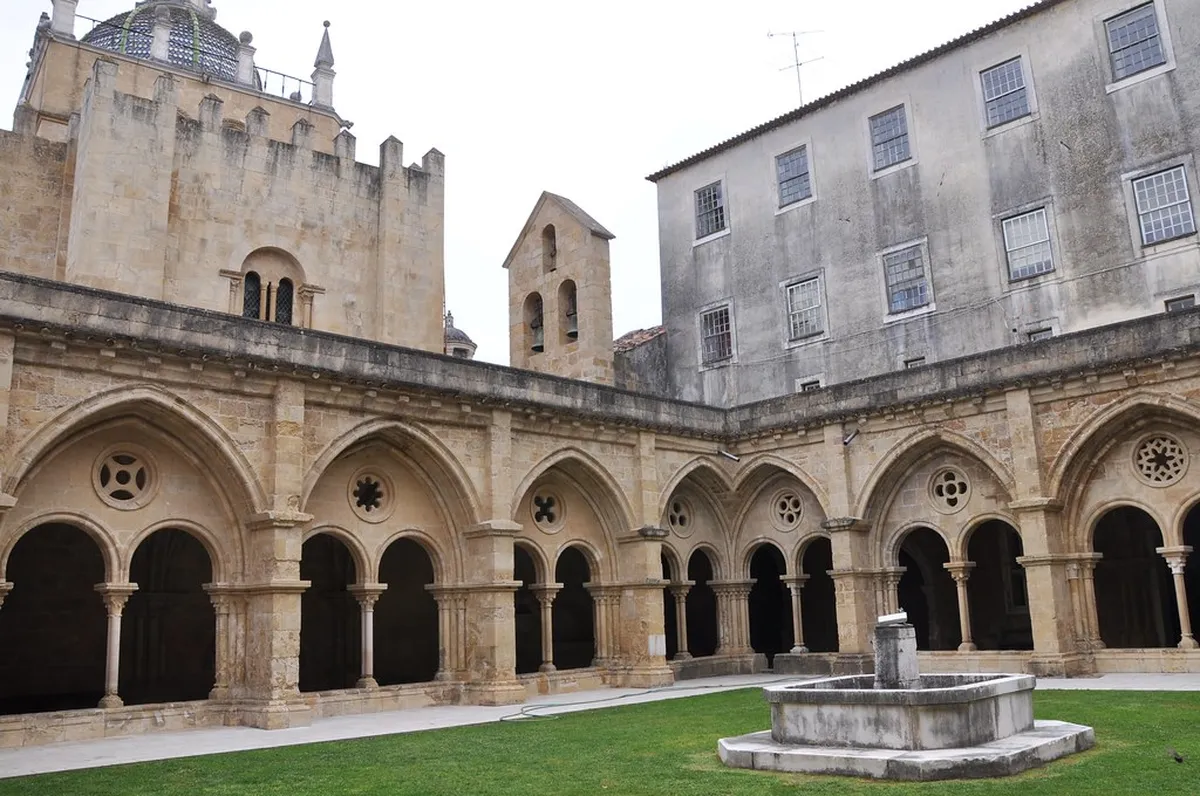
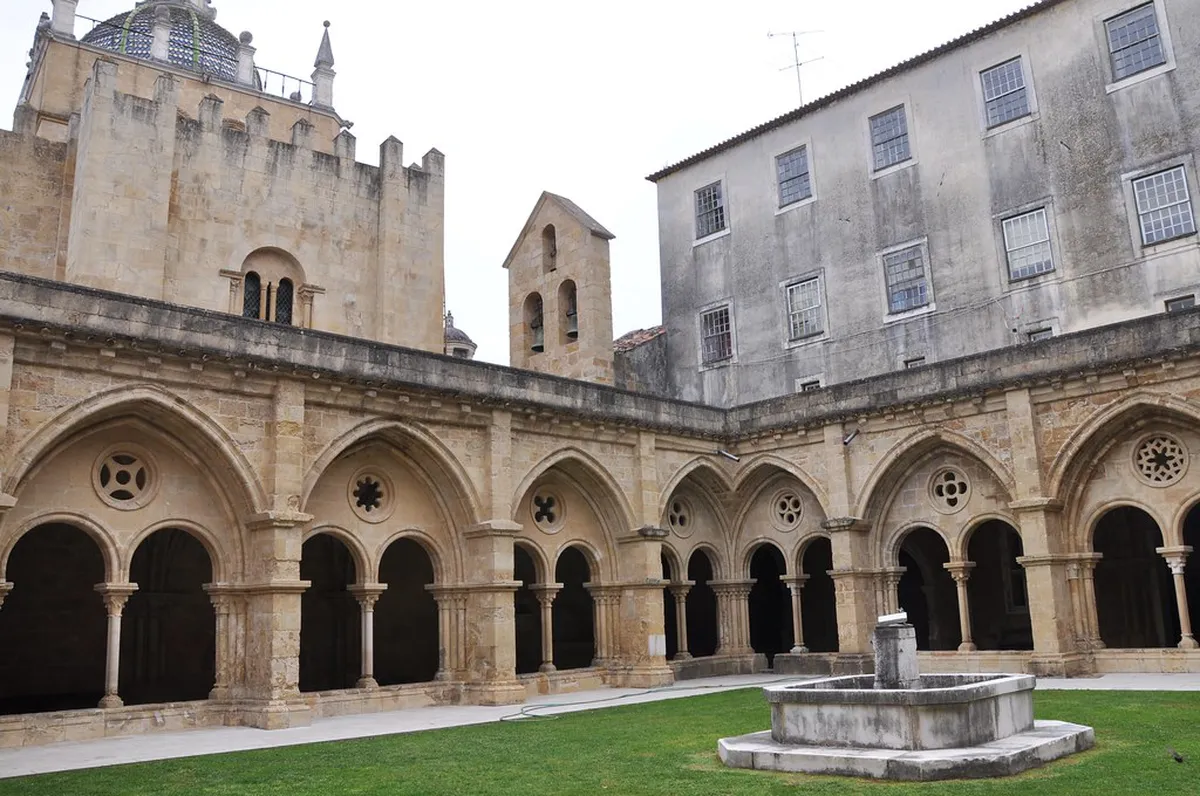
The cloister, built in the early 13th century, is a standout feature. It showcases some of the earliest Gothic elements in Portugal. Its peaceful arcade offers a serene retreat. This space contrasts nicely with the cathedral's imposing bulk. Visitors in 2026 can explore these ancient cloisters for a small fee.
The cloisters are not included in the main cathedral entrance — they require a separate small fee. Budget a little extra time (and money) to visit this tranquil Gothic arcade, which houses some of Portugal's earliest Gothic stonework.
Sé Velha Through the Centuries: Power and Transformation
The Sé Velha held immense power during the Middle Ages. It served as the seat of the Coimbra bishopric. Several Portuguese kings were crowned within its walls. It was central to both religious and political life in Portugal.
Over time, the cathedral saw various additions and modifications. Renaissance chapels were added in the 16th century. These brought new artistic styles to the ancient structure. The Manueline style also left its mark in certain decorative elements.
A significant shift occurred in the 18th century. The bishopric transferred to the new Sé Nova (New Cathedral). This marked a decline in the Sé Velha's primary religious role. Yet, its historical and cultural importance remained undiminished.
The cathedral's proximity to the University of Coimbra connected it to academic life. Students and scholars frequently visited its sacred spaces. It has always been an integral part of Coimbra's identity. Its stories are deeply intertwined with the city's development.
Stories Etched in Stone: Art and Legacy
Beyond its architecture, Sé Velha houses remarkable art. The main altarpiece is a magnificent example. It was crafted by Flemish masters Olivier of Ghent and Jean d'Ypres. This gilded woodwork depicts the life of the Virgin Mary. Its detail is truly breathtaking.
Several tombs of historical figures rest within the cathedral. One notable tomb belongs to D. Sesnando, a warrior who recaptured Coimbra. These tombs offer a tangible link to past eras. They invite reflection on the lives lived here.
Various chapels within the cathedral showcase different periods. Each chapel tells its own story through its decorations. Frescoes, sculptures, and stained glass windows adorn these spaces. They reflect centuries of devotion and artistic evolution.
Exploring these artistic elements enhances understanding of its history. They provide insights into the beliefs and tastes of their creators. The cathedral continues to inspire awe in all who visit. Its artistic legacy is a cultural treasure.
Experiencing Sé Velha Today: A Glimpse into the Past
Today, the Coimbra Old Cathedral is a revered national monument. It attracts thousands of visitors each year. Standing within its ancient walls transports you back in time. You can almost hear the echoes of medieval prayers.
A visit in 2026 offers a chance to connect with Portugal's past. Look for the intricate details in the main portal. Marvel at the imposing structure and serene cloisters. Imagine the coronations and ceremonies that once took place here.
The cathedral is located in the heart of Coimbra's historic upper town. It is easily accessible from many of the historic neighborhoods in Coimbra. Allow ample time to explore both the interior and exterior. The surrounding area also offers charming medieval streets.
Plan your visit to fully appreciate its history and grandeur. Check opening hours and ticket prices in advance for 2026. For more practical advice, consider our comprehensive guide to visiting Coimbra Old Cathedral. It promises a truly unforgettable experience.
The Sé Velha is a working religious monument and opening hours can change without notice. The bishopric transferred to the nearby Sé Nova in the 18th century, so Mass schedules no longer follow the old cathedral's hours — always verify current times before making the trip up to the historic upper town.
Frequently Asked Questions
When was Coimbra Old Cathedral built?
Construction of the Coimbra Old Cathedral began around 1162. It was largely completed by the end of the 12th century. King Afonso Henriques initiated its construction. Portugal's first king ensured its swift completion.
What architectural style is Sé Velha Coimbra?
The Sé Velha is a magnificent example of Romanesque architecture. It features thick walls and a fortress-like appearance. Its cloisters also display some of Portugal's earliest Gothic elements. This blend reflects its long building period.
What historical events occurred at Coimbra Old Cathedral?
Several Portuguese kings were crowned within the Sé Velha. It served as the bishopric seat for centuries. It played a crucial role in early Portuguese history. The cathedral witnessed many significant religious ceremonies.
Why is it called the "Old Cathedral"?
It is called the "Old Cathedral" to distinguish it from the Sé Nova. The Sé Nova (New Cathedral) was built much later. The bishopric transferred to Sé Nova in the 18th century. This historic landmark retained its original name.
The history of Coimbra Old Cathedral is a powerful narrative. It speaks of faith, power, and artistic brilliance. This medieval fortress-church stands as a symbol of Portugal's early nationhood. It offers a profound journey into the past.
Do not miss the chance to explore Sé Velha on your 2026 visit to Coimbra. Its ancient stones hold countless stories. Immerse yourself in this remarkable piece of Portuguese heritage. It's an experience you will surely cherish.
Key Takeaways
- Sé Velha construction began in 1162 under King Afonso Henriques.
- It is a prime example of sturdy Romanesque architecture with early Gothic cloister elements.
- The cathedral served as a crucial political and religious center for medieval Portugal.
- Its main altarpiece is a significant work by Flemish masters.
- Visiting today offers a deep connection to Portugal's rich historical past.
Continue exploring Coimbra's historic quarter
- Coimbra Old Cathedral History: A Medieval Portuguese TreasureDecember 13, 2025
 Sé Velha Coimbra: Opening Hours, Tickets & Visiting TipsDecember 13, 2025
 Guide to Visiting Coimbra Old Cathedral Sé VelhaDecember 13, 2025
 Discover Sé Velha Coimbra History and LegacyDecember 12, 2025
 Aveiro Day Trip from Coimbra: 2026 GuideJune 6, 2026