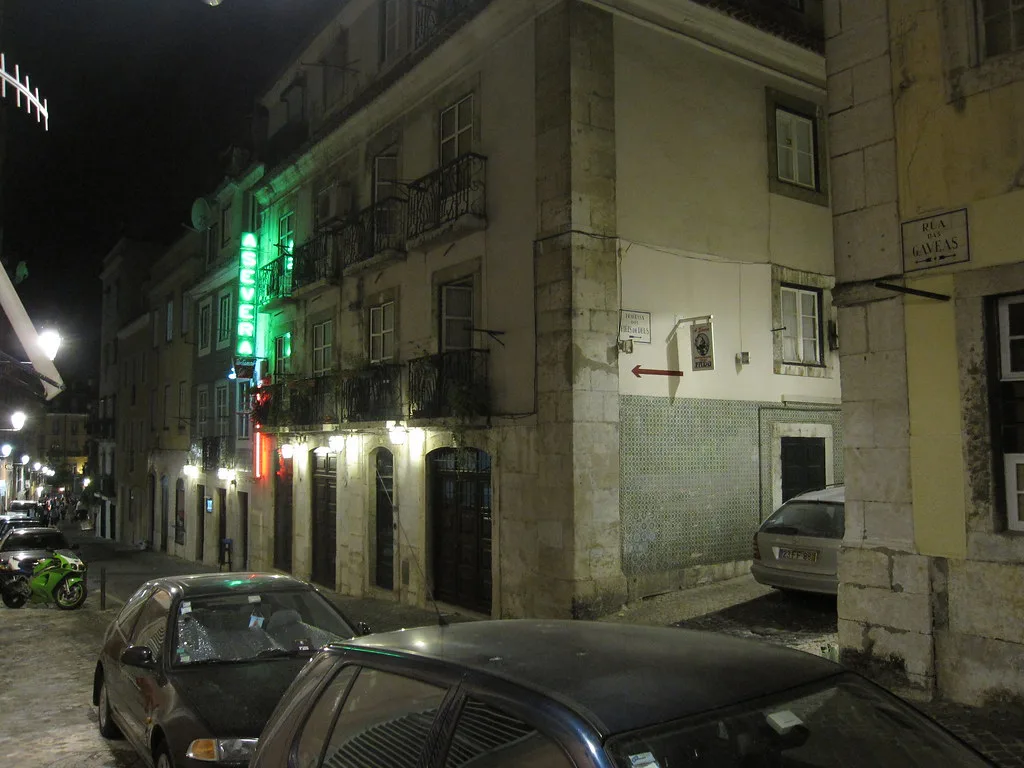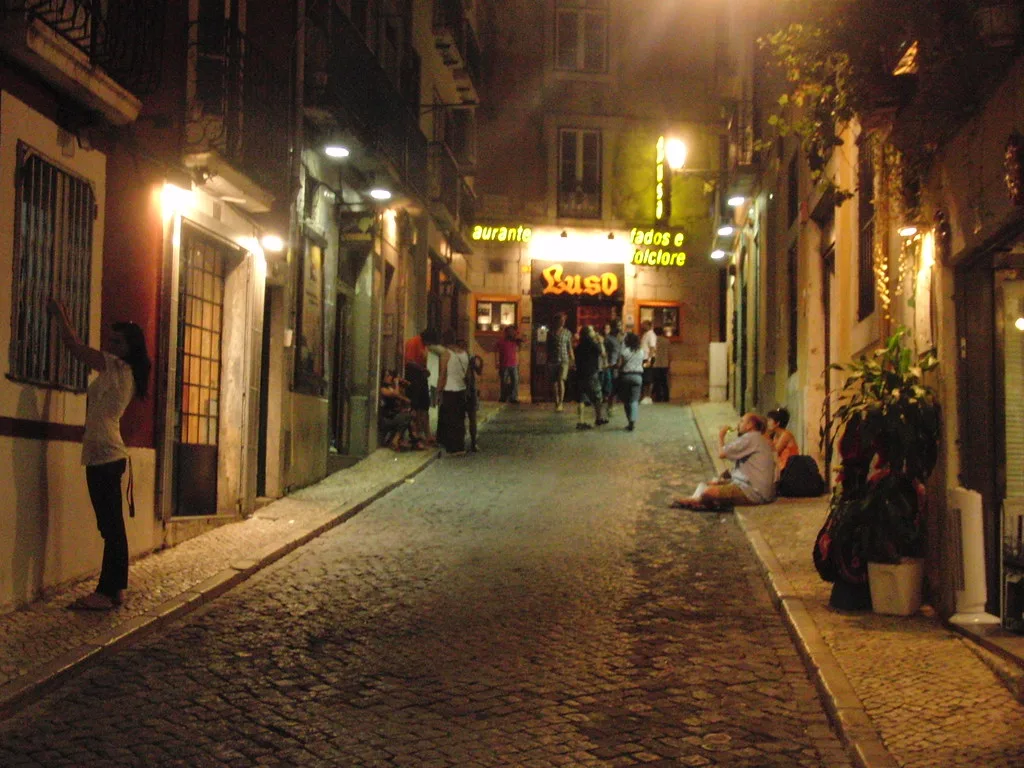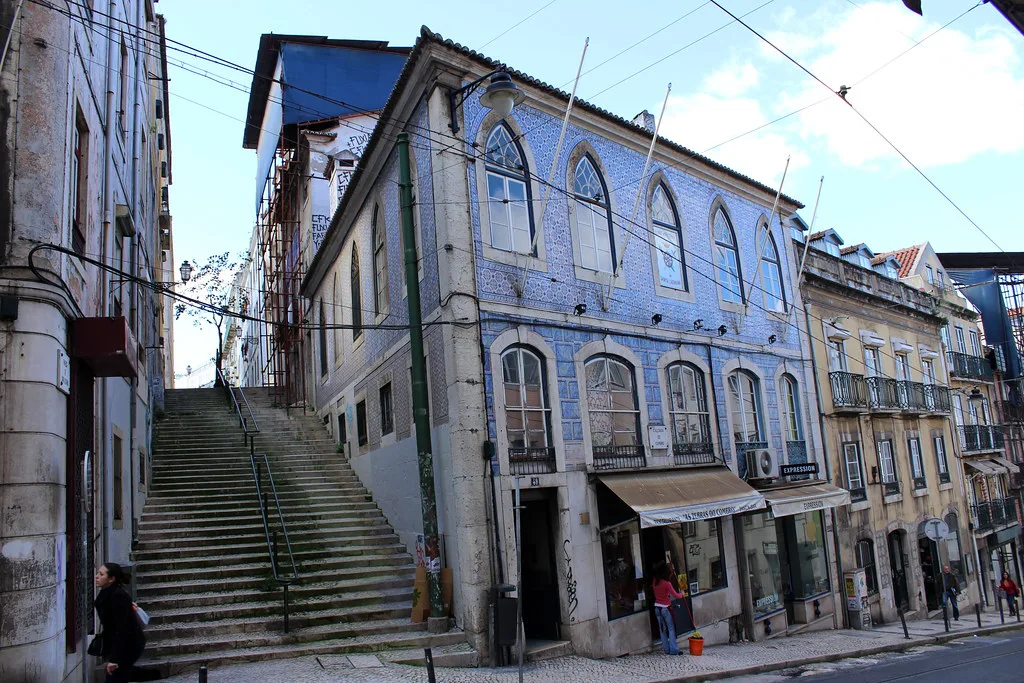
Bairro Alto wakes up after dark. By 22:00 the grid of narrow alleys between Rua do Norte and Rua da Atalaia fills with a low rumble of overlapping sound — jazz bleeding out of one doorway, indie guitar from the next, electronic percussion from somewhere three floors up. The neighborhood has carried Lisbon's non-Fado live music scene for decades, and in 2026 it remains the best single district in the city to spend a night chasing sound. This guide covers ten venues worth your time: what they play, what you pay, and when to show up.
A word on scope: this article focuses on non-Fado live music — jazz, blues, soul, rock, indie, experimental, and electronic. If you specifically want Fado bars in the area, that is covered separately on this site. Here the focus is on the broader, eclectic scene that most visitors to the district actually stumble into. See our Bairro Alto nightlife guide for the full district overview, or jump straight to the best Bairro Alto bars if you want the drinking-without-a-set-list version.
Lisbon's Live Music Scene at a Glance
Lisbon is not a one-genre city. While Fado carries the city's emotional identity, the actual live music calendar on any given Tuesday spans jazz, afrobeat, hip-hop, metal, and classical chamber music — often within a five-minute walk of each other. Bairro Alto and the adjacent neighborhoods of Chiado and Cais do Sodré concentrate the highest venue density in the city. You can realistically visit three or four different rooms in a single evening without taking a taxi.
The scene here skews younger and more alternative than Alfama. Most Bairro Alto venues are small — capacity between 50 and 200 people — which keeps entry prices low and sight lines short. Cover charges above €15 are rare except at established institutions like Hot Clube de Portugal. The majority of bars make their money on drinks, so a no-cover policy usually comes with an implied minimum spend of around €8 to €10 per person across the night.
One practical note on timing: Lisbon runs late. Doors at most live venues open between 20:00 and 22:00. First sets typically begin 60 to 90 minutes after doors. If you arrive at 21:00, you will often have time for a drink, a conversation, and still catch the full performance. Peak crowd in Bairro Alto is between midnight and 02:00, after which the energy migrates downhill toward Cais do Sodré.
Galeria Zé dos Bois (ZDB)
ZDB at Rua da Barroca 59 is the cornerstone of Bairro Alto's alternative music scene and has been for close to three decades. It operates as a cultural foundation rather than a simple bar — the building hosts over 150 art events per year alongside its music programme, and the rooftop terrace functions as a free social space on warm evenings well before any ticketed show begins. Show up at 21:00, get a cheap beer on the terrace, and you will understand why locals treat this as a meeting point rather than just a venue.
The indoor performance room holds around 100 people and has genuinely good acoustics for an 18th-century building. Programming ranges from noise rock and experimental electronica to contemporary dance and spoken word. Tickets run €5 to €15 depending on the act. Check zedosbois.org and filter by date — the calendar updates weekly and sells out for headlining nights. Walk-up tickets are usually available for midweek shows.
ZDB is also one of the few venues in Bairro Alto where the crowd is visibly mixed — art students, expats, middle-aged locals who have been coming since the 1990s, and first-time visitors all share the same floor. That democratic atmosphere is rare in a district that can feel very tourist-facing by midnight.
Café Alface Hall
On Rua da Atalaia in the heart of Bairro Alto, Alface Hall is one of the last venues in the district still consistently hosting live jazz, blues, and soul. The Portugal.com guide describes it as one of the few remaining live music holdouts in a neighborhood where many venues have quietly dropped their music programmes in favor of simpler, cheaper bar formats. The room is small — around 60 people at capacity — which makes it feel intimate rather than cramped.
Entry is free on most nights. Drinks cost €5 to €12 and that is how the venue stays solvent, so ordering is expected rather than optional. Doors open at 18:00 and music starts around 21:00. Arrive by 20:30 on weekends if you want a seat. The window tables facing the street fill first and offer a good view of both the performers and the foot traffic outside.
The genre leans toward traditional jazz and American blues, with occasional soul and R&B nights. Performers are mostly local but the quality is consistently high — this is not background music for cocktail hour. When the set is on, the room pays attention.
Pharmacia Musical
Pharmacia Musical started in a former laundromat on Rua Damasceno Monteiro, opened by cellist Hugo Fernandes with the stated aim of "transformation through art." The interior is styled after a pharmacy in Penha de Franca — glass jars, wooden cabinets, vintage medical signage — which sounds gimmicky until you are standing inside a 40-person room listening to a live classical trio. The small scale forces a level of attention that most venues cannot manufacture.
Live concerts here are free of charge. The programme runs Tuesday through Saturday and covers jazz, classical, world music, and occasional experimental chamber works. Drinks are reasonably priced and the bar stocks a decent selection of Portuguese wine by the glass. Because entry is free, the venue fills quickly on weekends — plan to arrive by 20:00 if you want a spot inside rather than listening from the doorway.
This is the best option in the district for travelers who want genuinely quiet, focused listening. No DJ booth, no smoke machine, no 03:00 closing push. The music is the point and the crowd understands that.
MusicBox, Pink Street
MusicBox at Rua Nova do Carvalho 24 — Pink Street in Cais do Sodré, a ten-minute walk downhill from the Bairro Alto core — operates on two modes depending on the night. From around 23:00 it runs as a live music venue with a stage for rock, hip-hop, and international touring acts. After the set finishes, usually around 01:00, it transitions into a full club with DJs playing until 06:00. Cover charges for live show nights run €12 to €20 and typically include one drink.
The sound system is the best in the area — proper subwoofers and a clear mix that makes the smaller Bairro Alto venues sound underpowered by comparison. MusicBox has also become the home of the Jameson Urban Routes festival, an indoor urban music festival that brings in acts well above the usual Lisbon touring circuit. Check musicboxlisboa.com to filter between "concerts" and "clubbing" nights before you go — the two types of evenings have different entry prices and very different atmospheres.
For a natural progression through the night, start in Bairro Alto for live music at 21:00 and move to MusicBox by midnight. The walk takes about ten minutes down the Escadinhas do Ferragial steps, past the Bica funicular, and straight onto Pink Street. It is a well-worn local route and you will be following a crowd doing exactly the same thing.
Hot Clube de Portugal
Hot Clube at Praça da Alegria 39 was established in 1948, making it one of the oldest continuously operating jazz clubs in Europe. It burned to the ground in a fire in 2009 and was rebuilt, reopening with the same programme of serious jazz in a room that holds around 150 people. The fire and the rebuild are part of the venue's story and something regulars mention without prompting — there is a sense that the club survived something and the music carries that weight.
The programme runs Tuesday to Saturday, doors at 22:00, concerts at 23:00 and 00:30. When no ticketed act is scheduled, the club hosts free jam sessions — check hotclubedeportugal.org the day of your visit. Cover for ticketed nights is €10 to €15. The booking process is straightforward and worth doing for weekend shows, which frequently sell out by Thursday.
This is the venue for jazz listeners rather than jazz tourists. The crowd is knowledgeable, the sets run long, and nobody talks over the solos. If you have been to clubs like Ronnie Scott's in London or Duc des Lombards in Paris, the atmosphere is comparable — focused, respectful, unhurried.
Tejo Bar
Tejo Bar in Alfama — technically outside Bairro Alto but reachable in about 15 minutes on foot or five minutes by Uber — is described by regulars as feeling like a musician's living room. The format is impromptu: on any given night, local artists might set up in a corner and play for an hour without announcement. Brazilian folk, experimental jazz, and acoustic guitar are the most common sounds. There is rarely a cover charge, though a donation for the musicians is standard practice.
The unpredictability is the point. You cannot book a specific performance at Tejo Bar because most performances are not pre-booked. This makes it a poor choice if you have a fixed schedule and a good choice if you have already done your planned evening and want to end somewhere genuinely unscripted. The bar keeps irregular hours — open most evenings from around 20:00, though "most evenings" requires checking their social media for exceptions.
Fábrica Braço de Prata
Fábrica Braço de Prata in the Oriente district — about 20 minutes from Bairro Alto by metro — is in a different category from the small Bairro Alto bars. The building is a former War Material Factory opened as a cultural space in 2007 and now contains 12 rooms hosting simultaneous events: live music concerts, dance classes, raves, bookshop readings, and art openings. Entry costs €5 to €15 and covers access to all rooms. On a busy Friday night you can move between a salsa room, a jazz basement, and a rock stage without going outside.
Salvador Sobral, the Portuguese Eurovision winner in 2017, has performed here regularly. The quality of touring acts skews higher than most Bairro Alto venues because the space can accommodate larger productions. Open Wednesday to Sunday. The tradeoff for the larger scale is that the intimate crush of Bairro Alto is entirely absent — this is a proper multi-room venue, not a bar with a corner stage.
Worth the metro ride if you want variety in a single evening, or if the specific act you want to see is on their calendar. Not worth the commute just to recreate the Bairro Alto experience at larger scale.
Three More Venues Worth Knowing
Onda Jazz Café (Arco de Jesus 7, Alfama) focuses purely on jazz and global acoustic music. The programming consistency is high — whoever is playing is typically very good — and the Alfama location gives the evening a different atmospheric register than Bairro Alto. Good choice for a quieter first half of the night before heading uphill.
Santiago Alquimista (Rua de Santiago 19C, near the castle) is a small-to-midsize venue that regularly books quality international touring bands that do not make it onto the larger Lisbon stages. The room is roughly 150 people, sound is professional, and the programming is reliably interesting. Check santiagoalquimista.com for the monthly calendar.
Ma Lingua in Graca runs acoustic concerts and jam sessions in a basement with high ceilings alongside a food menu of ceviche and Portuguese petiscos. They also run a weekly comedy night and an open mic. Open until 02:00 on weekends. If you prefer your live music alongside a proper dinner rather than bar snacks, this is the best option in the city's north-side neighborhoods.
The "Copo na Mão" Culture and How Bairro Alto Actually Works
The defining feature of Bairro Alto at night is not any single venue — it is what happens between venues. The "Copo na Mão" (cup in hand) tradition means most bars will serve your drink in a plastic cup so you can stand on the street between sets. By midnight, the narrow alleys fill with overlapping crowds moving slowly between doorways, drinks in hand, music from three different rooms audible simultaneously. This is the standard experience and it is worth understanding rather than resisting.
The practical implication: plan your night as a circuit, not a single destination. Pick two or three venues, allow 60 to 90 minutes at each, and build in time to drift between them. The streets are small enough that "wandering" is not inefficient — you will pass most of the key venues on any route through the district. The bars along Rua do Norte, Rua da Atalaia, and Rua Diário de Notícias are the highest-density stretch. If you get lost, walk toward the sound.
When the Bairro Alto bars close around 02:00 to 03:00, the standard progression is downhill to Cais do Sodré — ten minutes on foot, past the Bica funicular, onto Pink Street. MusicBox is the natural landing point. The shift from live acoustic music to heavier electronic sets marks the transition from the first to second half of a full Lisbon night.
Quick Genre Reference
If you are choosing based on music type rather than venue atmosphere, here is how the above split out:
- Jazz: Hot Clube de Portugal (most serious), Café Alface Hall (most accessible), Pharmacia Musical (most intimate), Onda Jazz Café (best Alfama option)
- Rock, Indie, Experimental: Galeria Zé dos Bois (alternative and experimental), MusicBox (rock and hip-hop with DJs after midnight), Santiago Alquimista (international touring acts)
- Multi-genre and variety: Fábrica Braço de Prata (12 rooms, everything simultaneously), Tejo Bar (impromptu and unpredictable), Ma Lingua (acoustic and comedy)
Cover charges above €15 are the exception rather than the rule. Pharmacia Musical and Alface Hall are free. Hot Clube and ZDB are typically €10 to €15 for ticketed nights. MusicBox charges the most for live show nights (up to €20) but the production quality justifies it. Budget travelers can have a full night of live music in Bairro Alto spending €20 to €30 total including drinks, if they stick to the free-entry venues and buy two or three drinks across the evening.
For the broader Bairro Alto bar crawl itinerary with a recommended walking route between venues, see the dedicated guide. It covers timing, the best streets for street drinking, and how to read the crowd density to decide where to stop next.
For related deep-dives, see our best Bairro Alto bars and Bairro Alto bar crawl itinerary guides.
Pair this with our complete Bairro Alto nightlife guide for the full picture.
Frequently Asked Questions
What is the best time to arrive for live music in Bairro Alto?
Most live music begins around 9 PM or 10 PM, but you should arrive by 8 PM to secure a seat. The neighborhood reaches its peak energy between midnight and 2 AM when the streets are fully packed.
Do I need to book Fado houses in Bairro Alto in advance?
Booking is highly recommended for popular spots like Mascote da Atalaia or Fado in Chiado. Smaller 'Fado Vadio' taverns like A Tasca do Chico do not take reservations, so early arrival is essential.
Are there any free live music venues in Bairro Alto?
Many bars like Café Alface Hall offer live music with no cover charge, though a drink purchase is expected. Always carry some small cash to tip the musicians if there is no formal entry fee.
Bairro Alto remains the beating heart of Lisbon's non-Fado live music scene, offering a rare blend of the ancient and the avant-garde in a walkable district. By choosing authentic venues and following the crowd between sets, you get more music per evening than almost anywhere else in Europe at comparable prices. The neighborhood rewards improvisation: the best night you will have here is often the one where you follow the sound rather than the itinerary.
Whether you spend your night at ZDB's rooftop terrace, Hot Clube's late-night jazz sets, or drifting between doorways on Rua da Atalaia with a plastic cup, the music is close enough to touch. Pack comfortable shoes, carry some cash, and let the district do the work.