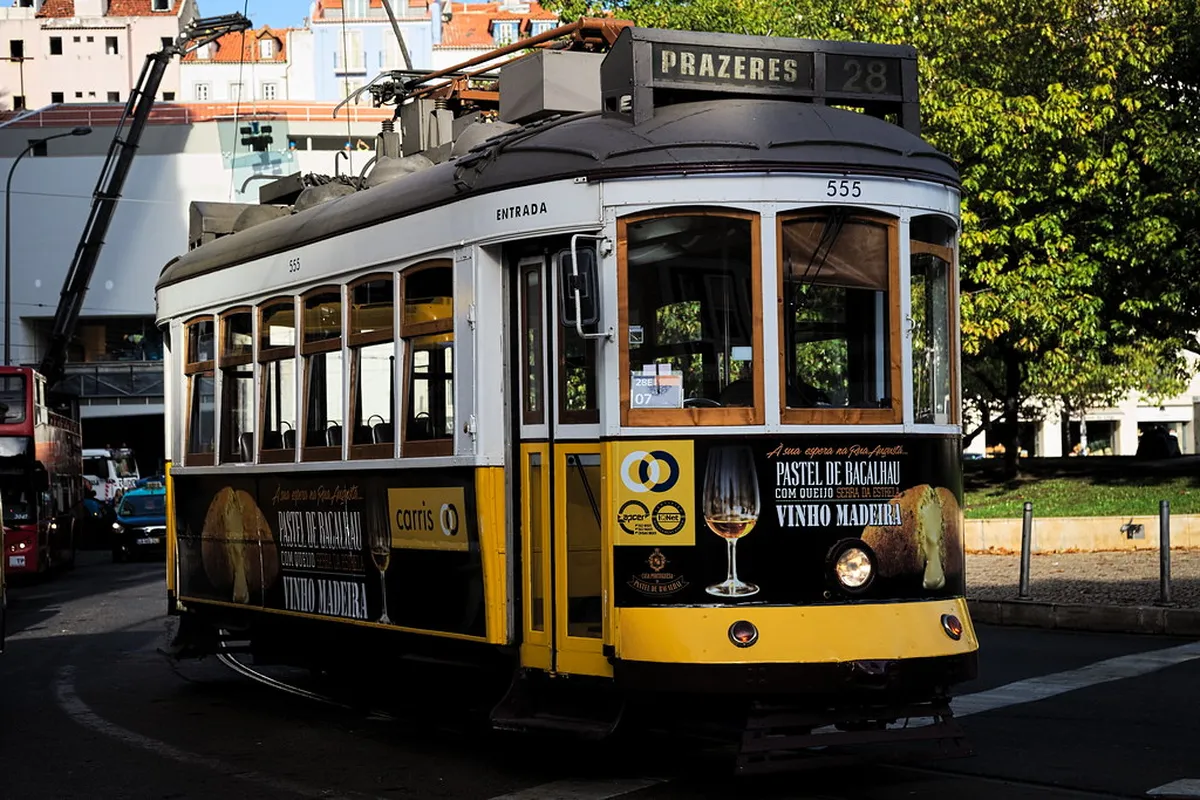
Lisbon is famous for its seven hills, but those steep inclines can be brutal on your legs. The climb from the flat grid of Baixa up to Bairro Alto is only about 60 metres of elevation — yet on a hot afternoon in July it feels like far more. Learning how to get to Bairro Alto from Baixa efficiently will save you both time and energy before a long night out. This guide is current for 2026 with up-to-date transport prices and route timings.
During my first trip I spent forty minutes waiting for a funicular just to avoid a ten-minute walk. That mistake taught me that the most famous route is not always the smartest way to travel. Bairro Alto sits high above the grid-like streets of Baixa, and several clever shortcuts and iconic transport modes make the transition much easier than it looks on a map.
Quick Answer: The fastest free option is the Baixa-Chiado Metro escalator hack — five minutes, no ticket needed. The Elevador da Glória costs €1.70 / ~$1.85 with a Viva Viagem card if you prefer an iconic yellow-tram ride. Walking via Rua do Alecrim takes around 15 minutes and is the right call if you want to arrive from Chiado direction.
Baixa-Chiado Metro: The Underground Escalator Hack
The Baixa-Chiado metro station is one of the deepest in Europe and serves as a vital bridge between the lower and upper city. What most visitors miss is that you can use the station's internal escalators as a free public lift — no transit card needed if you stay in the public corridors outside the ticket gates. This puts you at Largo de Camões in around five minutes, which is faster than any funicular during peak hours. It is a favourite trick among residents heading to Bairro Alto nightlife without breaking a sweat.
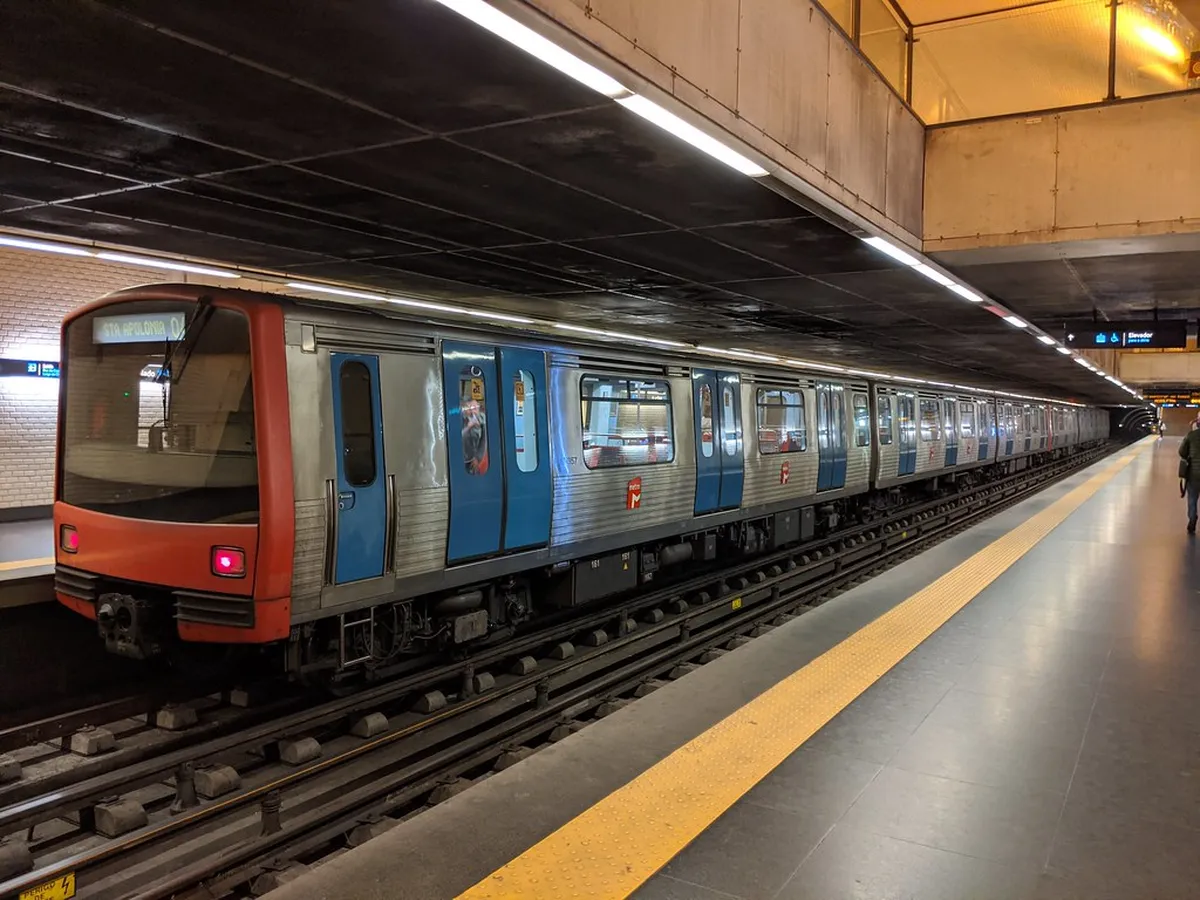
You will enter the station at the lower level on Rua da Vitória or Rua do Crucifixo in Baixa. Follow signs for the Chiado exit and you will ascend four long escalators through well-lit underground corridors. There is no need to touch a transit card as long as you stay on the public side of the turnstiles. The total ascent takes around four minutes from the bottom entrance to the glass doors at the top.
Once you push through the exit onto Largo de Camões, the atmosphere shifts instantly from commercial Baixa to the bohemian and artistic Chiado. From that square it is less than a two-minute walk north past the Bairro Alto Hotel to reach the first narrow lanes of the neighbourhood. The escalators run every day from 06:30 until 01:00, which covers almost any nightlife arrival window you could need.
- Find the Baixa-Chiado Metro entrance on Rua da Vitória or Rua do Crucifixo — look for the red 'M' sign. The station is open 06:30–01:00 daily.
- Walk past the ticket machines toward the Chiado exit corridors, staying outside the turnstiles so you pay nothing.
- Ride the series of four escalators upward. Keep to the right so faster commuters can pass on the left.
- Exit through the heavy glass doors onto Largo de Camões square. Orient yourself by the statue of the poet Luís de Camões in the centre.
- Walk north for two minutes past the Bairro Alto Hotel to enter the neighbourhood's narrow streets.
- Keep an eye on your belongings at the exit — the square can be busy. If arriving after dark, review our Bairro Alto safety at night guide before heading in.
The Baixa-Chiado Metro escalator hack is completely free — no Viva Viagem card or ticket required. Just follow signs for the Chiado exit, stay outside the turnstiles, and you reach Largo de Camões in about five minutes, faster than any funicular during peak hours.
The Elevador da Glória: Lisbon's Most Iconic Funicular
The Elevador da Glória is perhaps the most photographed transport line in the entire city. It departs from Praça dos Restauradores — the large square just north of Rossio station — and climbs Calçada da Glória to reach Rua de São Pedro de Alcântara at the top. The bright yellow carriages are often covered in vibrant local street art and graffiti, and the ride itself is bumpy and loud in all the best ways. It is a rite of passage for first-time visitors to Portugal.
Tickets bought on board cost €4.10 / ~$4.40 return. If you load a Viva Viagem card, the price drops to around €1.70 / ~$1.85 per journey — which also covers metro trips, buses, and trams. The ride lasts roughly three minutes and departs every 10 to 15 minutes. Service typically starts at 07:15 and runs until around midnight on weekends; check the Carris Official Site for the latest schedule and disruptions.
The incline is steep enough that walking up the tracks alongside is genuinely unpleasant in summer heat. The funicular saves you from a five-minute hike up a narrow and shadeless alleyway. At the top, you are dropped right beside the Miradouro de São Pedro de Alcântara — one of the finest viewpoints in Lisbon — making the fare feel very well-spent. From here it is also a short walk into the neighbourhood's bar streets on Rua da Rosa and Rua da Atalaia.
The Elevador de Santa Justa: A Vertical Shortcut with a View
The Santa Justa Lift is a stunning piece of Neo-Gothic architecture in cast iron, designed by a student of Gustave Eiffel and opened in 1902. While it is a fully functional elevator, today it operates as much as a tourist attraction as a transport link. It connects the Baixa streets directly to the ruins of the Carmo Convent above, which is a five-minute walk from the edge of Bairro Alto.
Wait times can be frustratingly long — often 30 to 60 minutes during the afternoon in high season. Individual tickets cost €6.00 / ~$6.50 including viewpoint access. I suggest visiting before 09:00 or after 21:00 to avoid the largest queues. The 360-degree view from the top platform takes in São Jorge Castle and the Tagus River in one sweep.
A local shortcut: enter the upper walkway from the back near Carmo Square, which connects the hillside directly to the lift's upper level for pedestrians. This lets you enjoy the same panorama without paying the lift fare or queuing at all. It is the practical choice if you are already walking up from Baixa and simply want to look out over the city on your way through.
Walking from Baixa to Bairro Alto: The Direct Scenic Route
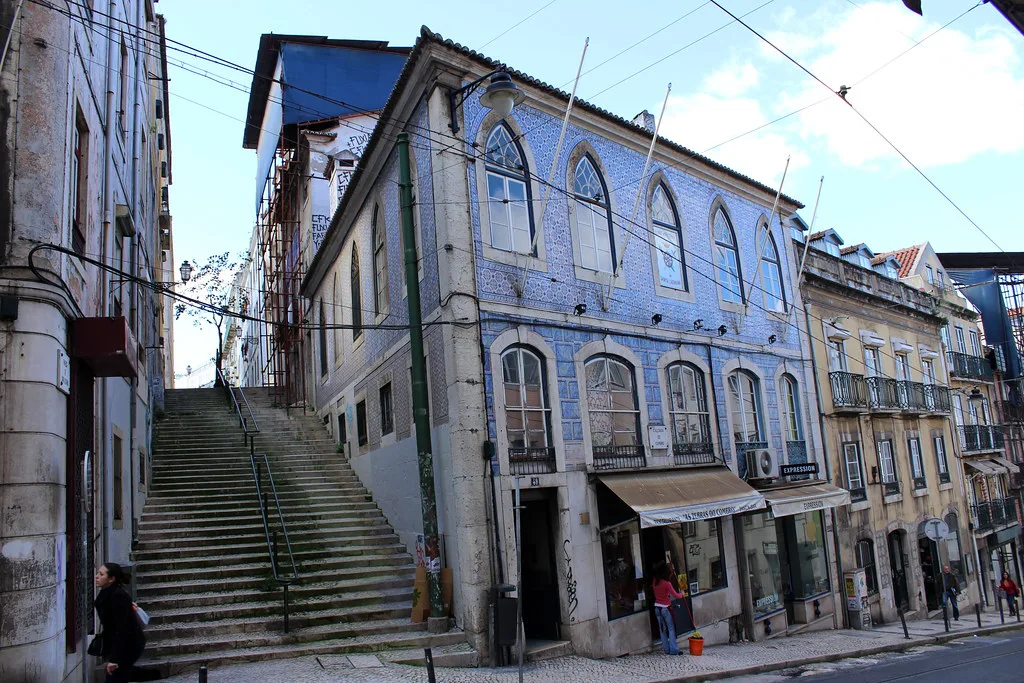
Walking is the most flexible option and costs nothing. The most direct path is the staircase at Calçada do Duque near Rossio station, lined with small restaurants and outdoor seating that offer glimpses of the castle across the valley. A second option is Rua do Alecrim, a wider street that climbs from Cais do Sodré through the Chiado district and borders Bairro Alto at the top. Both routes take 12 to 15 minutes at a comfortable pace.
If you prefer a gentler gradient, Rua Garrett through Chiado offers interesting shops and historic buildings and deposits you at the southern edge of the neighbourhood without any serious hills. The Calçada da Glória route — the same path as the funicular — is free to walk but steep and exposed; most people prefer one of the alternatives in summer. All routes are accessible 24/7 with no transport schedule to worry about.
Always wear shoes with rubber soles for the polished Portuguese limestone pavement. The calçada stones become genuinely slick when it rains or even during high-humidity evenings, and comfortable sneakers will serve you far better than fashionable footwear with smooth soles. I have seen many visitors slip mid-climb in sandals, particularly on the steeper sections near Rossio. Sturdy trainers are the single most practical item to pack for exploring any of Lisbon's upper neighbourhoods.
Lisbon's traditional calçada limestone paving becomes dangerously slippery when wet or during humid evenings. Smooth-soled shoes and sandals are a genuine slip hazard on the steeper walking routes up to Bairro Alto — always pack rubber-soled trainers if you plan to walk any of these routes.
Elevador da Bica: The Route Visitors from Cais do Sodré Miss
Most guides focus on reaching Bairro Alto from Rossio or central Baixa, but a large share of visitors arrive via Cais do Sodré station — whether coming from the airport by suburban train or heading up from the riverside before a night out. For those starting from Cais do Sodré, the Elevador da Bica is the equivalent of the Glória funicular, and almost no tourist guide flags it prominently.
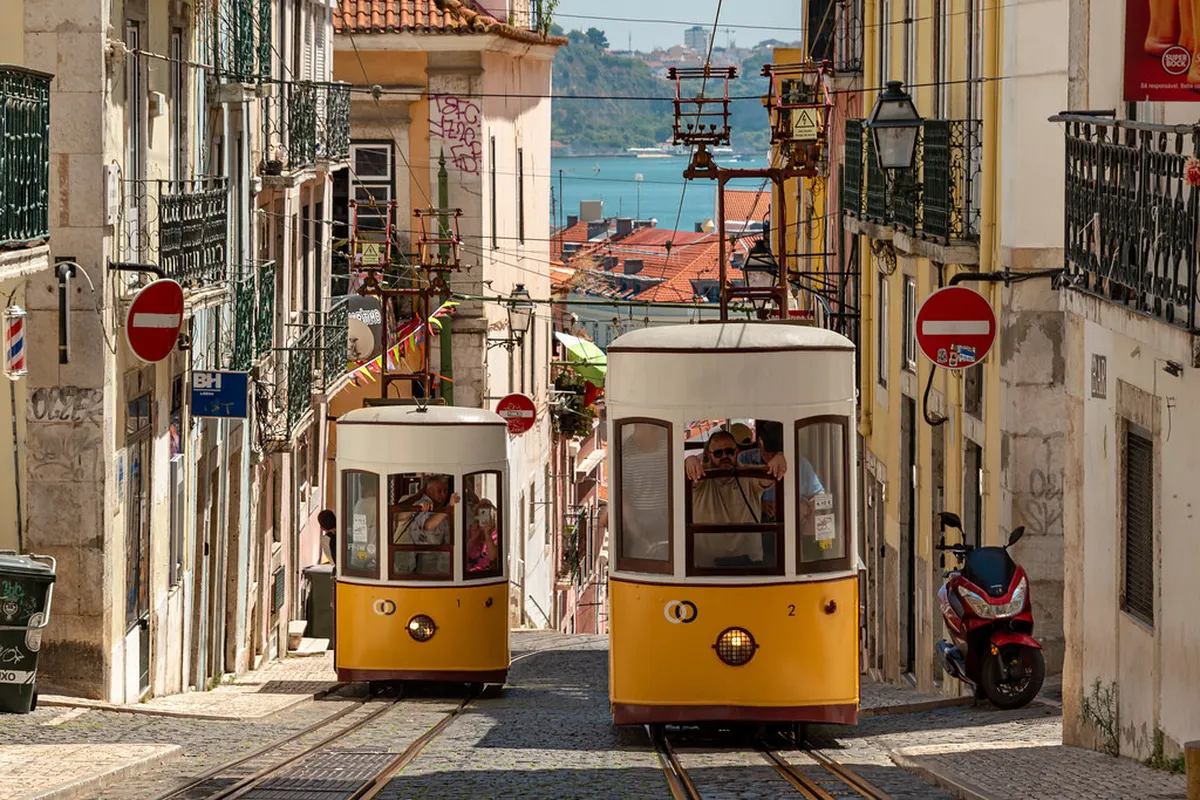
The Bica funicular departs from Rua de São Paulo — a four-minute walk from Cais do Sodré station — and climbs to Largo do Calhariz at the southern edge of Bairro Alto. The fare is identical to the Glória: €1.70 / ~$1.85 with a Viva Viagem card, or €4.10 / ~$4.40 on board. Service runs from around 07:00 to 21:00 on weekdays and until midnight on weekends. The carriages are the same vintage yellow as the Glória, the ride takes about three minutes, and queues are noticeably shorter because fewer tourists know it exists.
From the top stop at Largo do Calhariz, you are on the quieter southern fringe of Bairro Alto. Walk north along Rua da Bica de Duarte Belo or Rua do Século to reach the bar streets in about five minutes. If your accommodation or starting point is anywhere near the waterfront, the Bica is almost always faster than backtracking to Rossio to catch the Glória. Pair this with a Viva Viagem card loaded with a few euros and you have the most efficient funicular option in the city for river-side arrivals.
Taxis and Tuk-Tuks: Effortless Door-to-Door Transport
Motorised transport is the right call for anyone with mobility issues or heavy luggage. Taxis are plentiful in Baixa and can be hailed at the designated stands in Rossio. Always ensure the meter is running before the car moves. A typical ride from Rossio Square to the edge of the neighbourhood should not exceed €7.00 / ~$7.60 including a tip.
Rideshare apps like Uber and Bolt provide a fixed price upfront and are often slightly cheaper than metered taxis for this short distance. Expect to pay around €5.00 / ~$5.40 from Rossio. Be aware that some streets in the upper district are closed to private vehicles after 20:00, so your driver may drop you at the pedestrian zone boundary rather than your door.
Tuk-tuks are a novelty way to get up the hill while taking in the sights. These electric vehicles navigate alleys that cars cannot fit through. They are considerably more expensive than taxis — often €15.00 / ~$16.30 for a short trip — so negotiate the price before getting in. They are best suited to visitors who want a scenic orientation ride rather than pure point-to-point speed.
What to Do When You Arrive: The Miradouro Payoff
Whichever route you take, one of the best first stops in Bairro Alto is the Miradouro de São Pedro de Alcântara, the viewpoint directly above the Elevador da Glória's upper stop. The terrace is lined with gardens and offers a full sweep across the rooftops to São Jorge Castle and the Tagus River beyond. A kiosk on the terrace sells drinks if you want to take in the panorama with a cold beer. It is especially worth visiting at sunset, when the city light shifts over the castle and the river glitters below.
The Igreja de São Roque is just below the miradouro and easy to overlook — its façade is plain, but the interior is one of the richest in Lisbon. The side chapels are covered in azulejos, marble, and gold, and the Chapel of Saint John the Baptist was built in Rome in 1749 before being shipped to Lisbon in pieces. Entry is free. Most visitors walk straight past, which means you will almost always have it to yourself in the first hour after opening.
Once you are ready to move into the neighbourhood itself, Rua da Rosa and Rua da Atalaia are the core bar streets. The best time to arrive for nightlife is after 22:00 — bars here are slow to fill before then. Check our guide on the best time to visit Bairro Alto nightlife for a full breakdown of what opens when.
Comparing Your Options: Cost and Effort at a Glance
Here is how the five main methods compare when you factor in price, time, and queue risk in 2026. The Viva Viagem card prices assume a card loaded with single-journey credit; the 24-hour Carris/Navegante pass costs €6.80 / ~$7.30 and covers all buses, trams, and funiculars — it pays for itself if you use it for three or more funicular journeys in a single day, which is realistic on a sightseeing day.
- Metro escalator hack — €0.00, around 5 minutes, no queue. Best for budget travellers already in central Baixa.
- Elevador da Glória — €1.70 with Viva Viagem / €4.10 on board, 3-minute ride, short queue most of the day. Best for first-timers who want the classic experience and arrive from Rossio.
- Elevador da Bica — €1.70 with Viva Viagem / €4.10 on board, 3-minute ride, rarely a queue. Best for visitors starting from Cais do Sodré or the waterfront.
- Elevador de Santa Justa — €6.00 including viewpoint, 30–60 minute queue during peak hours. Worth it only for the view; inefficient as a transit option.
- Walking via Rua do Alecrim or Calçada do Duque — €0.00, 12–15 minutes. Best when you have flat shoes and want to explore at street level.
- Taxi or Uber — €5.00–€7.00, door-to-door. Best for luggage or mobility needs; essential if arriving late with heavy bags.
If you are making a single trip up the hill, load €2.00 onto a Viva Viagem card and take the Glória or Bica. If you plan to use Lisbon public transport for most of a full day, the 24-hour pass covers everything and makes the funicular journeys effectively free. There is no single right answer — it depends on where you are standing when you decide to go up.
| Route | Cost (Viva Viagem) | Cost (on board / ticket) | Time | Queue risk |
|---|---|---|---|---|
| Metro escalator hack | €0.00 | €0.00 | ~5 min | None |
| Elevador da Glória | €1.70 | €4.10 | ~3 min ride | Low–moderate |
| Elevador da Bica | €1.70 | €4.10 | ~3 min ride | Low |
| Elevador de Santa Justa | €6.00 (incl. viewpoint) | €6.00 | 30–60 min queue | Very high |
| Walking (Rua do Alecrim / Calçada do Duque) | €0.00 | €0.00 | 12–15 min | None |
| Taxi / Uber | €5.00–€7.00 | €5.00–€7.00 | ~5 min | None |
For related deep-dives, see our Bairro Alto safety at night and best time to visit Bairro Alto nightlife guides.
Use our Bairro Alto nightlife hub to plan the rest of your night out.
Frequently Asked Questions
Is the Elevador de Santa Justa worth the wait?
The lift is beautiful but the hour-long wait is rarely worth it for the short ride. I recommend walking to the back entrance for the same view without the queue. This saves you €6.00 / ~$6.50 and significant time.
Can you walk from Baixa to Bairro Alto?
Yes, you can walk between the two districts in about 10 to 15 minutes. The route is very steep but features many scenic viewpoints and charming side streets. Wear sturdy shoes to handle the slippery cobblestones.
How much does the Elevador da Glória cost?
A return ticket costs €4.10 / ~$4.40 if you pay the driver in cash. Using a pre-paid Viva Viagem card reduces the price to approximately €1.70 / ~$1.85 per trip. It is a quick three-minute journey up the hill.
Navigating the hills of Lisbon is part of the city's unique and historic charm. Whether you choose the modern metro hack or the vintage funicular, the journey is memorable. I suggest trying a different route each time to see various angles of the skyline. Reaching the top allows you to explore the best Bairro Alto bars with ease.
Remember to keep your transit card topped up to save money on every single ride. Enjoy the incredible views and the lively atmosphere that awaits you in the upper city. Lisbon is a city meant for exploring, so take your time and enjoy the climb.