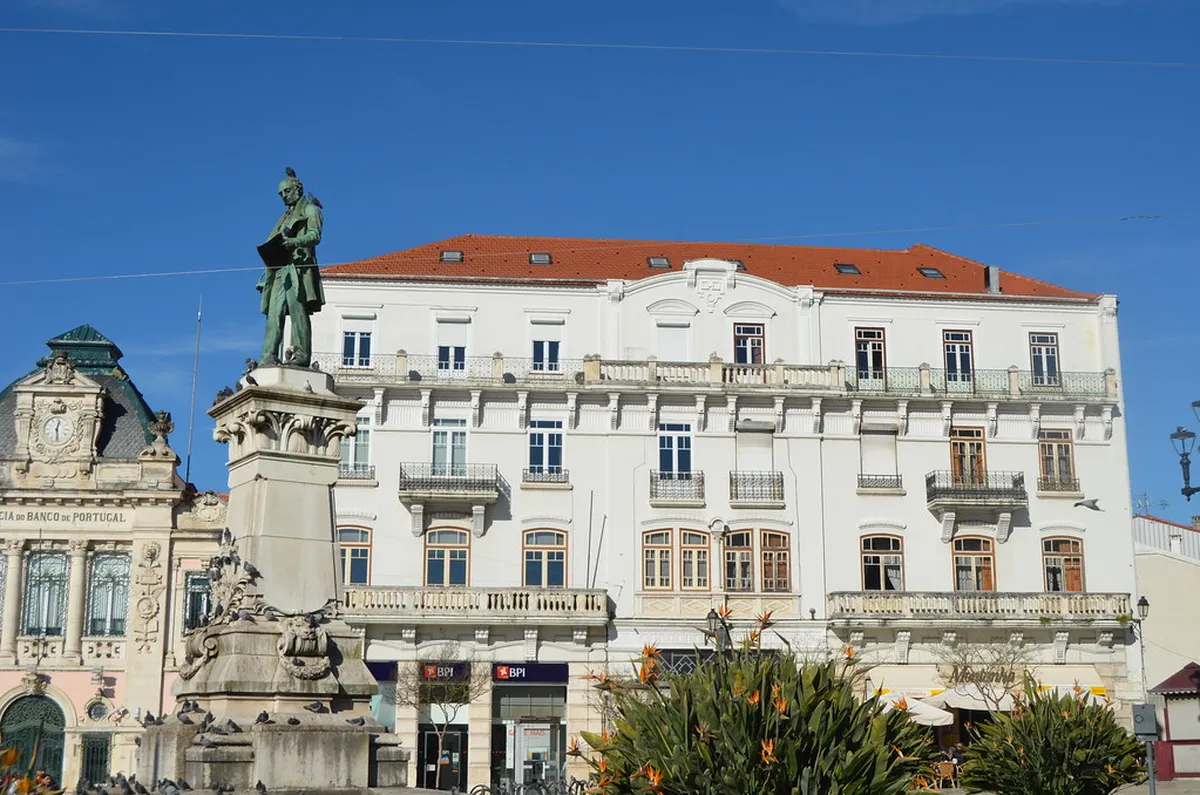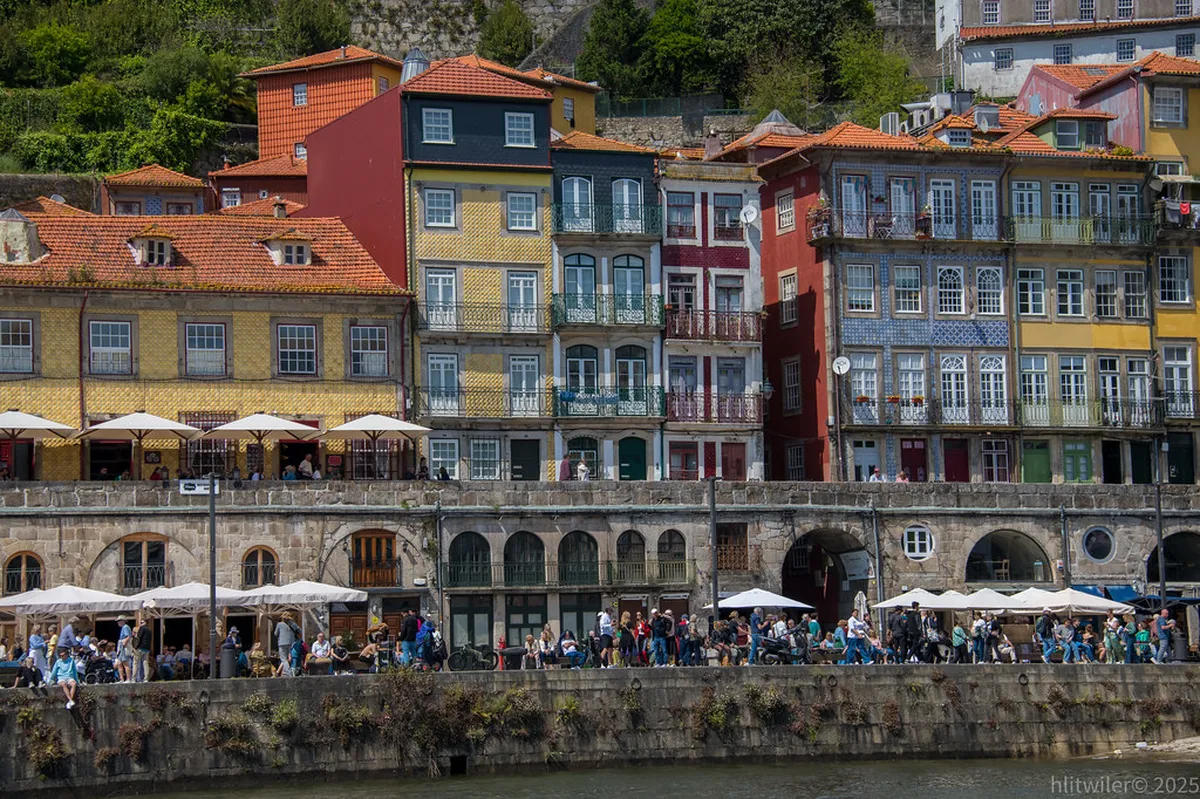
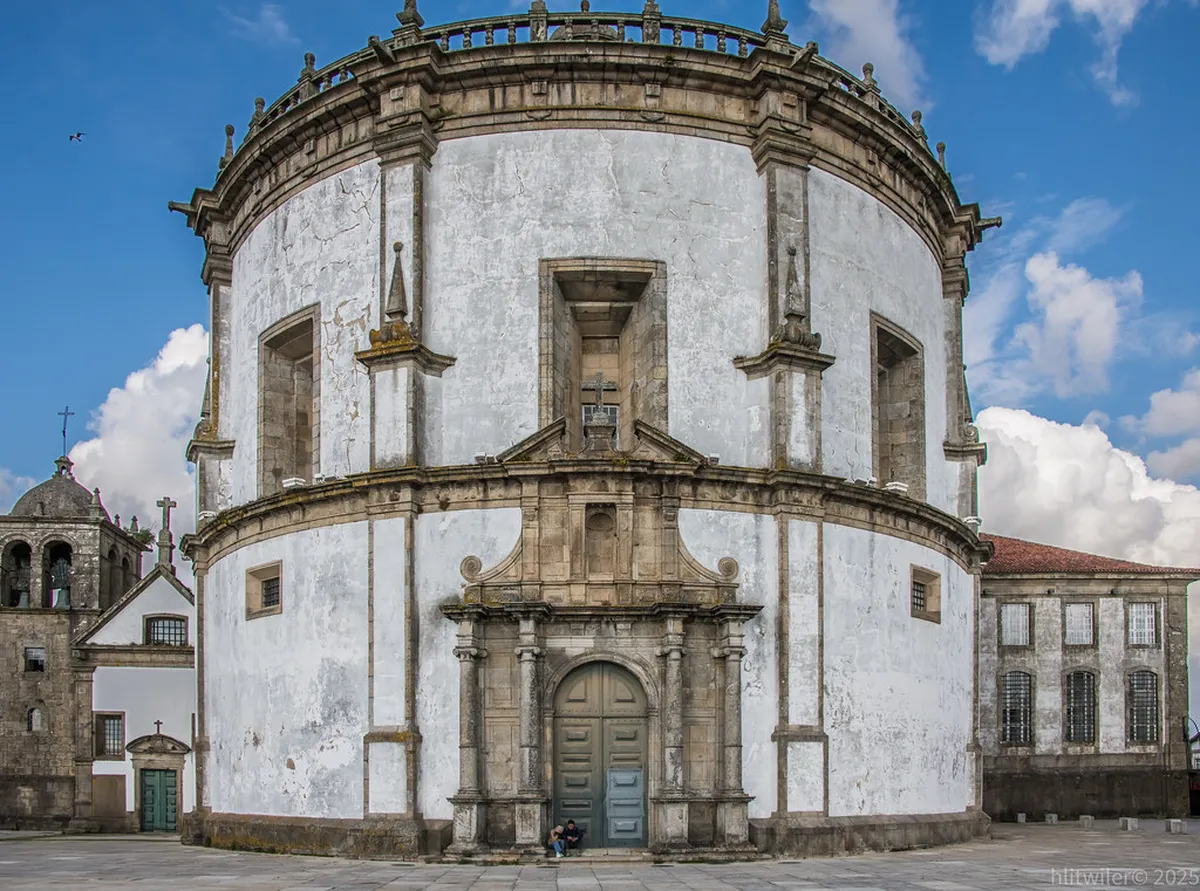
Coimbra sits halfway between Lisbon and Porto, and most travelers treat it as a one-night stopover. That is enough to see the University highlights. But the city rewards those who stay longer, especially on a weekday when thousands of students fill the old streets. This guide gives you a clear answer on trip length, then shows you exactly how to use each day.
The steep hills, the Joanina Library's timed entry slots, and the way the city transforms when students leave on Friday afternoons are all factors that should shape how you plan. We cover all of them here for 2026. Our a two-day plan breaks down the full schedule hour by hour if you want more detail after reading this guide.
Key Takeaways
- Two days is the recommended stay for first-time visitors.
- Book Joanina Library tickets at least 30 days in advance for peak dates.
- Arrive at Coimbra-B, then take the 3-minute shuttle to Coimbra-A in the city center.
- Visit on a weekday to see student life; weekends are quieter and more local.
How Many Days in Coimbra? (The Short Answer)
One day covers the essentials. Two days cover everything worth seeing without rushing. Three days makes sense only if you want a day trip to the Roman ruins at Conimbriga or the schist villages around Lousã.
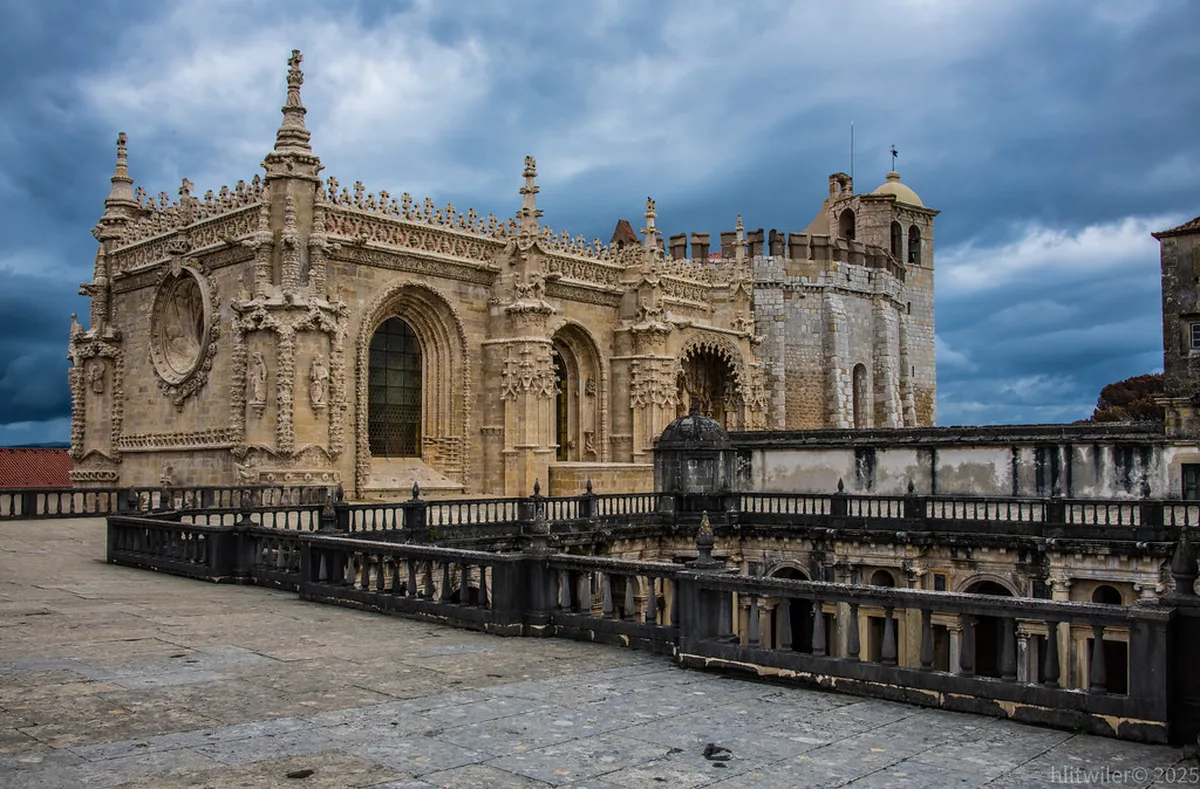
The case for two nights is strong for first-time visitors. The University circuit alone takes three to four hours if you include the Joanina Library, Saint Michael's Chapel, and the Sala dos Atos Grandes. Add the Machado de Castro Museum, a Fado show, and time on the riverside, and one day starts to feel thin. Two days lets you experience both the upper town and the quieter south bank of the Mondego.
If Coimbra is a stopover between Lisbon and Porto rather than a destination in itself, one full day is workable. Arrive early, spend the morning in the University, walk down through the old cathedral and Quebra Costas, and catch a train the following morning. Anything less than a full day means you will leave without any feel for why this city is different from every other historic Portuguese town.
The 1-Day "Essential Coimbra" Itinerary
A one-day visit works if you are disciplined about timing. Start at the University by 09:00 before the tour groups arrive. The Joanina Library requires a pre-booked time slot — book it as soon as you confirm your travel dates, not two days before. After the library, walk through the Paço das Escolas courtyard for the views over the Mondego, then descend to the old cathedral (Sé Velha).
From the cathedral, walk downhill — not uphill — through the Quebra Costas steps to the Baixa. Descending is the correct direction. First-timers who walk up Quebra Costas from the river and then up to the University spend double the energy and arrive at the library exhausted. The medieval stairs were designed to be descended from the Alta to the lower town, and that sequence rewards you with views opening progressively as you drop.
Lunch in the Baixa around 13:00 at one of the student tascas near Praça 8 de Maio, where a full meal costs €7–10. In the afternoon, walk through the Santa Cruz Monastery and the Jardim da Manga. If you can secure an evening Fado show at Fado ao Centro, book it for around 18:00. Check our a one-day plan for the full timed schedule.
The 2-Day "Deep Dive" Itinerary (Recommended)
Day one follows the upper town sequence above. Day two crosses the river. From the Baixa, walk over the Santa Clara Bridge to the south bank of the Mondego, where two very different monasteries and the Quinta das Lágrimas gardens sit within twenty minutes of each other on foot.
The Santa Clara-a-Velha monastery is a partially submerged 14th-century ruin that the government excavated starting in the 1990s. Admission is around €4. The New Monastery on the hilltop above it holds the tomb of Saint Elizabeth of Portugal. Most visitors skip one or the other — seeing both in sequence takes two hours and gives you a complete picture of why the city kept rebuilding on the same site despite repeated flooding.
The Quinta das Lágrimas gardens are free to enter separately from the hotel. They are associated with the Pedro and Inês de Castro love story, arguably Portugal's most celebrated historical romance. The garden paths and the Fonte dos Amores fountain are at their best in autumn when the leaf color peaks. Finish the afternoon with the Machado de Castro National Museum, built over a Roman cryptoporticus — admission is €6. Dinner at Restaurante Zé Manel dos Ossos in the Baixa runs €10–15 per person. Our a weekend plan maps out the full two-day route with transport links.
3 Days or More: Day Trips to Conimbriga and Lousã
Extending to three days makes sense if you want to leave the city entirely for a half day. The Roman ruins at Conimbriga, fifteen kilometers south, contain some of the best-preserved mosaic floors in the Iberian Peninsula. Buses run from Coimbra bus station twice daily in summer, or a taxi costs around €25 one way. Entry to the site and museum is €4.50. Plan two to three hours on site.
The schist villages around Lousã, forty-five minutes by car, offer an entirely different landscape — stone hamlets built into wooded hillsides, with no bus connection that makes them practical without a rental car. The Buçaco forest and its Neo-Manueline palace hotel is another half-day option, thirty minutes from the city. The palace grounds are open to non-guests and the forest trails are free to walk.
Three days in the city itself, without day trips, would feel repetitive unless you are drawn to the contemporary art scene at the Centro de Arte Contemporânea or want an entire morning in the Choupal National Forest along the river. For most visitors, three nights means one city day, one day-trip day, and a slower final morning before catching a train north or south.
2026 Planning: Best Time to Visit and Local Events
Spring and early autumn are the ideal windows. April and May bring warm days and the academic year in full swing, which means streets full of students in black capes. September and October offer lower prices, smaller crowds, and comfortable temperatures for walking the steep upper town.

The single biggest event on the 2026 calendar is the Queima das Fitas (Burning of the Ribbons), which runs for a full week in early May. This is the most important celebration in the student year, involving concerts, academic processions, and the ritual burning of the ribbons that mark each faculty. The city becomes extremely vibrant but accommodation books out months in advance and prices double. If you want to witness it, book at least three months ahead. If you want a quieter visit, avoid that week entirely.
July and August are the hottest months and the least interesting for the student atmosphere. The University is largely empty during summer break and the city loses some of its defining energy. December through February brings the quietest crowds and lowest hotel prices — walking the upper town in winter rain is atmospheric but physically demanding given the steep cobblestones.
One detail no competitor mentions: the city feels markedly different on weekends versus weekdays, year-round. From Thursday evening onward, students leave for their hometowns and the Alta empties. The Baixa stays active, but the energy that defines Coimbra — young people filling the Praça 8 de Maio, Fado drifting from open café doors — is a weekday phenomenon. If your only option is a weekend visit, you will still enjoy the city, but you are experiencing a quieter, more local version of it.
Logistics: Getting to Coimbra from Lisbon and Porto
Most long-distance trains stop at Coimbra-B, not the city center station. Coimbra-B is a major rail junction three kilometers north of the old town. From there, a short regional shuttle train runs to Coimbra-A, which is right in the Baixa. The shuttle takes three minutes and is included in your regional train ticket — you do not pay again. Do not take a taxi from Coimbra-B thinking it is faster. The shuttle is quicker and drops you exactly where you need to be.
- From Lisbon: Alfa Pendular or Intercidades trains, 20+ daily departures from Lisboa Oriente between 06:00 and 22:00. Journey time 1h45m (Alfa) to 2h30m (IC). Fares from €13 to €26. Book via Comboios de Portugal (CP).
- From Porto: Multiple departures per hour from Porto Campanhã, starting 05:00. Journey time 1h15m (Alfa) to 2h30m (IC). Fares from €9 to €20. Porto is slightly closer — about 120 km versus 200 km from Lisbon.
- By bus: Rede Expressos and FlixBus both serve Coimbra. Fares start around €3 with FlixBus. Lisbon takes 2h30m; Porto takes 1h30m. Buses stop at the main bus station in the Baixa, which is more central than Coimbra-B.
- By car: Coimbra sits directly on the A1 motorway. Free parking is available along the Avenida Marginal and at the Parque do Choupalinho. Paid garages exist in the Baixa. Do not drive into the Alta — the streets are too narrow and most are restricted.
| Option | Journey time | Fares from |
|---|---|---|
| Train from Lisbon (Alfa Pendular / Intercidades) | 1h45m–2h30m | €13–€26 |
| Train from Porto (Alfa Pendular / Intercidades) | 1h15m–2h30m | €9–€20 |
| Bus from Lisbon (Rede Expressos / FlixBus) | 2h30m | €3 |
| Bus from Porto (Rede Expressos / FlixBus) | 1h30m | €3 |
Book Alfa Pendular seats up to 60 days in advance. Early booking typically saves 40–50% versus walk-up fares. The official CP app is the most reliable purchase method for avoiding sold-out windows on peak summer dates.
Where to Stay: Upper Town (Alta) vs. Lower Town (Baixa)
The Alta puts you closest to the University but commits you to walking uphill every time you return to your hotel. The views from guesthouses in the upper town are genuinely good, and the quiet cobblestone streets feel historic. The trade-off is noise from student socializing, particularly during term time from October through June, and the physical effort of the climb after an already long walking day.
The Baixa is flatter, closer to the train station, and better positioned for restaurants and the evening Fado venues. Budget guesthouses in the Baixa run €50–80 per night for a double. The neighborhood's main drawback is some street noise near the main shopping streets, though this fades a few alleys away from the main drag.
A third option is the Santa Clara neighborhood across the river, where Quinta das Lágrimas operates a five-star hotel (from €200 per night) partly housed in a former palace. It is quiet and scenic but requires a taxi or a fifteen-minute walk to reach the upper town. The Hotel Mondego in the Baixa (around €110) and Hotel Astoria on the riverfront (around €70, historic but basic) are the most practical mid-range and budget options for most visitors. Read our the historic Old Town for a full neighbourhood breakdown.
Accessibility is a real factor here. Travelers with limited mobility or heavy luggage should choose the Baixa without hesitation. The electric buses that run up to the Alta are useful but infrequent, and the Quebra Costas steps are not manageable with a wheeled suitcase. Book ground-floor rooms where possible if the Alta appeals despite the terrain.
Essential Tips for Visiting the University of Coimbra
The University of Coimbra is a UNESCO World Heritage Site and the city's single most visited attraction. The main complex is open daily, typically from 09:00 to 19:30 in summer and until 17:30 in winter. Admission to the full circuit — which includes the Joanina Library, Saint Michael's Chapel, the Royal Palace rooms, and the Sala dos Atos Grandes — costs €12.50. A basic circuit without the library costs €9.
The Joanina Library is the critical booking problem. Capacity is capped at a small number of visitors per time slot, and slots at 09:00–11:00 sell out weeks in advance during June through September. Book your slot on the official University of Coimbra website as soon as you have confirmed travel dates. Save your ticket offline — phone signal inside the library building can be poor. If you arrive without a ticket in summer, you will almost certainly be turned away.
Book your Joanina Library time slot at least 30 days ahead for peak dates, and save the ticket offline before you arrive — signal inside the historic building can be poor. Wear comfortable, flat-soled shoes too: the courtyard paving and stairs throughout the University complex are uneven.
One practical detail worth knowing: the library actually houses a colony of small bats that live inside the historic shelves. They are managed deliberately — they eat the insects that would otherwise damage the 35,000 books. The caretakers spread leather covers over the antique tables at night to protect them from droppings. The bats are invisible during daytime visits but the fact is worth knowing because your guide will likely mention them and it surprises most visitors.
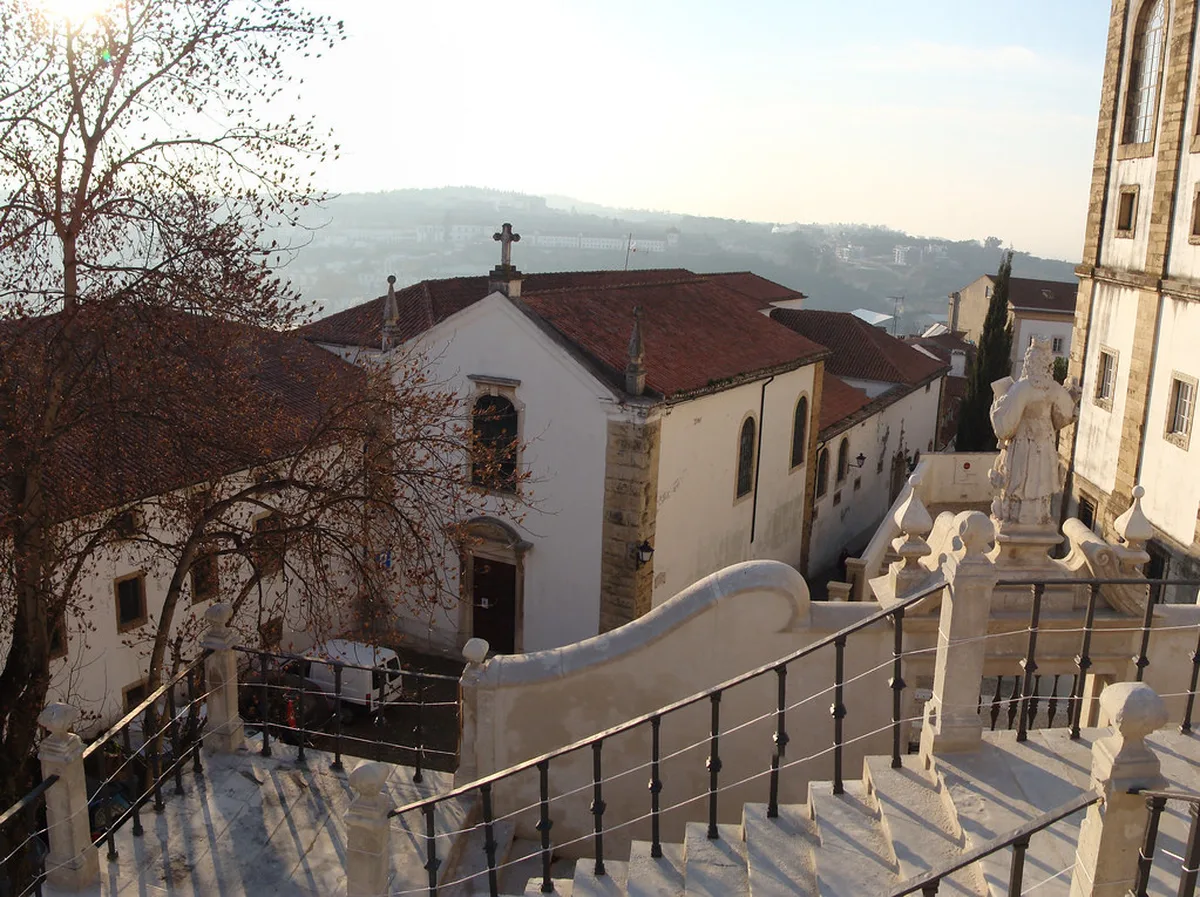
The recommended sequence through the University is to arrive at the main gate on Largo da Porta Férrea, collect your tickets, visit the library first in your booked slot, then work through the chapel and the palace rooms at your own pace. The Botanical Garden is a ten-minute walk downhill from the main complex and is worth thirty minutes on its own. Comfortable, flat-soled shoes are essential — the courtyard paving and the stairs throughout the complex are uneven.
Frequently Asked Questions
Is one day enough for Coimbra?
One day is enough to see the main University highlights and the historic center. However, staying two days allows for a much more relaxed pace. You can explore the riverfront and enjoy a traditional Fado show without rushing.
How do I get from Coimbra-B to the city center?
You should take the local shuttle train to the Coimbra-A station. This ride only takes three minutes and is usually free with your regional ticket. Taxis and ride-shares are also available outside the main station exit.
Do I need to book the University of Coimbra in advance?
Yes, you must book your tickets in advance for the Joanina Library. These tickets are time-slotted and often sell out weeks ahead during the summer. I recommend booking at least thirty days before your planned visit.
Two days is the right answer for most visitors to Coimbra in 2026. One day leaves you with the highlights but without the texture. Three days only makes sense with a day trip destination in mind. The city is compact, historic, and genuinely distinctive — the student culture, the Fado tradition, and the medieval upper town together make it worth more than a fleeting stopover on the Lisbon–Porto corridor.
Book the Joanina Library as your first logistical step. Everything else in the city is walkable without advance tickets. Pack comfortable shoes, plan to descend Quebra Costas rather than climb it, and aim for a weekday visit to catch the city at its most alive.