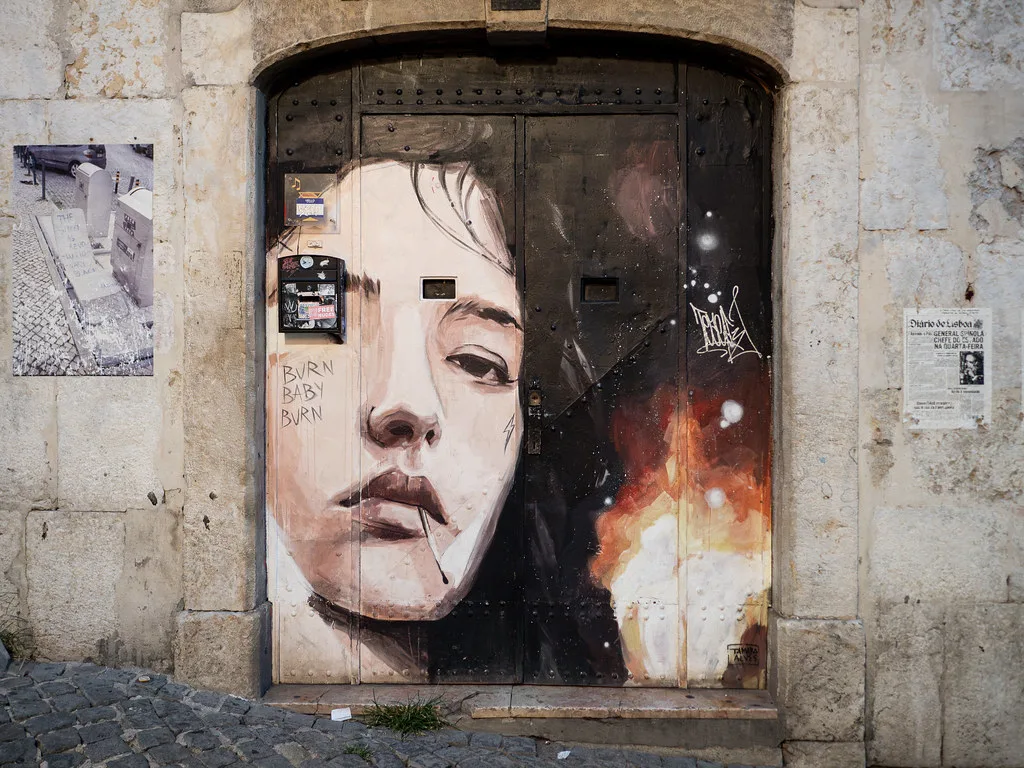
I built this guide after my fourth visit to Lisbon's most colorful neighborhood. Bairro Alto feels like two different worlds depending on the hour you visit. This guide is perfect for any first-timer who loves creative murals and lively nights.
Last refreshed after my summer visit, this route hits the best hidden gems. You will find political murals and the most authentic bars in the city. I recommend wearing flat shoes because these cobbled hills are quite steep.
A Brief History of Bairro Alto and the Carnation Revolution
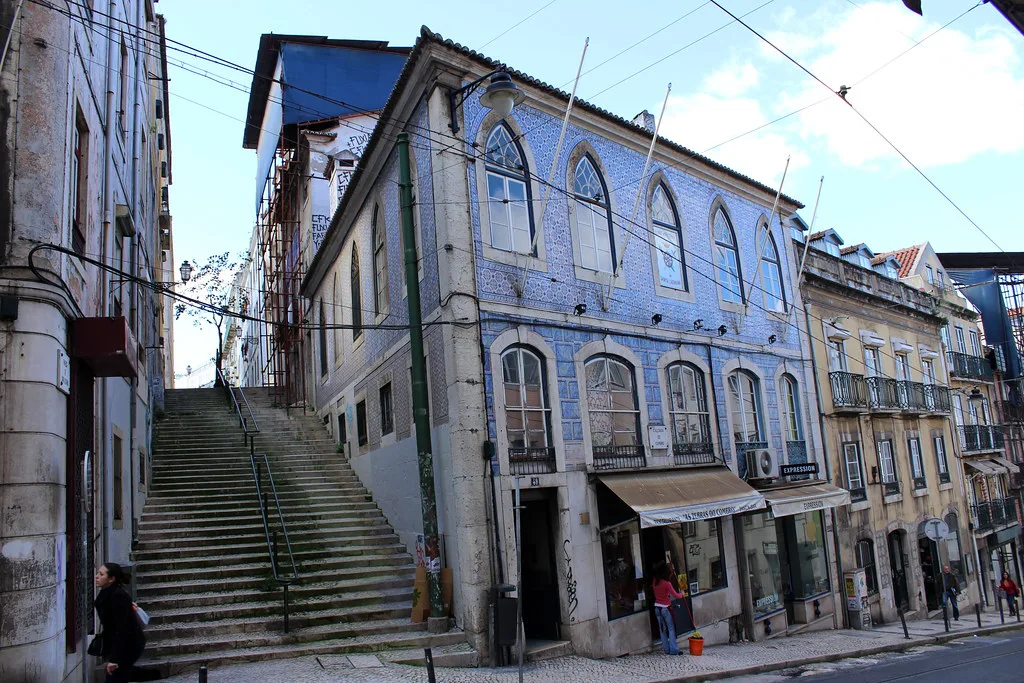
Bairro Alto began taking shape in the 16th century above the older riverfront. Its tight grid later attracted printers, newspaper offices, writers, artists, and taverns, which is why the neighborhood still feels more bohemian than monumental.
The political edge sharpened after the 1974 Carnation Revolution, when Portugal's dictatorship ended and public walls became places for slogans, portraits, and arguments about freedom. Lisbon's current street-art culture still carries that memory through flowers, workers, music, and everyday neighborhood life.
Essential Street Art Stops and Famous Artists
Begin around the top of the Sonse - Elevador da Glória Image location, where the tracks and surrounding walls create the easiest visual entry into the area. From there, drift toward Miradouro de São Pedro de Alcântara and the lanes behind it.
Look for work tied to the Carnation Revolution, especially flowers, soldiers, workers, or red political imagery. Lisbon's broader scene also includes Vhils, who carves into walls, and Shepard Fairey, whose Lisbon works connect protest graphics with revolutionary memory. For a deeper artist-led route, Lisbon Street Art Tours is the best external starting point.
- Elevador da Glória gives you the steepest, most photogenic approach from Restauradores.
- Miradouro de São Pedro de Alcântara pairs skyline views with nearby walls and buskers.
- Rua do Norte, Rua da Barroca, and Rua do Diário de Notícias are better for layered tags, shutters, and smaller pieces than for one famous mural checklist.
Navigating the Neighborhood: Elevador da Glória and Logistics
The simplest approach is to take the metro to Baixa-Chiado, exit toward Largo do Chiado, and walk uphill. For the classic arrival, use the Elevador da Glória from Praça dos Restauradores to the upper viewpoint. It saves your legs and lines you up with the first art stops; this getting to Bairro Alto from Baixa guide covers the approach in more detail.
Plan a loop rather than a straight line. Start near São Pedro de Alcântara, cut through the central lanes, then finish lower near Praça Luís de Camões or downhill toward Cais do Sodré. In 2026, ride-hailing cars still struggle with the narrowest nightlife streets, so choose a pickup point outside the packed bar blocks.
Accessibility is uneven. The sidewalks are narrow, cobbles can be slick after rain, and some lanes have sudden drops or steps. Anyone avoiding steep climbs should ride up and descend slowly toward Chiado.
The Evening Transformation: Fado and Nightlife
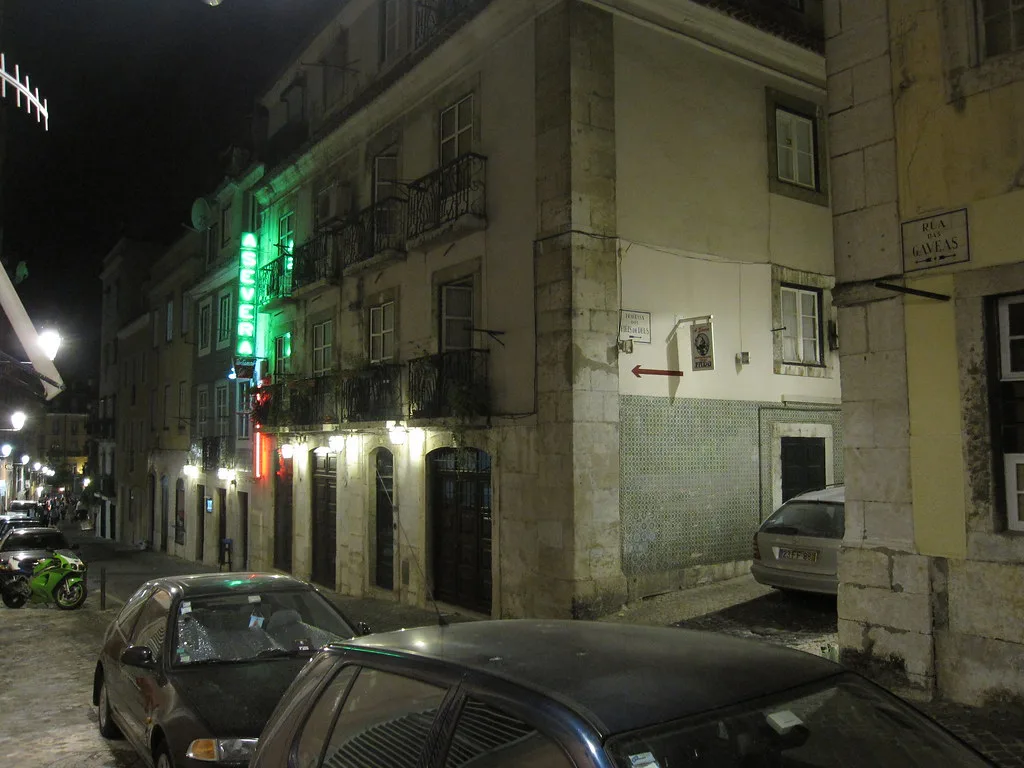
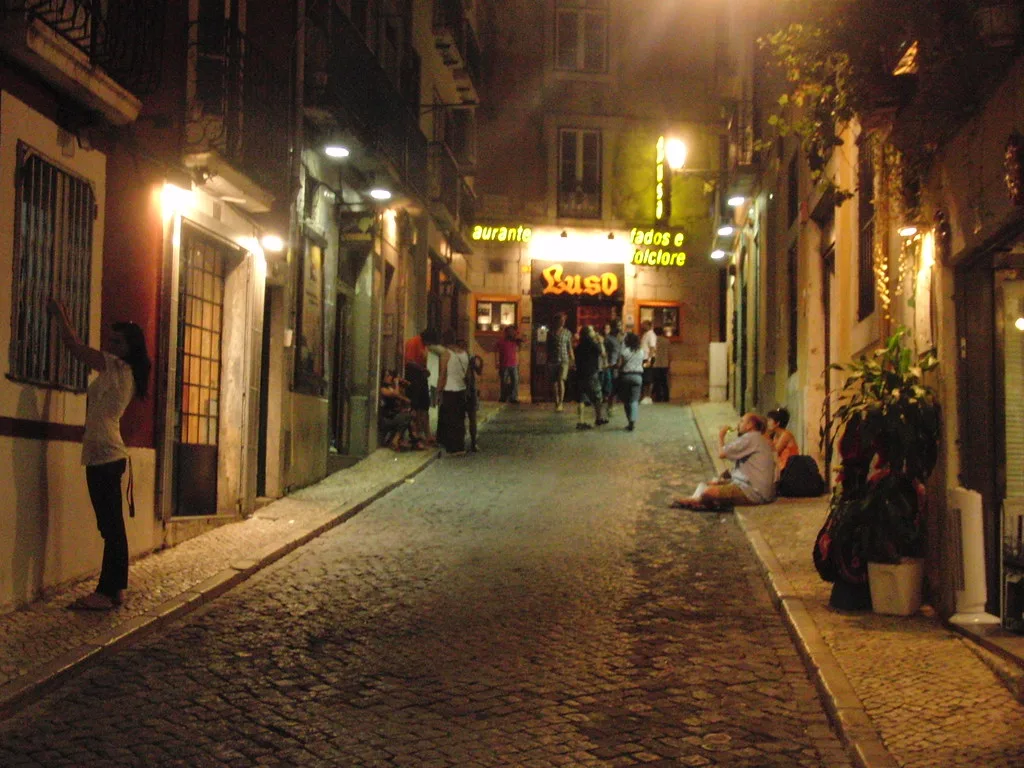
Bairro Alto's most useful trick is timing. Before 17:00, it can feel almost sleepy, with shutters down and enough space to photograph murals. Between 18:00 and 20:30, restaurants and fado houses take over, so this is the right window for dinner or a small music venue.
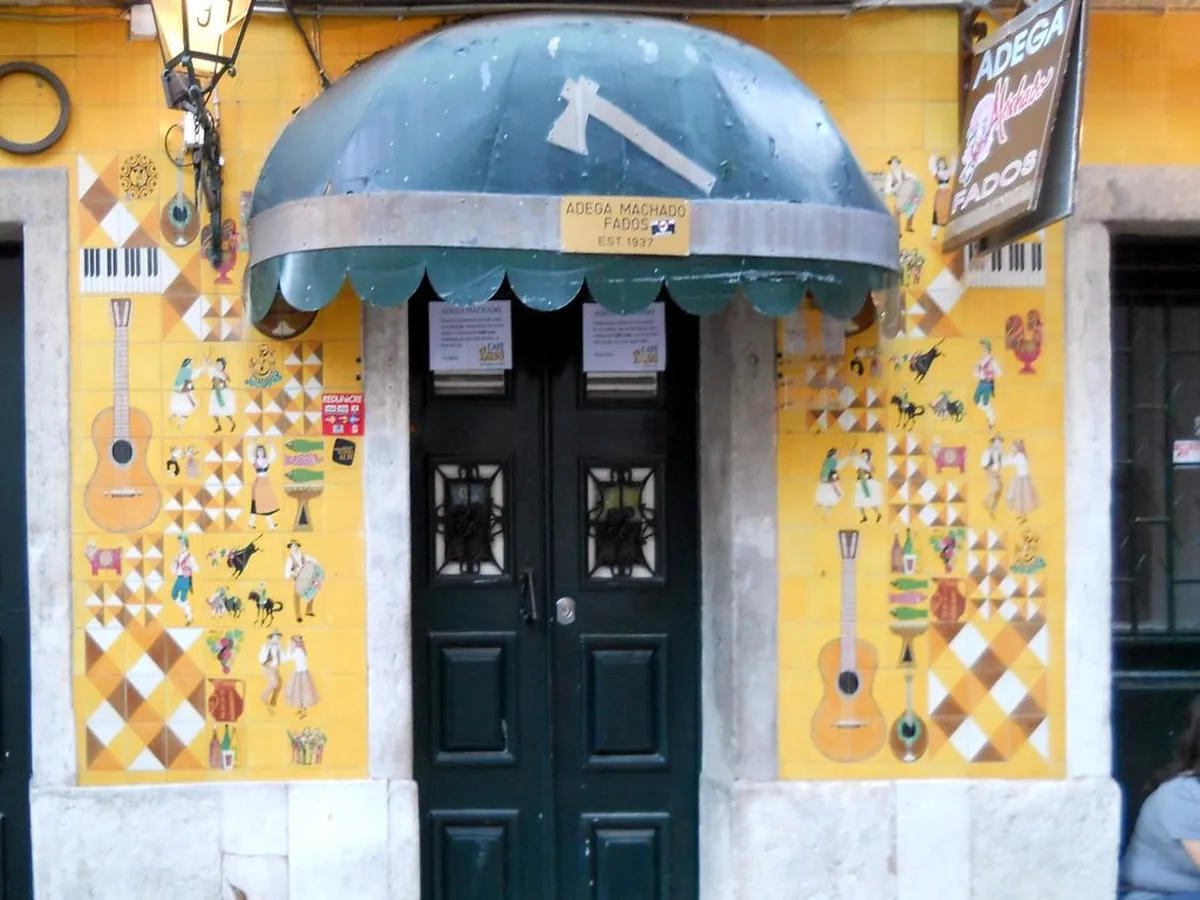
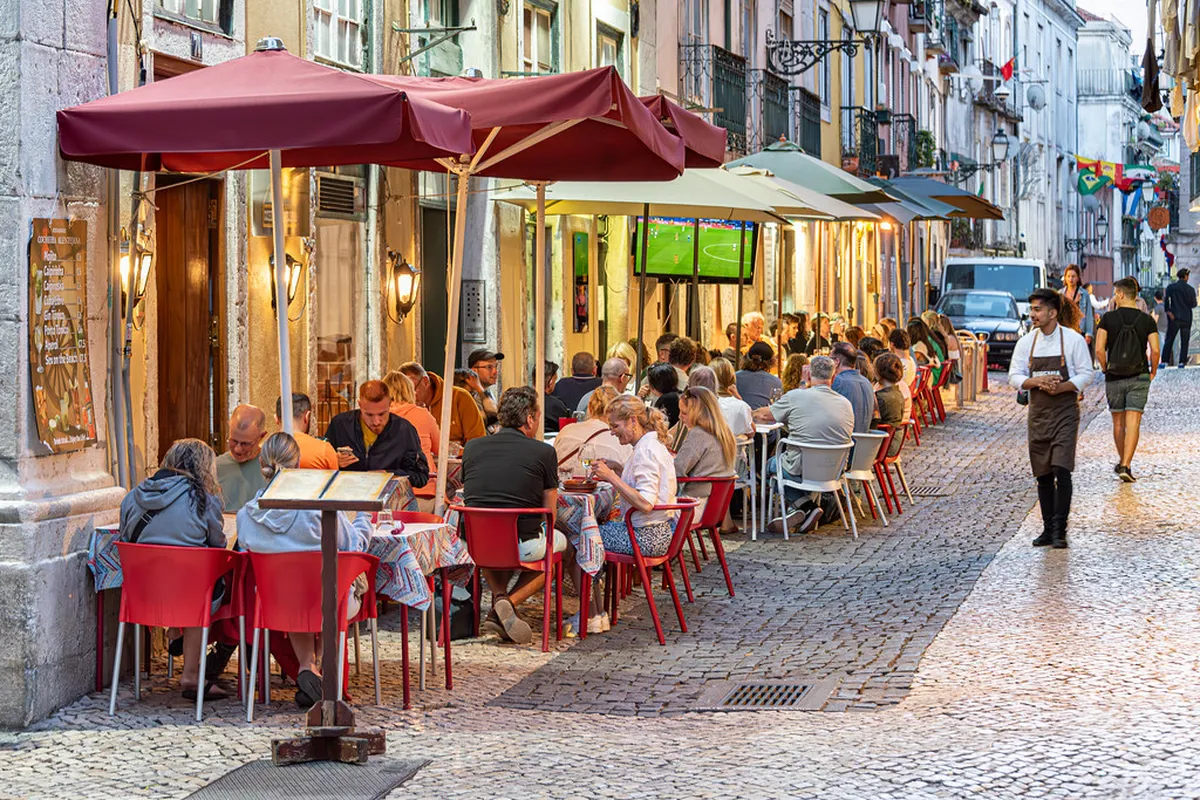
After 21:00, the same streets become a social nightlife grid. Bars open onto the pavement, conversations move outside, and people drift with plastic cups rather than staying fixed at one counter. If fado is part of your night, reserve a best fado bar in Bairro Alto before you travel, because the better rooms fill first.
The best sequence is art first, viewpoint at sunset, dinner or fado, then bars. Reversing it means seeing murals in poor light and spending the prettiest hour in the dinner crowd.
Before 17:00, Bairro Alto is at its quietest — shutters are down and the mural lanes are nearly empty, making it the ideal window to photograph street art without crowds. Plan your art walk for the afternoon and save the bars for after 21:00.
Best Bars for a Bairro Alto Pitstop
The first drink should be low-commitment. Try ginjinha, a small beer, or vinho verde before you settle into a louder bar. Simple drinks often cost about €2 to €5 in casual spots, while cocktails and terrace drinks climb higher.
| Drink | Venue Type | Approx. Price | Best Time |
|---|---|---|---|
| Ginjinha | Counter bar / tavern | €2–€3 | 18:00–21:00 |
| Small beer (fino) | Casual street bar | €2–€3 | Any time |
| Vinho verde (glass) | Wine bar / tavern | €3–€5 | 18:00–21:00 |
| Cocktail | Rooftop / terrace bar | €8–€15 | After 21:00 |
For a mellow start, choose a tavern or wine bar before 21:00. For the full Bairro Alto nightlife experience, move through two or three small bars instead of camping in one place.
- Start with a quiet counter bar if you want to talk before the music rises.
- Use a rooftop or viewpoint-adjacent terrace for one drink, not the whole night, because prices rise with the view.
- Check the Bairro Alto Opening Hours Guide: 10 Essential Timing Tips before planning a weekday crawl, when some venues open later or stay subdued.
Copos na Rua: Bar-Hopping Etiquette in Narrow Streets
The local phrase to understand is copos na rua, or drinks in the street. Bairro Alto's bars are small, so people buy a drink and stand outside with friends. It feels relaxed, but it happens below apartments where people still live.
Keep your cup close to the bar that served it, leave doorways clear, and avoid sitting on residential steps. Use bins when you see them, lower your voice after midnight, and do not treat every painted shutter as a photo backdrop if someone is opening a business.
Solo travelers should set a simple exit plan before the third drink. The central streets are busy and generally comfortable, but pickpocketing and confusion rise when the lanes become packed. Read the 9 Things to Know About Bairro Alto Safety at Night notes before a late Friday or Saturday.
Practical Tips for Your Street Art and Bar Walk
One day is enough if you keep the focus tight. You can cover the core mural lanes, the funicular, a viewpoint, dinner, and two or three bars without rushing. Add Alfama or LX Factory another day, because those areas tell different street-art stories.
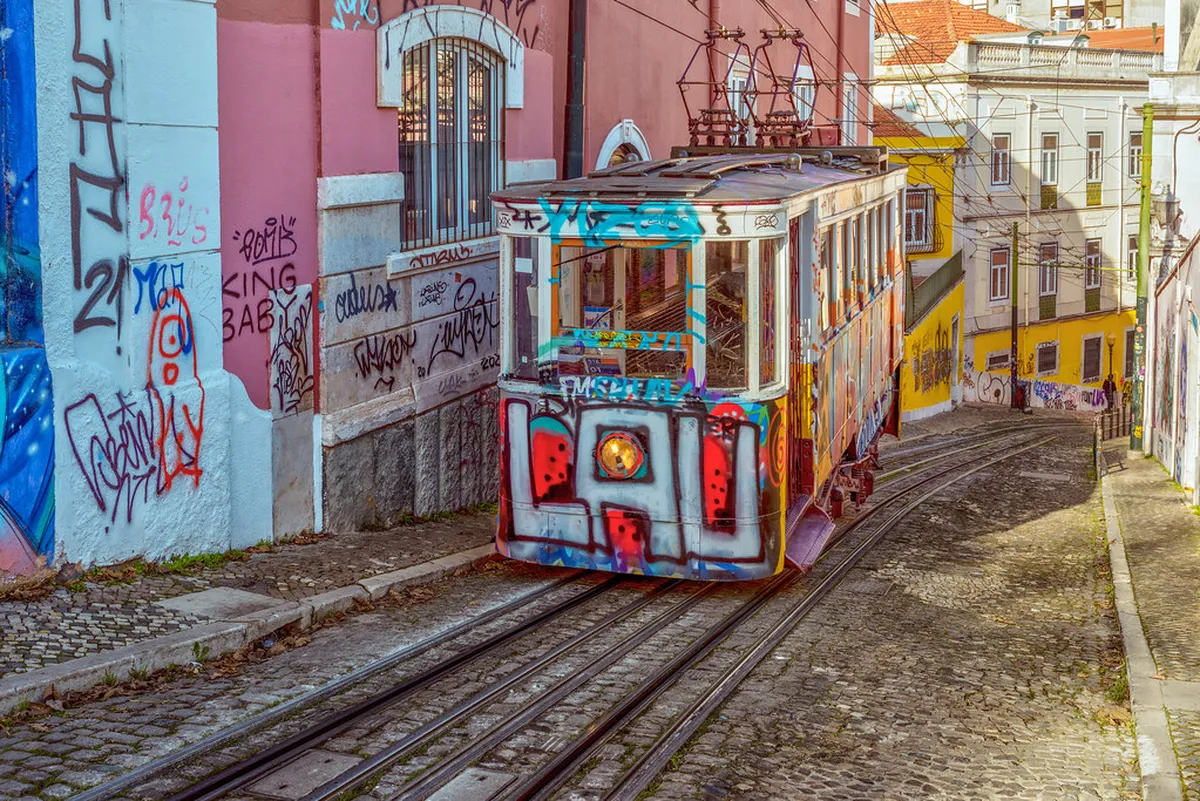
Daytime and nighttime feel completely different. In daylight, noise is low, crowds are thin, and accessibility is better. At night, the atmosphere is more social and memorable, but the same lanes become louder, denser, and harder for anyone using mobility aids.
Bring a power bank for photos, keep a light jacket for the viewpoint after sunset, and avoid driving into the district. If you are staying nearby, choose lodging on the edge rather than directly above the busiest bar lanes.
Bairro Alto's cobblestones can be slick after rain and some lanes have sudden steps or drops. Anyone avoiding steep climbs should take the Elevador da Glória up and descend slowly toward Chiado — flat shoes are strongly recommended over heels or sandals.
For a broader overview of nightlife in this neighborhood, see our complete Bairro Alto nightlife guide.
Frequently Asked Questions
When is the best time to see Bairro Alto street art?
Visit between 9:00 AM and 11:00 AM for the best lighting. The streets are empty of crowds then. This allows you to photograph murals without people blocking the view.
Are the bars in Bairro Alto expensive?
Prices vary by venue. A beer usually costs $2 to $4 at local spots. Cocktails at rooftops are more expensive, ranging from $8 to $15 per drink.
Is Bairro Alto safe for solo travelers at night?
Yes, it is generally safe due to the high number of people. Always watch your belongings in crowded alleys. Stick to well-lit main streets when walking alone late.
Bairro Alto remains the beating heart of Lisbon's creative and social scene. From political murals to plastic cups of beer, it offers a unique charm. I hope this guide helps you find the magic in these cobbled streets.
Remember to respect the locals who live in these historic buildings. Keep your voices down when leaving the bars late at night. Enjoy your walk through one of the most vibrant spots in Portugal.