The morning of November 1, 1755, changed the course of Portuguese history forever.
A massive earthquake struck the city, followed by a devastating tsunami and uncontrollable fires.
Most of the lower city lay in ruins, leaving the capital in a state of absolute chaos.
The subsequent rebuild created one of the world's first planned, seismic-resistant urban centers.
The 1755 Earthquake and a Radical Reconstruction
The earthquake hit Lisbon on All Saints' Day, 1 November 1755, when churches were full and candles were burning across the city.
The first shocks brought down roofs and masonry, then a tsunami surged up the Tagus about 40 minutes later. Fires burned for days, and the 1755 earthquake impact made reconstruction a political and engineering question, not just a cleanup operation.
| Before 1755 | After the Pombaline rebuild |
|---|---|
| Narrow medieval lanes grew around trade and churches. | Wide streets formed a grid from Rossio to Praça do Comércio. |
| Buildings were crowded and vulnerable to fire. | Facades, heights, arcades, and plots were standardized. |
| Timber and masonry worked as brittle systems. | The gaiola timber cage absorbed movement inside masonry walls. |
Marquês de Pombal: The Visionary Behind the Rebuild
Sebastião José de Carvalho e Melo, later the Marquês de Pombal, became the public face of the response because he moved faster than the court.
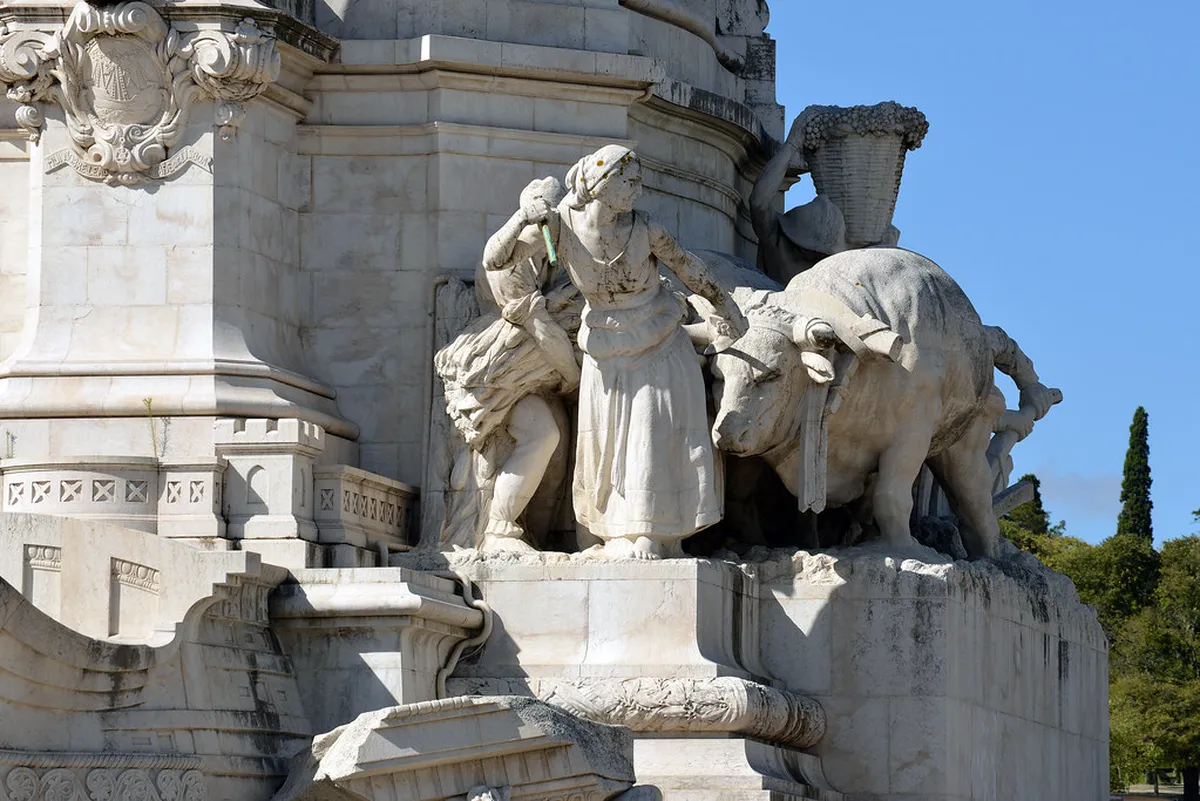
His reported command was blunt: bury the dead and feed the living. Pombal then turned the disaster into an Enlightenment planning project, with Manuel da Maia assessing options, Eugénio dos Santos shaping the plan, and Carlos Mardel refining architecture and infrastructure.
The result was a state-directed commercial district built for circulation, taxation, military order, and safer construction under King José I.
Technical Characteristics of Pombaline Architecture (The Gaiola)
The gaiola pombalina was the rebuild's most important technical idea: a timber lattice inside load-bearing masonry.
The Saint Andrew's Cross geometry matters because X-shaped braces spread horizontal force through many smaller triangles. In a tremor, the frame can rack, bend, and redistribute energy while the masonry carries vertical weight.
- Masonry gave the street its sober Pombaline rhythm.
- Timber floors and partitions kept buildings lighter than solid masonry.
- The internal cage made collapse less sudden by allowing movement inside the walls.
- Compatible lime mortars still matter in 2026 because trapped moisture can damage old timber.
Pombaline buildings still rely on lime mortar to breathe. Using cement-based fillers or sealing surfaces during renovation traps moisture inside the gaiola timber frame, accelerating decay and undermining the seismic performance the system was built to provide.
Rossio Square: Lisbon’s Wave-Patterned Plaza
Rossio Square, officially Praça de Dom Pedro IV, marks the northern edge of Baixa’s planned lower town.
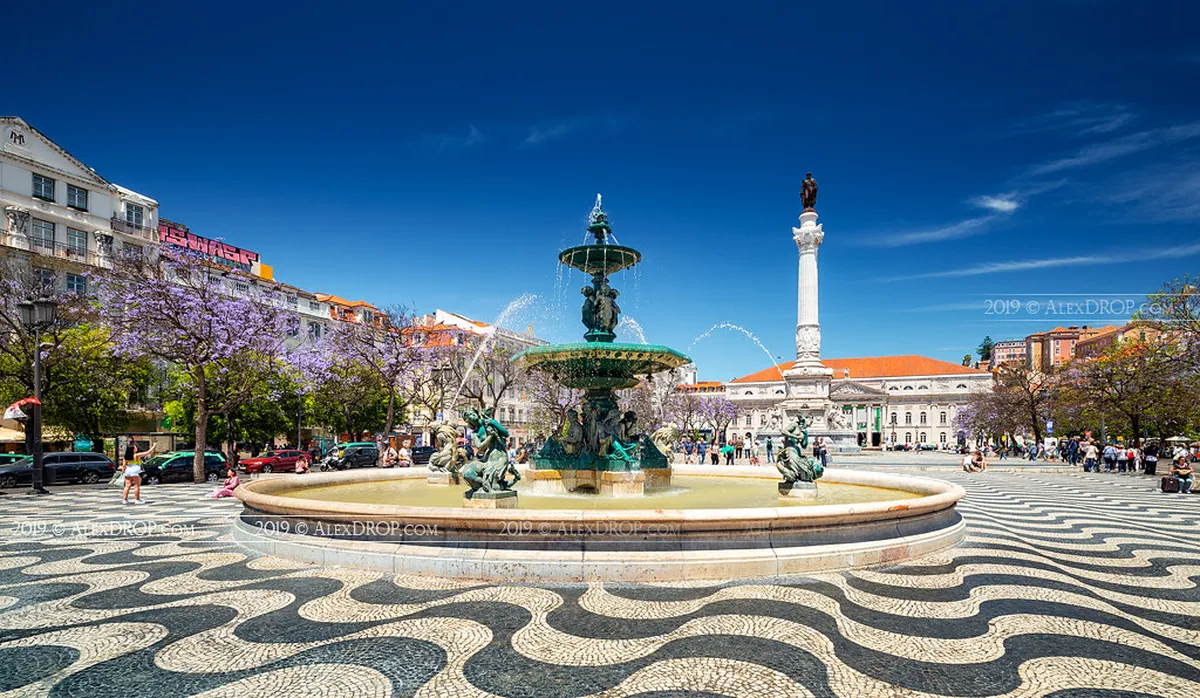
Its black-and-white wave pavement is 19th-century calçada portuguesa, but the open plaza still makes the Pombaline grid easy to read before the streets run south toward the river.
Baixa feels deliberately flat and rational beside the historic Alfama district, where narrow lanes survived with a more medieval logic.
Local insight: use Rossio as the orientation point. The grid, Restauradores, Praça da Figueira, and routes up to Chiado are easier to sort out from here.
Rua Augusta Arch: A City’s Triumph in Stone
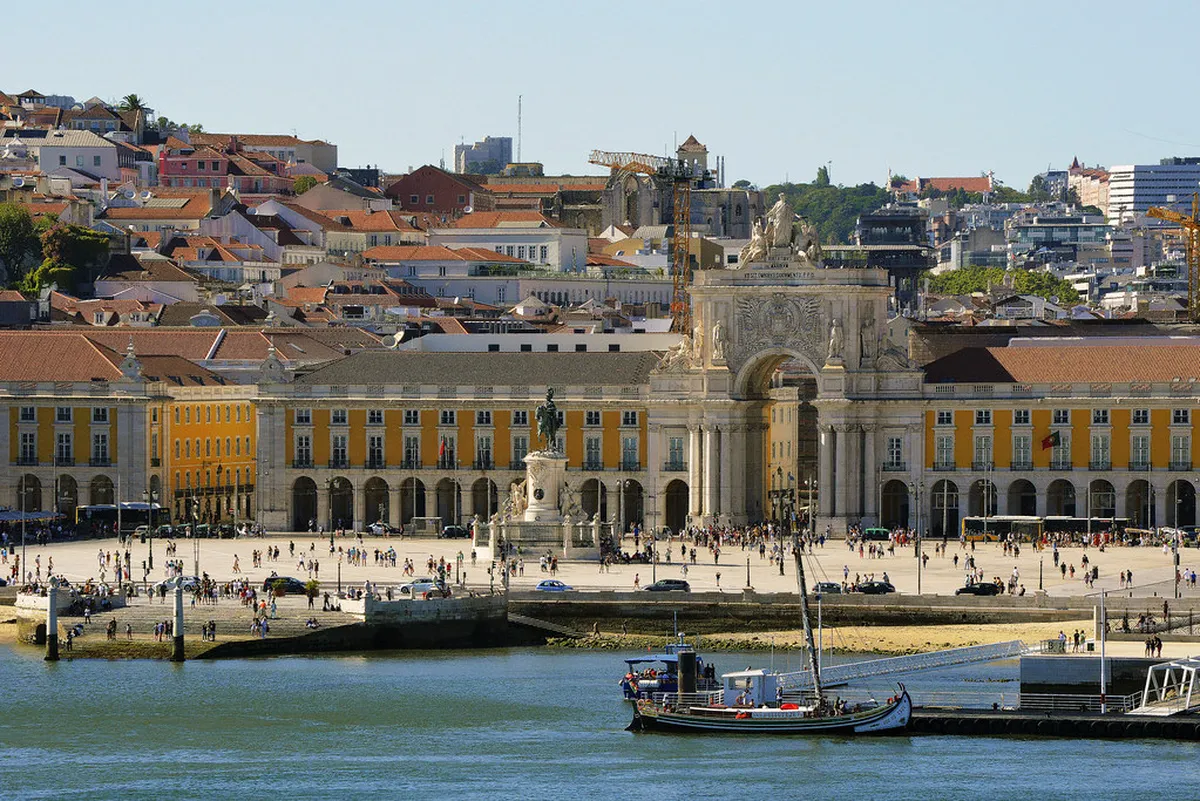
The Rua Augusta Arch turns the grid into a ceremonial route from Praça do Comércio into the rebuilt commercial city.
Eugénio dos Santos conceived an arch soon after the earthquake, but the monument took more than a century to finish. The completed 1873 version crowns Valor and Genius beneath Glory, with figures including Vasco da Gama, Viriathus, Nuno Álvares Pereira, and the Marquês de Pombal.
The viewing platform suits photographers because it shows Rua Augusta, the Tagus, and the regular blocks at once. If time is tight, nearby viewpoints may matter more, especially for travelers already heading into Chiado.
- Go near opening time or late afternoon for cleaner sightlines.
- Expect a small admission charge in euros and stairs near the top.
- Skip it in heavy rain, when the exposed terrace adds less.
The Rua Augusta Arch viewing platform opens early and closes in the afternoon — arriving near opening time or in late afternoon gives the cleanest sightlines over the grid and the Tagus. A small admission fee in euros applies, and the final stretch to the terrace involves narrow stairs.
The Santa Justa Elevator and Commerce Square
The Santa Justa Elevator opened in 1902 to solve a practical Lisbon problem: moving between low Baixa and the higher Largo do Carmo.
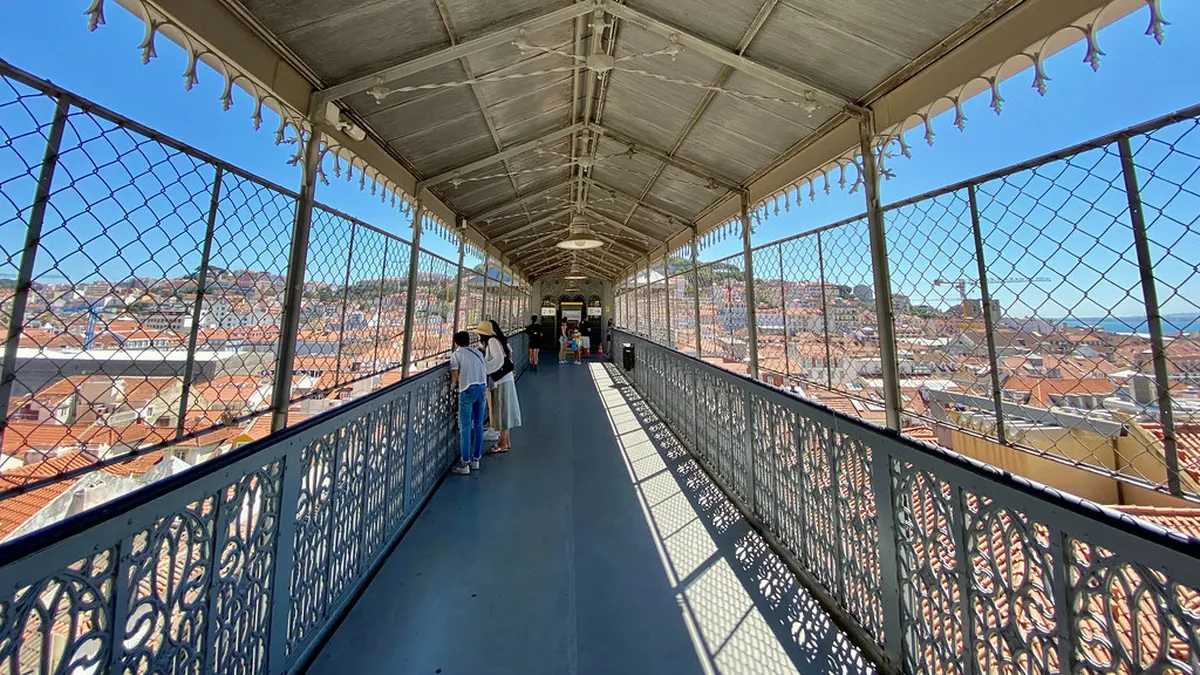
Its neo-Gothic ironwork, designed by Raoul Mesnier du Ponsard, belongs to a later industrial age than the Pombaline blocks around it. The contrast shows how Baixa kept absorbing infrastructure without losing the grid created after 1755.
South of the lift, Praça do Comércio replaced the destroyed Ribeira Palace and opened the rebuilt city to the Tagus. The statue of King José I faces the river, with serpents under the horse symbolizing triumph over disaster.
The square also became a political stage on 1 February 1908, when King Carlos I and his heir Luís Filipe were assassinated there. Two years later, the monarchy fell.
A Brasileira: Where Lisbon Learned to Love Coffee
The Pombaline rebuild did more than straighten streets. It created a public city of arcades, storefronts, offices, and cafes where commerce and conversation shared the same spaces.
A Brasileira, opened in Chiado in 1905, shows that later cultural layer. Founder Adriano Telles promoted Brazilian coffee, helping make the small, strong bica part of daily urban life.
The cafe became associated with writers and artists, especially Fernando Pessoa, whose bronze statue still draws visitors to Rua Garrett. It also links Baixa's commercial world with routes toward the Bairro Alto district.
Baixa Today: Everyday Life and Movement
Baixa in 2026 is still the easiest Lisbon district to navigate because the rebuild solved movement first. Rua Augusta, Rua da Prata, Rua do Ouro, Rossio, and Praça do Comércio form a clear sequence between shopping, transit, civic space, and the river.
The preservation challenge is less visible. Many Pombaline buildings now need elevators, insulation, fire protection, accessibility upgrades, and new residential or serviced-apartment layouts.
Good rehabilitation keeps the gaiola structurally useful rather than treating it as decorative old timber. Modern comfort can fit inside an 18th-century frame, but masonry, lime mortar, wood, floors, and seismic reinforcement have to work as one system.
Frequently Asked Questions
What is the significance of the gaiola pombalina?
The gaiola pombalina is a revolutionary anti-seismic wooden internal frame developed after 1755. It allows buildings to flex during an earthquake rather than crumbling. This engineering feat makes the district one of the safest historic areas in Europe today.
Who was the main architect of the Baixa rebuild?
The Marquês de Pombal oversaw the project, but Eugénio dos Santos was the primary architect. He designed the rational grid system and the iconic Praça do Comércio. His work replaced the chaotic medieval streets with wide, functional avenues.
Can you see ruins of the 1755 earthquake in Baixa?
Most ruins were cleared for the rebuild, but the Carmo Convent remains a standing memorial. It is located just above Baixa and shows the scale of the destruction. You can also learn about the Mouraria quarter to see how other areas survived.
The Baixa Pombaline rebuild remains a masterpiece of Enlightenment urban planning and engineering.
It transformed a site of tragedy into a modern, resilient city center that still thrives today.
Walking through these streets allows you to appreciate the vision of those who rebuilt Lisbon.
The district stands as a lasting tribute to human resilience and architectural innovation.
For the wider context, see our Lisbon oldest neighborhoods historical guide.