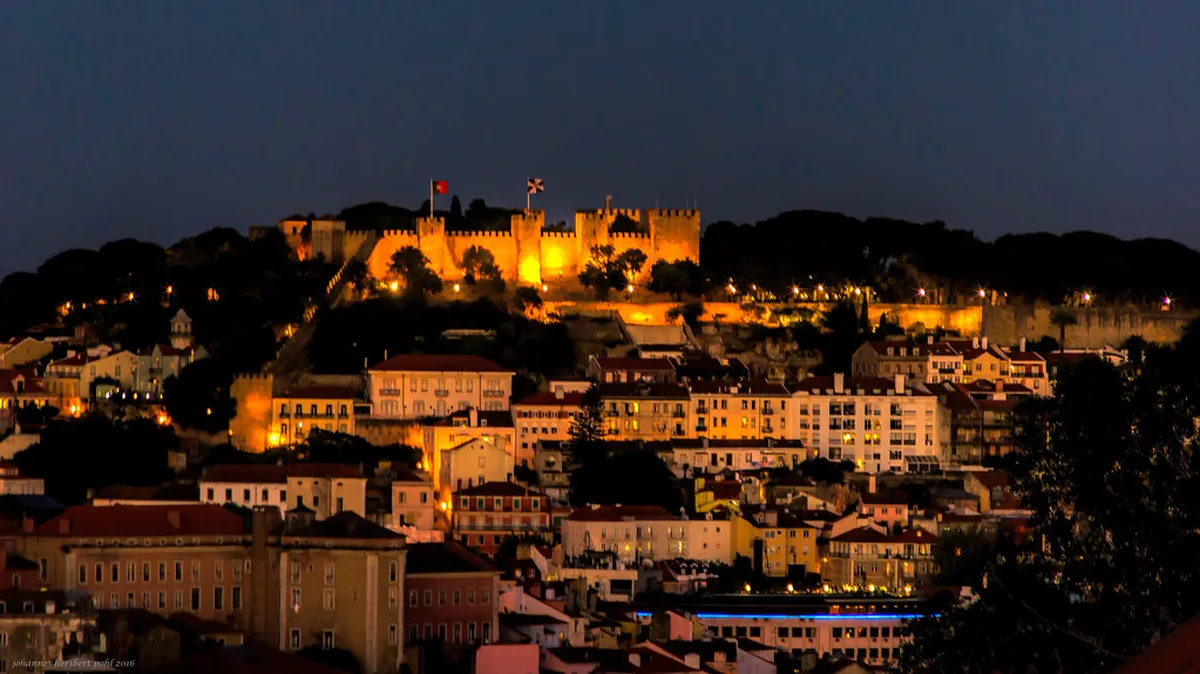
Mouraria is one of the clearest places to read Lisbon's layered history on foot.
The mouraria moorish quarter history begins with Islamic Lisbon, changes sharply after the 1147 Christian conquest, and later becomes tied to Fado, earthquake survival, migration, and urban renewal.
The district sits between Martim Moniz, Graça, Alfama, and the slopes below Castelo de São Jorge, so a short walk can move from medieval walls to street portraits of Fado singers and immigrant-run lunch rooms.
For 2026 visitors, the best way to understand Mouraria is to treat it as a lived-in neighborhood first and a historic site second.
The Islamic Roots: Mouraria’s 8th-Century Origins
Lisbon came under Islamic rule after the early 8th-century expansion into the Iberian Peninsula, and the city then developed as part of al-Andalus. The fortified hill above today's Baixa was known as Lishbuna, with its castle, defensive walls, houses, markets, and approaches to the Tagus. The name Mouraria came later, but the district's oldest identity is tied to this Islamic city.
The strongest visible clue is the street plan. Mouraria's tight lanes, stairways, and sudden small squares still follow a medieval logic shaped by slope, shade, defense, and neighborhood life rather than by the straight grids seen after 1755. That is why this area feels different from the rebuilt Baixa only a few minutes away.
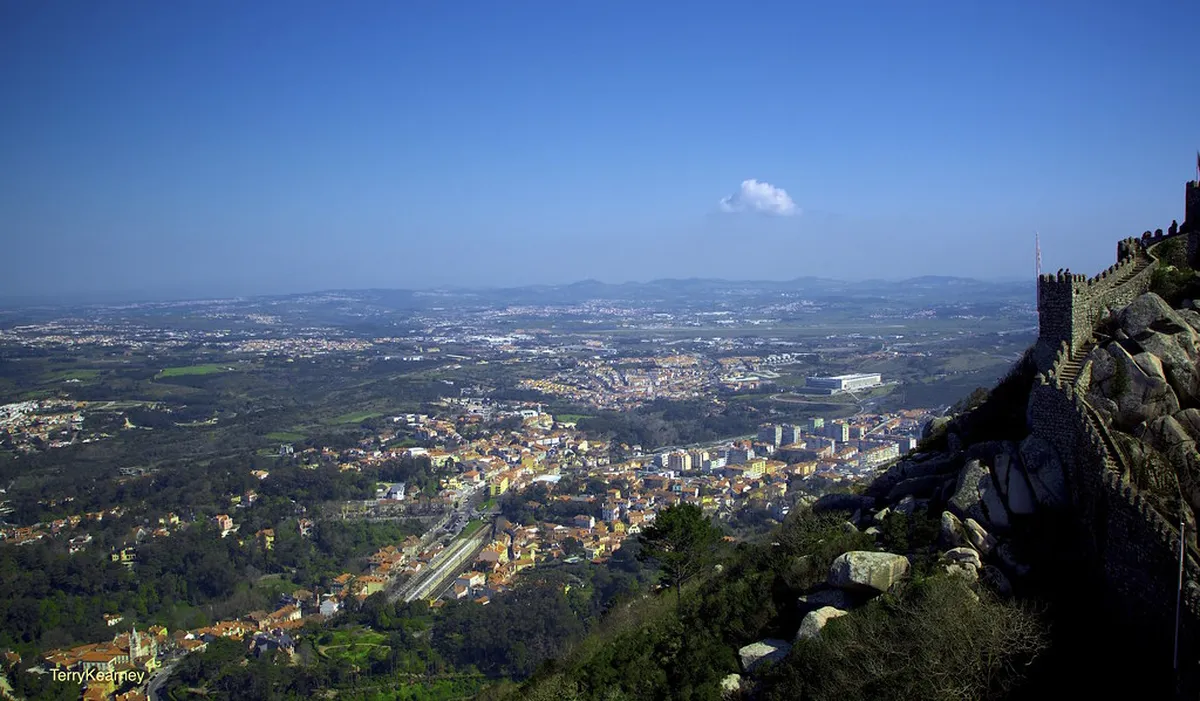
To understand the deeper setting, start with the Moorish walls of Lisbon history before climbing toward the castle. The Islamic wall system protected the citadel and framed the oldest parts of the city; later centuries reused its stone in churches, houses, shops, and retaining walls. Mouraria is not a preserved Islamic museum, but a neighborhood where medieval traces survive inside everyday buildings.
Post-Reconquest Life: The Moorish Ghetto After 1147
The decisive break came in 1147, when Afonso Henriques and crusader forces captured Lisbon after a long siege. Surviving Muslim residents were allowed or compelled to live outside the main Christian-held walls, north of the castle slope. That relocation created the Moorish quarter, or Mouraria, and fixed the district's name in Lisbon's memory.
This was not a romantic multicultural quarter in the modern sense. It was a segregated community shaped by Christian rule, legal restrictions, labor needs, and gradual pressure to convert or leave. Muslim craftsmen, builders, traders, and agricultural workers still mattered to the city's economy, but their lives were increasingly controlled by the new political order.
The district's position helps explain the pattern of Lisbon oldest neighborhoods facts today. Alfama, the castle, Graça, and Mouraria all preserve fragments of the pre-Pombaline city, but Mouraria carries the clearest memory of the post-conquest Muslim enclave. Its importance is historical as much as architectural: the streets mark where a defeated community continued to live, work, and reshape Lisbon after 1147.
The Birthplace of Fado: Maria Severa and Musical Heritage
Mouraria also claims one of Lisbon's strongest links to Fado. The music developed in the 19th century among working-class taverns, lodging houses, sailors, street life, and intimate night venues where songs of loss and longing made sense. Alfama also claims a major role, but Mouraria's strongest figure is Maria Severa.
Maria Severa Onofriana lived in Mouraria and became the first famous Fado singer before her early death in 1846. Her life entered legend because she connected popular street music with aristocratic attention, helping Fado move beyond the neighborhood without losing its association with marginal Lisbon. Around Rua do Capelão and Largo da Severa, the district still turns that memory into street art, plaques, and performance culture.
Fado in Mouraria is best approached quietly. Small venues and neighborhood gatherings do not feel like big stage productions, and the strongest moments often happen when the room stops talking. If you want the broader context, pair Mouraria with the museum and performance history covered in a walk through Alfama's older streets, then compare how each district tells the story.
Later singers extended Mouraria's reputation. Fernando Maurício became known as the King of Mouraria Fado, while Amália Rodrigues and Mariza are often mentioned in Lisbon's wider Fado geography. The district's value is not that every famous singer came from one lane, but that its social world made Fado feel local, emotional, and public at the same time.
Surviving the 1755 Earthquake: Why Mouraria Still Stands
The 1755 earthquake, tsunami, and fires destroyed large parts of Lisbon, especially the lower commercial city. Mouraria survived more visibly because it sits on the hill north of the castle and away from the most exposed riverfront zones. Its rockier, higher ground and dense medieval layout helped preserve sections of the older urban fabric.
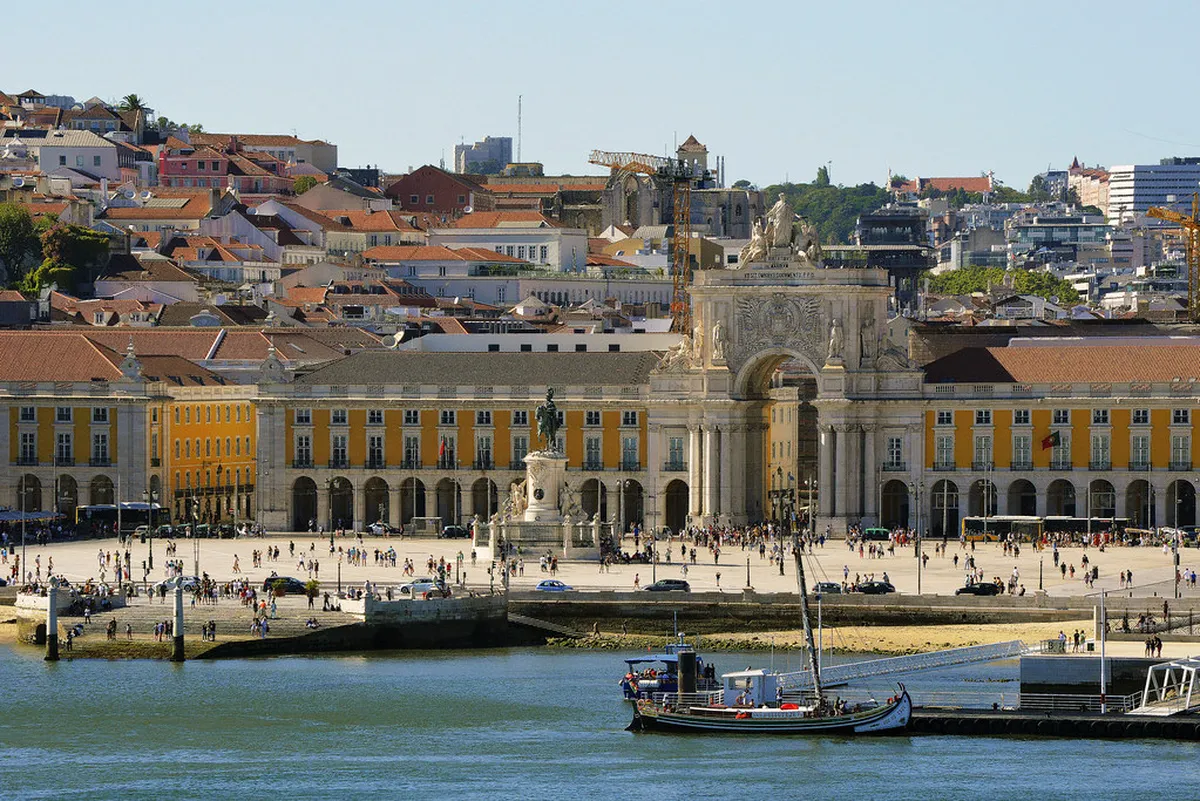
This survival explains why the quarter still feels irregular. Baixa was rebuilt with broad Pombaline streets, standardized blocks, and a new earthquake-conscious plan; Mouraria kept stairs, bends, small courtyards, and older building lines. That contrast is one of the most useful ways to read the Lisbon 1755 earthquake guide while standing in the city itself.
Do not treat every leaning wall as untouched medieval fabric. Buildings have been repaired, extended, divided, and reinforced across centuries. What survives is the older pattern: tight parcels, sloped lanes, small squares, and a street rhythm that predates the rational reconstruction below.
In 2026, preservation work in Mouraria still has to balance safety with lived use. Residents need stable housing, not just scenic facades, and visitors should remember that many picturesque stairs and patios are daily routes to front doors. The quarter's earthquake survival matters because it protected a neighborhood structure, not simply because it left attractive ruins.
Modern Multiculturalism: From 2009 Renewal to Today
Modern Mouraria is not only an old Moorish quarter. Since the 2009 renewal period, it has become one of Lisbon's clearest multicultural districts, with communities linked to Bangladesh, India, Pakistan, China, Mozambique, Cape Verde, and other countries. The area around Martim Moniz makes that change especially visible through grocery shops, cafes, languages, and street life.
The safety story needs context. Before redevelopment, Mouraria had a rougher reputation among many Lisbon residents, and some buildings were neglected. Public investment, cultural projects, renovated squares, and stronger visitor traffic have made the district easier to explore, though it remains more residential and less polished than Alfama.
The discreet immigrant dining scene is one reason food-focused visitors seek Mouraria. Some places operate from small rooms, association spaces, or semi-private settings rather than obvious restaurant fronts. Look for handwritten menus, lunch-hour groups, open doors with tables visible, or recommendations from nearby shopkeepers, then ask politely before entering and accept that a place may be private, full, or not serving that day.
Respect is the rule. Do not photograph diners through windows, do not treat a home-based meal as a spectacle, and bring cash in small notes because informal places may not take cards. The reward is not just a cheap meal; it is a clearer sense of how modern Mouraria keeps absorbing new communities while holding onto older Lisbon habits.
Where to Spot the Moorish Walls Today
The most useful wall search begins at Castelo de São Jorge, where excavated Islamic houses, patios, and archaeological remains help establish the scale of the old fortified city. From there, follow the slope toward Graça, Alfama, and the streets around the castle instead of expecting one continuous exposed wall. Lisbon reused its defensive stone so thoroughly that the best evidence often appears as a fragment inside a later structure.
The British Historical Society of Portugal notes several specific clues: the Porta de Alfofa area near Rua do Santiago, the Porta do Ferro near the Sé, and the marked trace of the old Porta da Alfama. Casa dos Bicos, down by Campo das Cebolas, also matters because the 1147 assault approached the wall from the riverfront side. These places are outside Mouraria's tightest lanes, but they explain the defensive system that shaped the quarter's birth.
Inside Mouraria, use the walls as a treasure hunt rather than a checklist. Look at retaining walls, building bases, shop interiors, and sudden thick stone sections where modern plaster gives way to older masonry. If a doorway opens into a courtyard, stay outside unless invited; the most interesting fragments are often in private residential space.
Key Historical Sites: Castelo de São Jorge to Largo da Achada
Start with Castelo de São Jorge medieval history, because the castle explains why this hill mattered to Romans, Visigoths, Muslims, and Christians. Its viewpoint also helps you understand Mouraria's position north of the old citadel and Alfama's descent toward the river. Without that geography, the district can feel like a maze instead of a defensive and social landscape.
Largo da Achada is one of the best small stops inside Mouraria. The square sits behind the Church of São Cristóvão and near old houses that show how much pre-1755 Lisbon survives here. It is also a good place to pause without blocking narrow lanes or treating residential doorways as viewpoints.
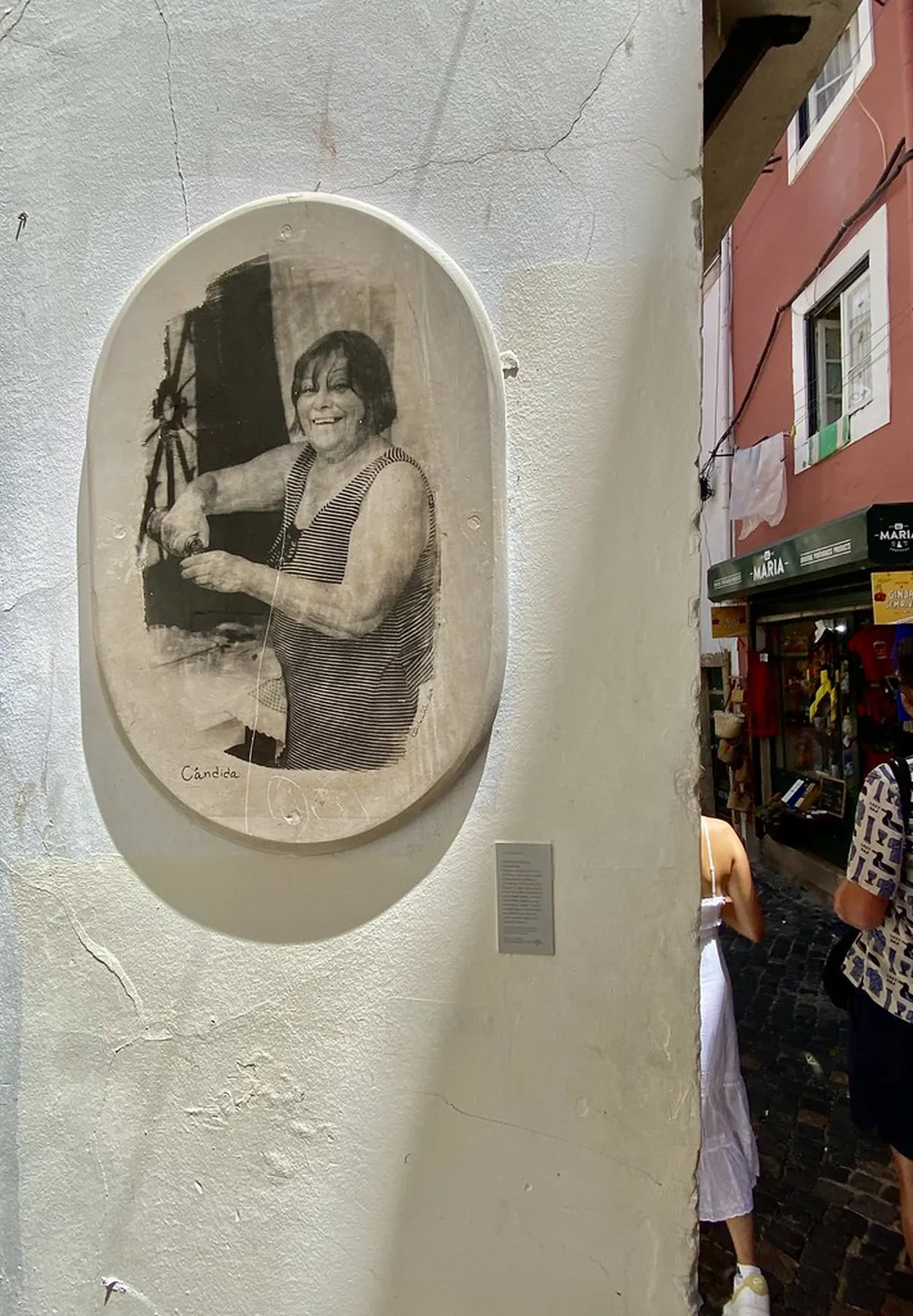
Rua do Capelão and Largo da Severa connect the history of Fado to the neighborhood's walking route. Beco das Farinhas is known for Camilla Watson's photographic portraits of local residents, which turn the lane into an open-air memory project. These sites keep the article's history from becoming abstract because they attach names and faces to the streets.
For a broader loop, link Mouraria with Graça above and Alfama below. A descent from Graça hilltop history through Mouraria toward the castle edge gives the most natural sense of slope, views, and neighborhood change. Casa dos Bicos and the Sé then connect the old wall story to the riverfront and Christian Lisbon.
Practical Tips for Visiting Lisbon’s Oldest Quarter
Mouraria is compact, but the slopes are real. Wear shoes with grip, carry water in warm months, and expect stairs rather than smooth pavements. If mobility is a concern, approach from Martim Moniz for the lower streets or use the Baixa-to-castle elevators before descending, because climbing from the bottom can be tiring.
Choose Mouraria when you want multicultural Lisbon, Fado memory, street art, and a less polished local feel. Choose Alfama oldest neighborhood history when you want more classic viewpoints, the Fado Museum, easier souvenir browsing, and a route that feels more established for first-time visitors. The best half-day combines both, with Mouraria first and Alfama after the castle or Sé.
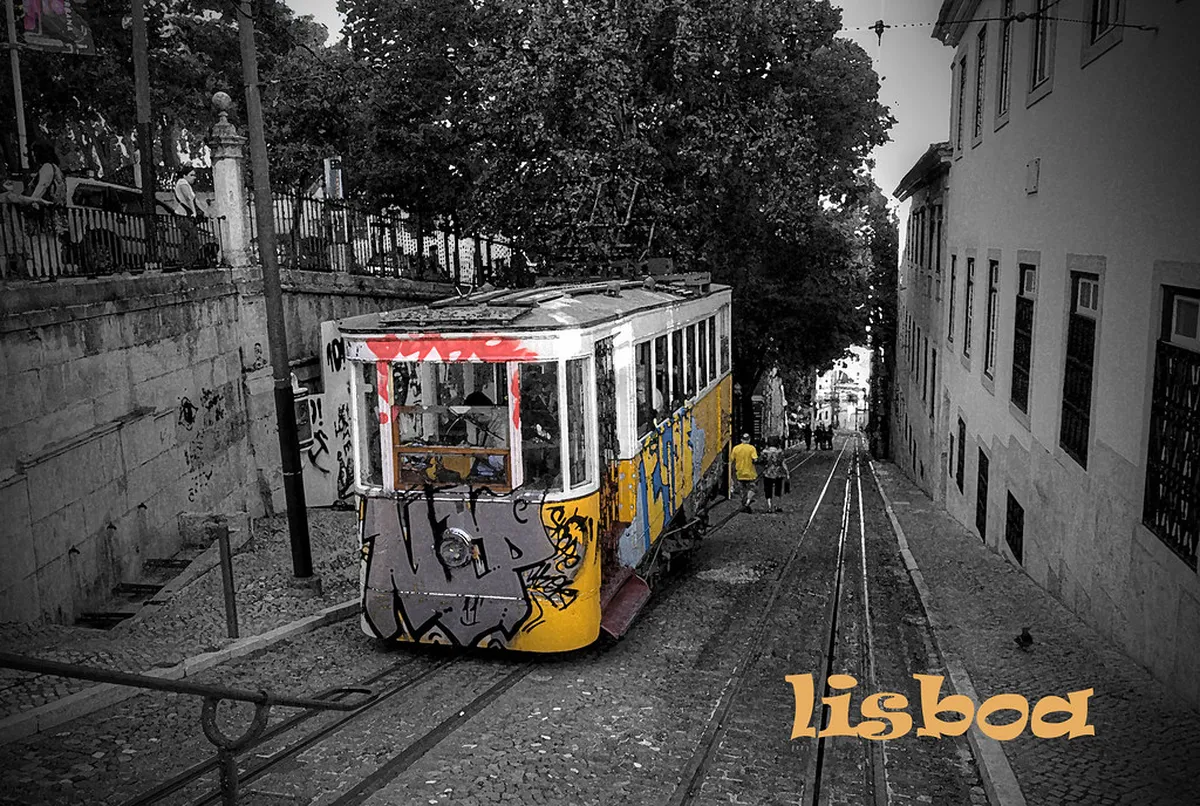
Safety in 2026 is generally fine in the main visitor areas, especially during the day and early evening. Use normal Lisbon precautions: keep phones and wallets secure on Tram 28 and around crowded viewpoints, avoid empty stairways late at night, and do not follow strangers into private buildings for a promised restaurant or performance. The district is welcoming, but it is still a residential neighborhood with uneven foot traffic.
- Use Martim Moniz metro on the green line for the easiest lower entrance into Mouraria.
- Visit late afternoon for better light, then stay for dinner only if you already know where you are going.
- For Fado, book a small venue in advance or ask locally rather than assuming every doorway with music is open to visitors.
- Bring cash for small cafes, informal meals, and old-school tascas.
- Keep internal courtyards, laundry areas, and residential stairways private unless clearly signed as public.
Frequently Asked Questions
Why is Mouraria called the Moorish Quarter?
Mouraria earned its name after the 1147 Reconquest when the city's Muslim population was forced to live in this specific area. This created a Moorish ghetto that preserved Islamic culture for centuries outside the main city walls. You can explore this legacy further in our Lisbon oldest neighborhoods guide.
Is Mouraria safe for tourists today?
Yes, the neighborhood has seen major safety improvements since a 2009 urban renewal project. It is now a vibrant multicultural hub popular with travelers seeking an authentic experience. Standard city precautions apply when exploring the narrower alleys at night.
Why did Mouraria survive the 1755 earthquake?
The district sits on a solid limestone foundation that provided stability during the seismic tremors. This geological advantage protected the medieval structures while the lower, sandy areas of the city were destroyed. It remains one of the few places to see pre-1755 architecture.
Who is Maria Severa and why is she important?
Maria Severa was a legendary 19th-century singer who lived in Mouraria and pioneered the Fado musical style. She is considered the first 'fadista' and her tragic life story remains a central theme in Portuguese music. Her former home is a key landmark in the quarter.
Exploring the mouraria moorish quarter history offers a profound look into the soul of Lisbon.
The neighborhood successfully balances its ancient Islamic roots with a modern, multicultural identity.
Whether you come for the Fado, the food, or the fortifications, the area provides an unforgettable experience.
Plan your visit today to walk through centuries of history within these resilient and colorful streets.