
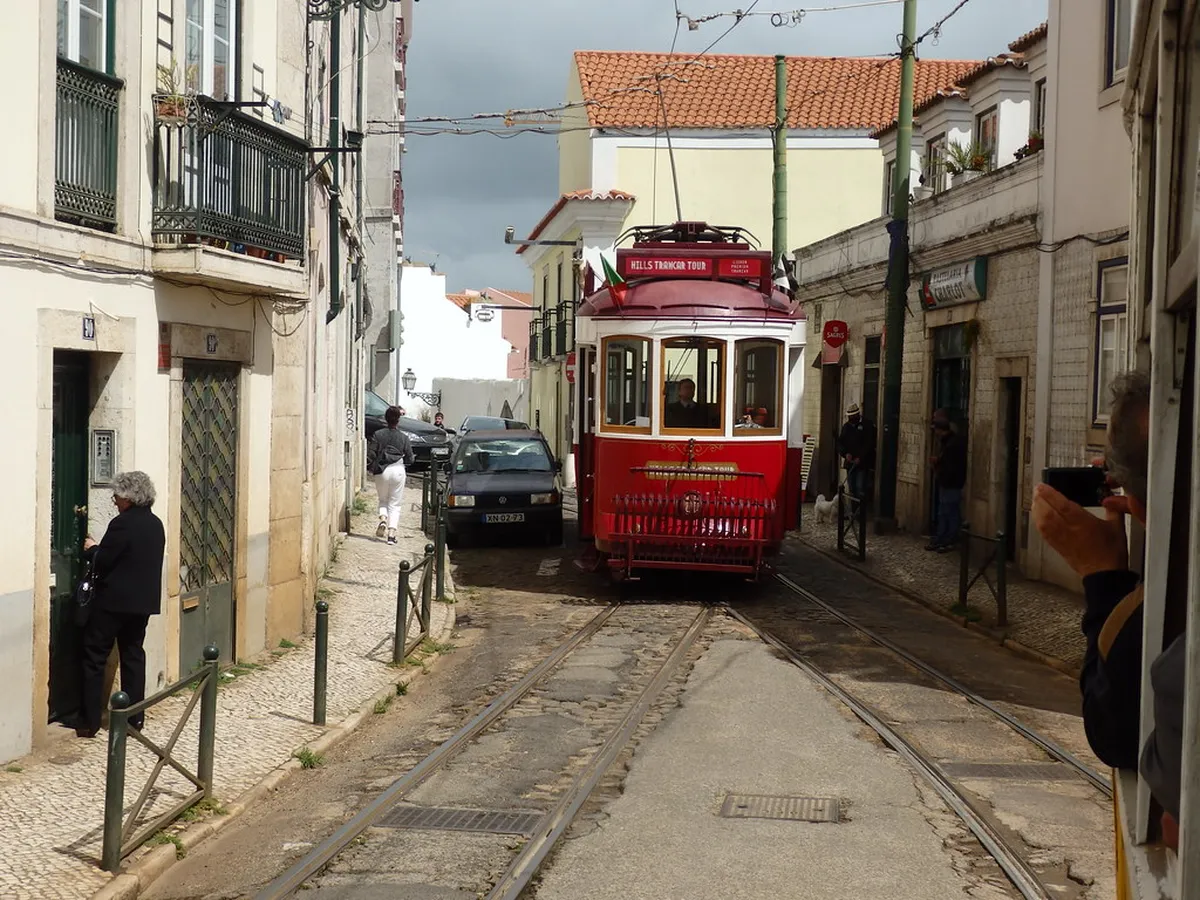
Lisbon tram tickets are simple once you know the difference between buying on board, loading a Navegante Ocasional card, and using Zapping credit. The expensive mistake is stepping onto a crowded yellow tram and paying the driver. In 2026, the on-board tram fare is **3.10€**, while the pre-paid Carris/Metro fare is **1.80€** and Zapping is usually cheaper again.
This guide focuses on the ticket decisions visitors actually face: where to buy the card, which fare to load, when the 24-hour pass pays off, and how to ride the **E28** without joining the longest queues. The same ticket rules apply to the old Remodelado trams in Alfama and the modern **E15** to Belém. Buy before boarding when you can, validate every ride, and keep one card per person.
Overview of Lisbon's Tram Network
Lisbon has two tram experiences that use the same public transport fare system. The small yellow Remodelado trams run on tight, steep streets where larger vehicles cannot turn safely. These are the trams most visitors picture when they plan the historic Tram 28 Lisbon ride through Alfama, Graça, Baixa, Chiado, Estrela, and Campo de Ourique.
The modern Articulado trams are longer, roomier, and mostly limited to flatter routes. The main example is **E15**, which connects central Lisbon with Cais do Sodré, Alcântara, and Belém. Both tram types are run by Carris, so your Navegante Ocasional card, Zapping credit, and 24-hour public transport pass work across the network.
Lisbon Tram Fares and Ticket Pricing (2026 Update)
The most expensive way to ride is buying a ticket after you board. A single on-board tram fare costs **3.10€** in 2026, and on the older Remodelado cars you normally pay the driver in cash. On-board payment is useful in an emergency, but it is slow, crowded, and almost twice the price of pre-paid travel.
The better baseline is a Navegante Ocasional card, which costs **0.50€** before you load any fare. A Carris/Metro single ticket loaded onto that card costs **1.80€** and is valid for 60 minutes after first validation, except for back-to-back Metro entries. Zapping credit usually deducts **1.61€** for a Carris tram or bus journey and is the best value for occasional rides.
For a full sightseeing day, the 24-hour Carris/Metro pass costs **6.80€** plus the card fee if you do not already have one. It covers trams, buses, the Metro, funiculars, and the Santa Justa Lift. The pass starts from the first validation, so a ticket activated at 09:30 remains valid until 09:29 the next morning.
- Choose on-board cash only if you are caught without a card and have small notes or coins.
- Choose a **1.80€** pre-paid single if you need one straightforward Carris or Metro trip.
- Choose Zapping if you will mix trams, buses, Metro, ferries, or trains across more than one day.
- Choose the 24-hour pass if you plan three or more tram, bus, Metro, lift, or funicular rides in one day.
| Ticket Type | Price | Card Fee | Notes |
|---|---|---|---|
| On-board single (cash) | 3.10€ | — | Pay driver in cash; most expensive option |
| Pre-paid single (Carris/Metro) | 1.80€ | 0.50€ (one-off) | Valid 60 min after first validation; loaded onto Navegante card |
| Zapping credit (Carris tram/bus) | 1.61€ per journey | 0.50€ (one-off) | Stored credit; works across trams, buses, Metro, ferries |
| 24-hour Carris/Metro pass | 6.80€ | 0.50€ (if no card) | Covers trams, buses, Metro, funiculars, Santa Justa Lift |
| Lisboa Card (transport + museums) | Varies by duration | — | Worth it only when museum admissions are part of the plan |
Where to Buy Lisbon Tram Tickets: A Step-by-Step Guide
Most street tram stops do not have ticket machines, so buy before you reach the platform. The easiest place is any Metro station, including Baixa-Chiado, Rossio, Martim Moniz, Restauradores, Cais do Sodré, and Oriente. Machines have English menus and usually accept coins, notes, Visa, and Mastercard.
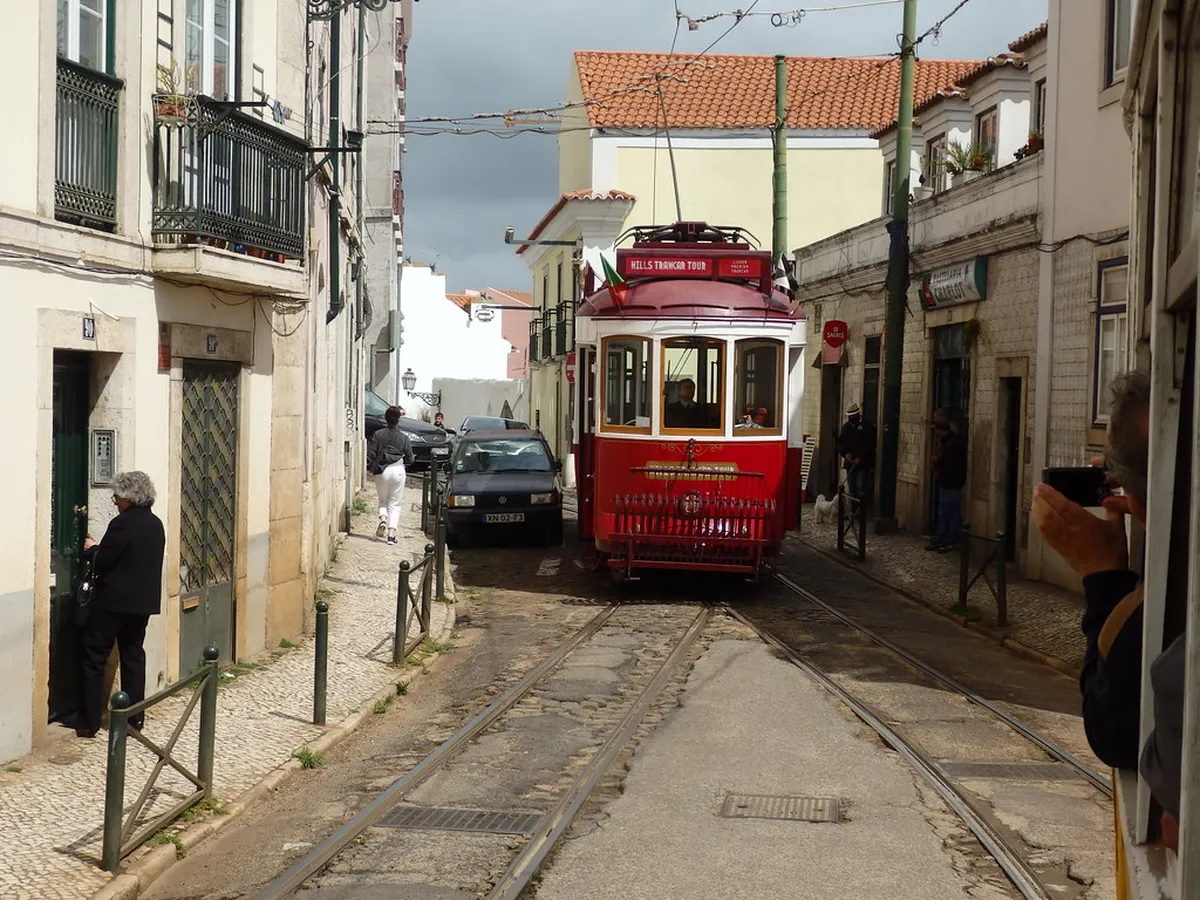
Start by selecting a new Navegante Ocasional card if you do not already have one. Add either a Carris/Metro single, the 24-hour Carris/Metro pass, or Zapping credit. Keep the receipt until the card validates correctly, because paper cards can bend or fail if they have been kept loose in a pocket.
If you are boarding **E28** at Martim Moniz, buy the ticket somewhere else first. The stop itself is busy, and queues grow quickly after cruise passengers and walking tours arrive. Praça da Figueira, Rossio, and Baixa-Chiado are better places to sort the card before walking to the tram.
- Buy one Navegante Ocasional card per traveler for **0.50€**.
- Load the fare type you want; do not mix a 24-hour pass and Zapping on the same card for the same day.
- Tap the yellow validator as soon as you board, then wait for the green light and beep.
- Top up at Metro stations, train stations, Carris points, Payshop agents, and some kiosks.
The 24-Hour Public Transport Pass: Is It Worth It?
The 24-hour pass is worth it when Lisbon becomes a transport-heavy day rather than a single tram ride. Three on-board tram tickets would cost **9.30€**, while the pass costs **6.80€** once you have the Navegante card. It becomes especially strong if your plan includes **E28**, the **E15** to Belém, a Metro trip, and one of the funiculars.
The hidden value is that the pass covers expensive short attractions that are still part of the Carris network. The Santa Justa Lift and funiculars can cost more than visitors expect when bought separately. With the 24-hour pass, you can use them without paying another fare each time.
The pass is less useful if you only want one scenic ride and will spend the rest of the day walking. In that case, Zapping or a single pre-paid ticket is cleaner. The Lisboa Card is a separate decision: use it when museum admissions and monument entries matter, not just for tram transport.
Understanding the Navegante Ocasional Card and Zapping
The Navegante Ocasional is the reusable paper card that stores your fare. It costs **0.50€**, is valid for one year, and must be used by one person only. A couple needs two cards; a family of four needs four cards. Inspectors check individual validations, not whether one person in the group has enough balance.
Zapping is flexible credit loaded onto that card. On Carris trams and buses, it deducts **1.61€** for a journey within the operator's validity window. It also works on the Metro, CP urban trains, and ferries, but each operator has its own deduction and transfer rules. Changing from tram to Metro can trigger another fare, so Zapping is best understood as stored money rather than an unlimited transfer ticket.
The card fee is small, but the wrong loading choice can be annoying. A card loaded with a specific 24-hour pass cannot also behave like a Zapping wallet until that product is used or replaced. If you are unsure, buy one card for the day pass and a separate card for Zapping only when your itinerary is complex.
The Navegante Ocasional card costs just 0.50€ and is valid for one year — if you are staying multiple days or returning to Lisbon, it is worth keeping the card and topping up Zapping credit rather than buying a new card each time.
Validating Tickets and Using Contactless Payment
Validation is the step visitors most often miss. On older Remodelado trams such as **E28**, board at the front and look for the yellow validator close to the driver. Tap the card flat against the reader, wait for a green light and beep, then move down the aisle quickly so the queue can board.
On modern Articulado trams such as **E15**, validators are usually placed near more than one door, and some vehicles have card payment terminals. Do not rely on contactless bank card payment for the old yellow trams, because availability varies by vehicle and route. The Metro is more contactless-friendly, but a physical Navegante card remains the safer choice for historic tram rides.
If the validator shows red, your card may be empty, loaded with the wrong fare product, or damaged. Try another validator if the tram has one, but do not ignore the failed tap. Inspectors can board between stops, and "the machine was confusing" is not a reliable defense.
The Historic E28 Tram: Route Highlights and Tips
The **E28** is the classic Lisbon tram route because it links Martim Moniz, Graça, Portas do Sol, Sé Cathedral, Baixa, Chiado, São Bento, Estrela, Campo de Ourique, and Prazeres. It is public transport, not a tourist-only ride, but the route functions like a slow city tour. The tight turns and steep Alfama streets are exactly why the small Remodelado cars still operate here.
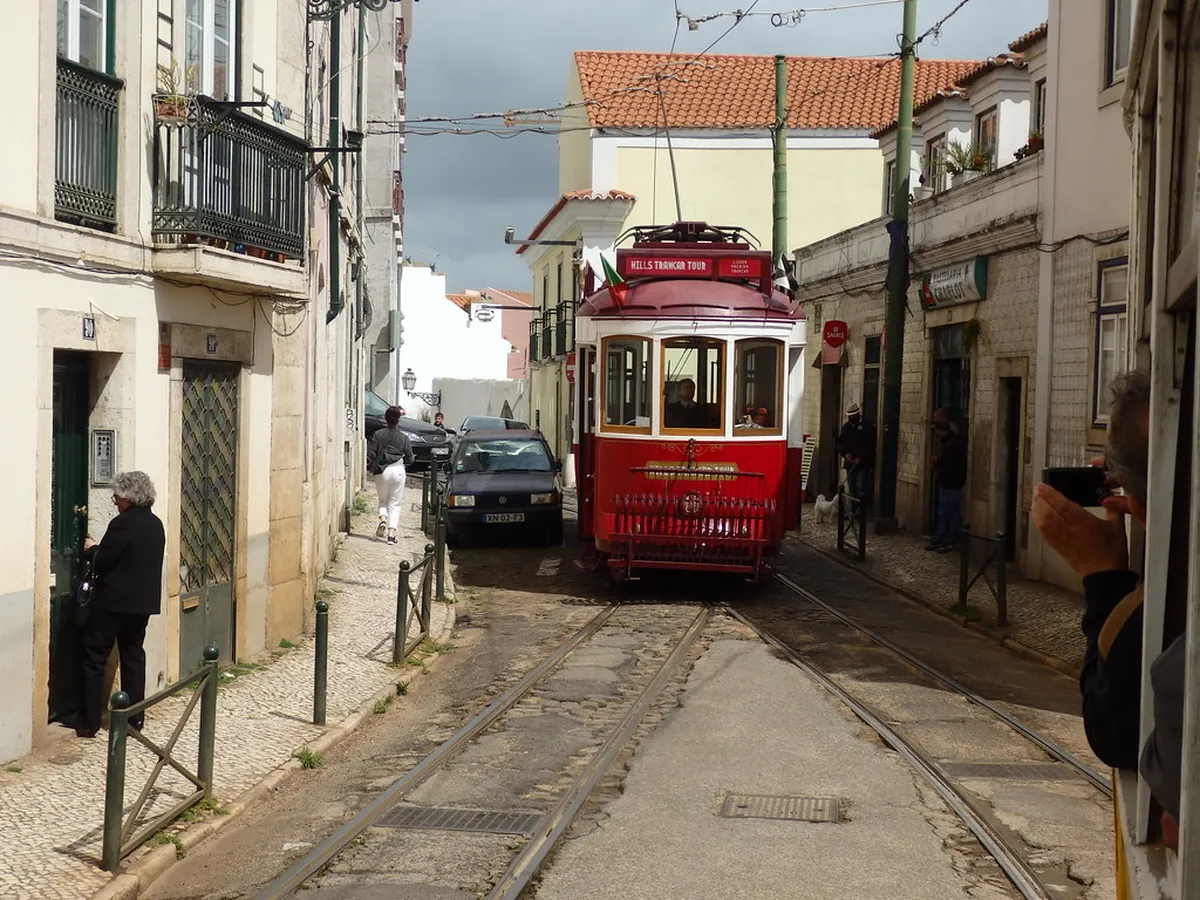
For the full ride, board at either end and stay on until the terminus. Martim Moniz is famous but often has the longest queue, especially from late morning to mid-afternoon. Campo Ourique and Prazeres can be calmer for the return direction, and the western section between Chiado, Estrela, and Prazeres is usually less packed than the Alfama stretch.
Pro Tip: if your goal is getting a seat rather than photographing the first stop, consider boarding after exploring Graça on foot. Walking uphill first and riding down can be more comfortable than standing in the Martim Moniz queue. For route planning, pair this ticket guide with the Tram 28 Lisbon route map before choosing where to board.
Alternative Tram Routes to the Crowded E28
If you mainly want the old yellow tram experience, **E28** is not your only choice. **E12** loops through Baixa, Mouraria, and Alfama, covering some of the most atmospheric streets without committing to the full cross-city ride. It is useful when the Martim Moniz queue for **E28** looks unreasonable.
**E24** is the quieter Remodelado route from Praça Luís de Camões toward Campolide. It is not as famous, but it still gives you polished wooden benches, narrow streets, and a traditional tram ride with a better chance of sitting down. For many visitors comparing Tram 28 vs other Lisbon trams, **E24** is the more relaxed answer.
**E25** is more local and less useful for first-time sightseeing, but it can help around Estrela, Lapa, and Campo de Ourique. The key is to choose the route for your goal. Use **E28** for the famous cross-city historic ride, **E12** for a shorter Alfama loop, **E24** for a calmer vintage tram, and **E15** for Belém.
Modern Tram E15: Getting to the Belém District
The **E15** is the practical tram for Belém, not the romantic one. It uses modern Articulado vehicles on flatter streets from Praça da Figueira and central Lisbon toward Cais do Sodré, Alcântara, and Algés. Use it for Jerónimos Monastery, the riverfront, Belém Tower, and MAAT.
Your Lisbon tram ticket works the same way on **E15** as it does on **E28**. The difference is the boarding environment: more doors, more passengers, and a higher chance of crowding around Cais do Sodré. Validate promptly and keep valuables close, especially when the tram fills with visitors heading west.
If the **E15** queue is long, the Cascais-line train from Cais do Sodré to Belém can be faster. It is not a Carris tram, so check whether your fare product covers the train before boarding. Zapping can be useful here because it works across more operators, even when each operator deducts its own fare.
Tram Timetables, Journey Times, and Frequency
Lisbon tram timetables are useful as a rough guide, but real-time boards are better. Traffic, delivery vans, parked cars, and staffing gaps can interrupt the old tram routes. It is common to wait longer than expected and then see two trams arrive close together.
The **E28** generally runs from early morning until late evening, with higher frequency through the main daytime period. A full end-to-end ride can take around 45 to 60 minutes depending on congestion and boarding delays. For stop-by-stop planning, use the Tram 28 Lisbon schedule and times guide rather than relying only on a printed timetable.
Major stops such as Martim Moniz, Praça da Figueira, Cais do Sodré, and Belém are more likely to have digital departure information. Smaller hill stops may only have route signs. Build slack into your plan if you have timed museum entry, a dinner reservation, or a cruise departure.
Safety and Practical Tips: Avoiding Pickpockets
Pickpocket risk is real on the most crowded tram routes, especially **E28** and **E15**. The risk is highest while boarding, when people press together and visitors are looking at ticket validators, cameras, or maps. Keep your phone and wallet out of back pockets, wear backpacks on your front, and close crossbody bags before the tram arrives.
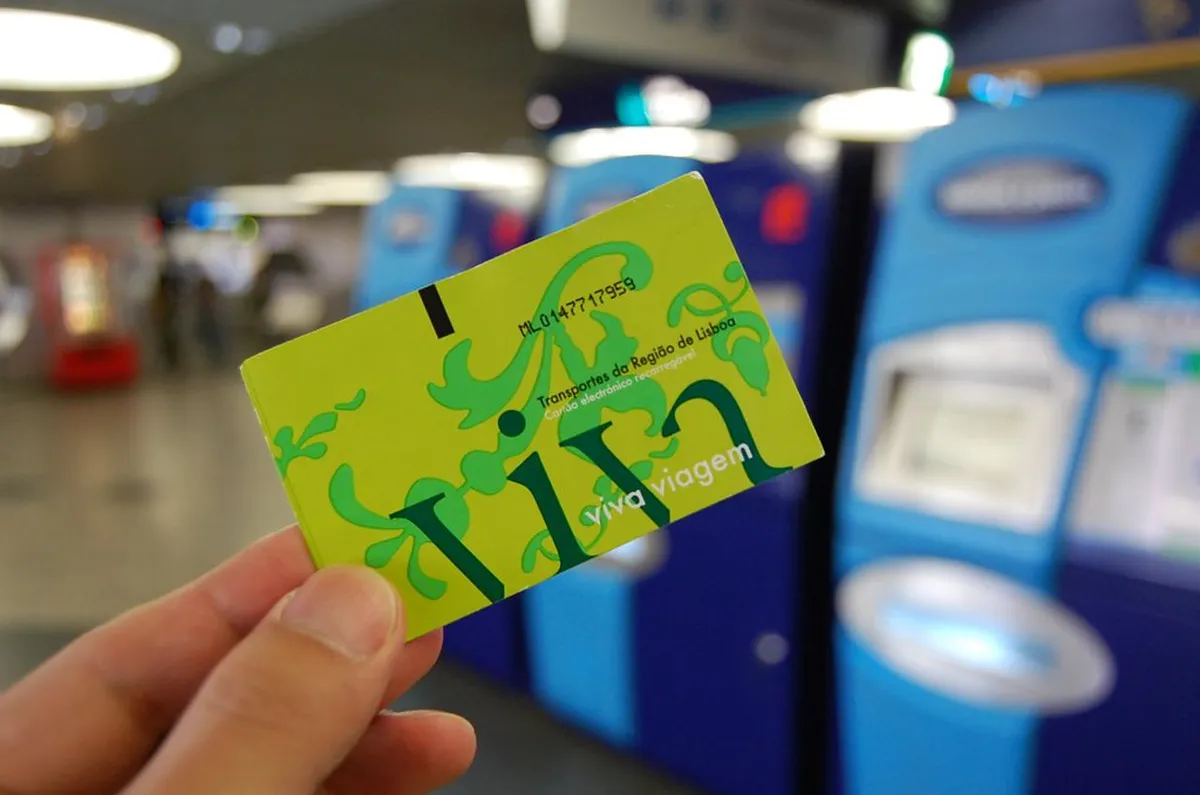
Professional thieves often work near doors because they can step off quickly. Be extra alert at Martim Moniz, Portas do Sol, Sé, Rua da Conceição, Cais do Sodré, and Belém. The Tram 28 pickpocket safety tips are worth reading before you ride during peak hours.
The E28 is the most pickpocket-affected tram in Lisbon. The highest-risk moments are at boarding — keep your phone and wallet secured before the tram arrives, not after you are already in the crowd.
Comfort matters too. Remodelado trams brake sharply, have narrow aisles, and can become hot when packed. Hold a pole if standing, let locals exit before pushing forward, and avoid blocking the front door after validation. The tram is part of daily transport for residents, even when the route feels like an attraction.
Frequently Asked Questions
How much is a single tram ticket in Lisbon?
A single ticket bought from the driver costs **3.10€** / ~$3.40 in cash. Using a pre-paid Navegante card reduces the price to **1.80€** / ~$2.00 per journey. Zapping credit offers the lowest rate at **1.61€** / ~$1.75.
Can I pay for the Lisbon tram with a credit card?
You cannot pay with a credit card directly on the vintage yellow trams. Modern **E15** trams may have machines, but it is unreliable. Always buy your tickets at a Metro station machine first.
Where can I buy a 24-hour Lisbon travel pass?
The 24-hour pass is available at any Metropolitano de Lisboa ticket machine or ticket office. It costs **6.80€** / ~$7.40 plus the initial card fee. This pass is valid for all trams, buses, and lifts.
The cheapest Lisbon tram ticket is rarely the one bought on board. For one or two rides, use a Navegante Ocasional card with Zapping or a pre-paid single fare. For a full sightseeing day, choose the 24-hour Carris/Metro pass and use it across trams, buses, the Metro, lifts, and funiculars.
Buy before you reach the tram stop, validate as soon as you board, and choose your route based on crowd tolerance. **E28** is the classic ride, **E12** and **E24** are calmer vintage alternatives, and **E15** is the practical route to Belém. For the smoothest experience, pair the right fare with the best time to ride Tram 28 Lisbon before setting out.