The absolute best time to ride Tram 28 is before 09:00. Board at that hour and you will likely find a window seat with no queue. Updated February 2026 from a late-September 2026 trip through the Portuguese capital.
For the best overall visit, target mid-May to early June or mid-September to mid-October. Temperatures are mild, queues are manageable, and the light over the Alfama district is excellent for photos.
Our late-May trip hit the Nortada wind on three of seven days — pack a light windbreaker. This Atlantic breeze can make the open tram windows feel sharp once the sun drops.
When Is the Best Time of Day to Ride Tram 28?
Most tourists start late, so by 10:00 the trams are packed. Boarding before 09:00 almost guarantees a seat. Check the tram 28 schedule and times to plan your early departure — the first trams leave Martim Moniz at 06:00.
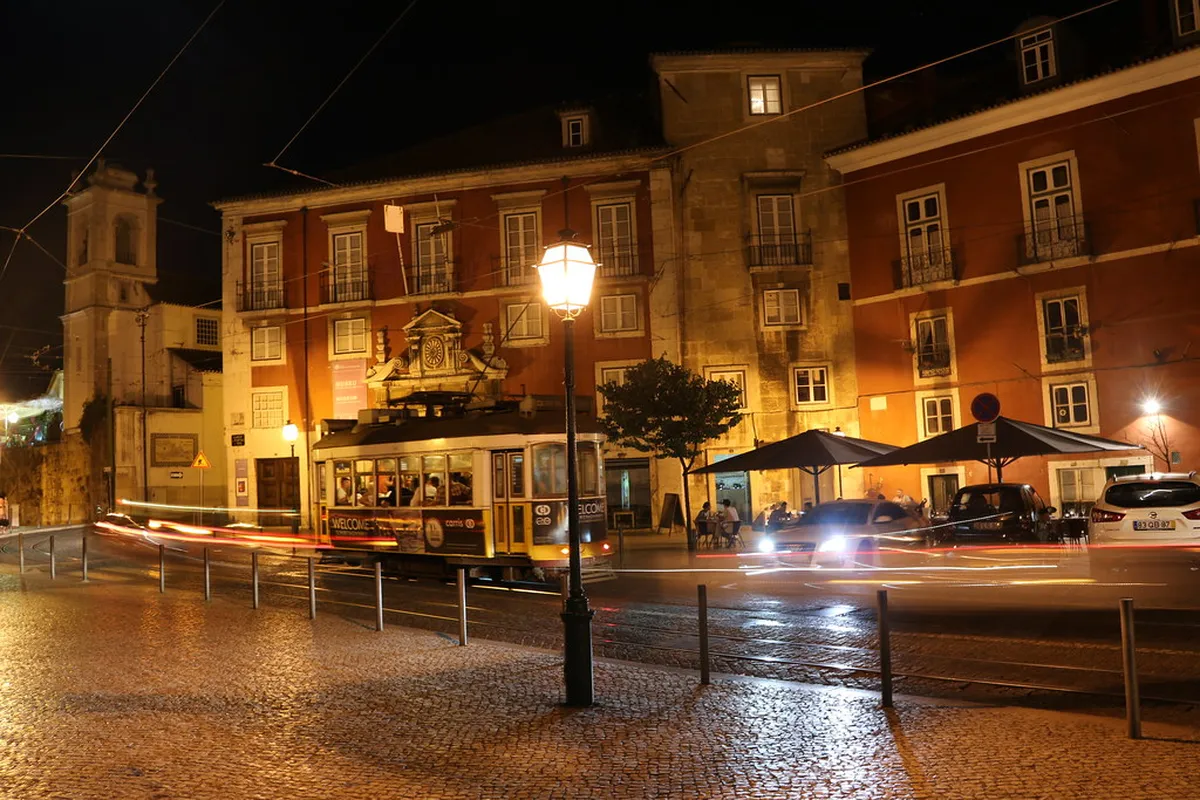
Evening rides after 19:00 are the second-best window. Commuter pressure fades and the tourist groups head to dinner, leaving the carriages noticeably emptier. The Tagus River catches warm light at this hour.
Avoid 11:00–18:00 if possible. Queues at Martim Moniz can stretch past 30 minutes during this window, and you will likely spend the entire journey standing in a crowded carriage. Local commuter spikes hit around 08:00 and 17:30 — give those windows a miss too.
Boarding at Campo de Ourique heading east at around 08:00 lets you start on an empty tram in the opposite direction from most tourists — you still pass every landmark on the route and can take a window seat on the right side for the best Alfama views.
| Time of Day | Crowd Level | Wait at Martim Moniz | Notes |
|---|---|---|---|
| Before 09:00 | Low | Minimal / no queue | Best window; seats almost guaranteed from the terminal |
| 08:00–08:30 | Moderate | Short queue | Local commuter spike — board eastbound from Campo de Ourique instead |
| 09:00–11:00 | Building | 10–20 min | Tourist groups start arriving; standing room likely by 10:00 |
| 11:00–18:00 | Very high | 30+ min | Avoid; packed carriages, limited boarding at mid-route stops |
| 17:30–18:30 | High | 20–30 min | Second commuter spike — overlap with tourist peak |
| After 19:00 | Low–Moderate | Minimal | Second-best window; tourist groups head to dinner, warm evening light on the Tagus |
The Remodelado Trams: A Moving Piece of History
The yellow carriages on the 28E are Remodelado trams, dating from the 1930s. In any other city they would be museum pieces. In Lisbon they run daily, because no modern tram can handle the route.
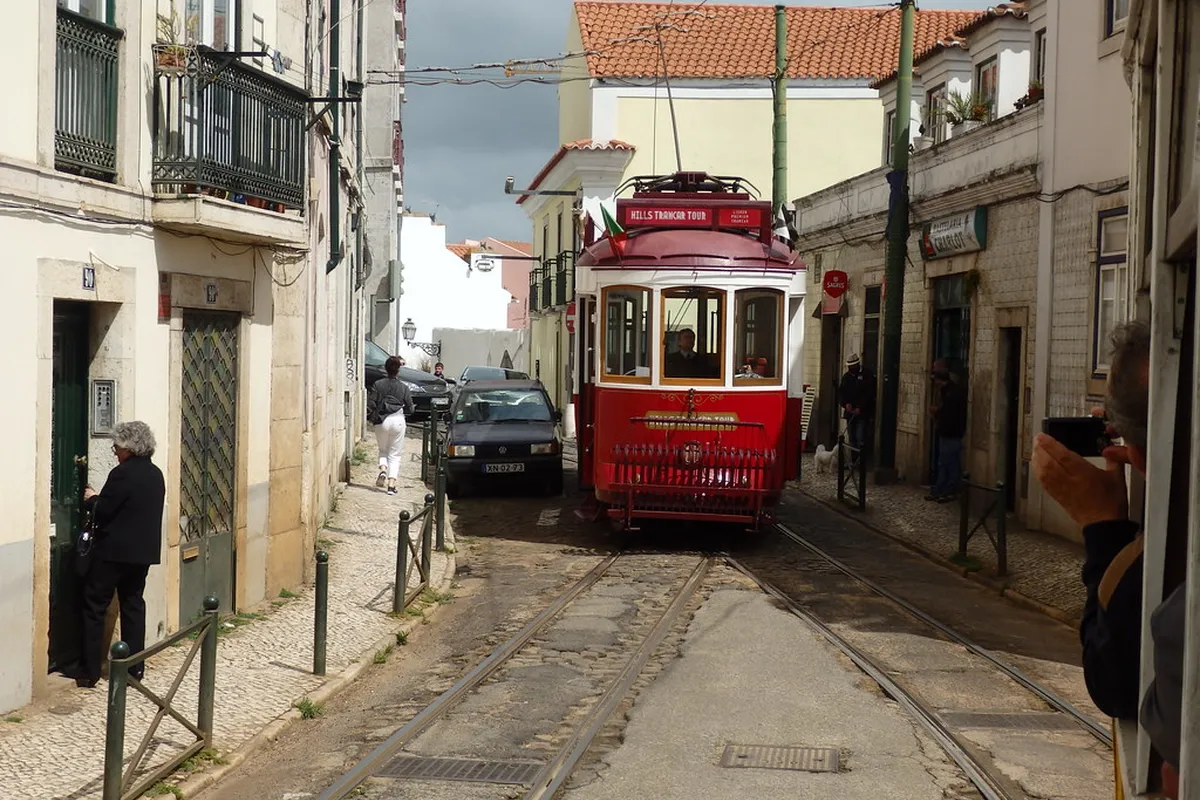
The E28 climbs gradients of over 13% through streets barely wider than the tram itself. Modern low-floor trams — such as those on the E15 to Belém — cannot negotiate these turns. The Remodelado's shorter wheelbase and tight turning radius make it the only viable vehicle for Alfama.
The carriages were upgraded in the 1990s with improved brakes and electrics — hence "Remodelado" (re-modelled) — but the polished wood benches, brass dials, and lever-operated doors are original. The bell is still the driver's primary warning signal on blind corners.
The E28 Tram Route: Key Stops and Sights
The full route runs Martim Moniz – Graça – Portas do Sol – Sé Cathedral – Rua Conceição – Praça Luís de Camões – São Bento – Estrela – Campo de Ourique – Prazeres. End to end covers roughly 7 km in 40–50 minutes, depending on traffic.
- Graça — a genuinely local district; the Miradouro da Graça viewpoint is a five-minute walk from the stop.
- Portas do Sol — the most scenic Alfama plaza, with a wide view over the rooftops to the Tejo. The Museu de Artes Decorativas is here too.
- Sé Cathedral — classic photo stop; the tram passes within metres of the 12th-century facade. The stop is also the highest-pickpocket-risk point on the route.
- Praça Luís de Camões — the heart of Chiado, where the E12 loop terminates. Useful transfer point if you want to walk into Bairro Alto.
- Estrela — the Basílica da Estrela's Baroque dome fills the view as the tram pulls in. The Jardim da Estrela opposite is a good lunch stop.
- Campo de Ourique / Prazeres — the western terminus; a quiet residential neighbourhood with almost no tourist crowds.
See the full tram 28 route map for stop-by-stop detail and walking distances to each landmark.
Season Comparison: When to Visit Lisbon for This Ride
The Remodelado trams have no air conditioning. That makes season choice more important here than for most city sightseeing. Summer carriages can reach uncomfortable heat levels by midday.
| Season | Temperature | Crowds | Fares | Best for |
|---|---|---|---|---|
| Mid-April to May | 18–24°C | Moderate | Mid-range | Photography, sightseeing |
| June to August | 25–35°C | High | Peak | Early morning only |
| September to mid-October | 20–26°C | Moderate | Mid-range | Photography, long rides |
| November to March | 12–17°C | Low | Off-peak | Budget travelers |
Winter brings rain and slippery cobblestones, but queues essentially disappear. If you visit in July or August, strict early-morning discipline is the only way to have a comfortable ride.
How to Avoid the Crowds: Boarding Tips and Locations
The key insight most guides miss: the westbound direction (from Martim Moniz toward Campo de Ourique) is consistently more crowded than the eastbound return. Tourists flock to Martim Moniz because it is the listed starting point. This means if you board eastbound at Campo de Ourique or Prazeres in the morning, you board an empty or near-empty tram going the "wrong" direction — and you still see every landmark on the route.
If you do start at Martim Moniz, arrive at least 15 minutes before your intended tram or queue behind a full load. The alternative is to walk uphill to the Graça stop — many tourists give up at the terminal, so the second stop often has available standing room at worst. Read our full guide on where to board tram 28 for a stop-by-stop strategy.
Avoid boarding at mid-route stops like the Sé Cathedral or Rua Conceição. By the time the tram reaches these points in peak hours it is already full. You will watch several packed trams pass before getting on.
Tram 28 Fares and Ticket Options for 2026
Paying the driver in cash costs €3.30 per single journey. If you want to ride both directions (Martim Moniz to Prazeres and back), that is €6.60 total. Using a pre-loaded card cuts the cost significantly. Read our tram 28 tickets guide for the full breakdown of 2026 pricing.
- On-board cash fare: €3.30 — most expensive option, driver accepts cash only (no cards).
- Card payment at Validator Terminal: €3.30 — accepts Visa/Mastercard or NFC mobile; works for up to 10 passengers.
- Viva Viagem / Navegante "Zapping" credit: €1.72 per journey — buy the card at any Metro station, load credit, tap when boarding.
- 24-hour unlimited pass: €7.25 — covers all trams, buses, funiculars, and the Elevador de Santa Justa (€6.20 return alone). Must be bought at a Metro station, not on the tram.
The 24-hour pass pays for itself after two tram rides plus one funicular trip. Validate your card at the yellow machine near the door as soon as you board — inspectors check regularly and fines are substantial.
Safety on the 28E: Dealing with Pickpockets
This route is a known hunting ground for professional pickpockets who target tourists. The Sé Cathedral stop and the stretch through Baixa are the highest-risk points. Our tram 28 pickpocket safety tips cover this in detail, but the key rules are simple.
- Never keep a phone or wallet in a back pocket while on the tram.
- Wear rucksacks on your front during crowded sections.
- Be alert near doors — thieves often work in pairs, one blocking and one grabbing during boarding or alighting.
- Pickpockets are as likely to be women as men; do not profile by appearance.
Most visits go without incident if you apply basic common sense. Lisbon is a safe city overall. The pickpocket risk is higher on the 28E than on any other tram line simply because of tourist density.
The Sé Cathedral stop is the highest-pickpocket-risk point on the entire route. Thieves often work in pairs — one blocks the door during boarding or alighting while the other grabs. Keep your phone and wallet in a front zip pocket and wear your rucksack on your front through this section.
Alternative Tram Routes to the E28
If the queue at Martim Moniz is too long, the E12 is your best fallback. It follows the E28 track from Martim Moniz to Praça Luís de Camões — covering the entire Alfama and Baixa section — then terminates instead of continuing west. Many visitors ignore it because it is not labelled "28", which means seats are usually available. Compare all options in our tram 28 vs other Lisbon trams guide.
For a completely crowd-free vintage tram experience, take the E24 from Praça Luís de Camões north to Campolide through Bairro Alto and Príncipe Real. There is never a queue and seats are almost always available for the full route. Check the full Lisbon tram map to see all your options.
| Route | Section covered | Crowds | Seats available? |
|---|---|---|---|
| E28 | Martim Moniz → Prazeres (full route) | Very high | Only at termini, early AM |
| E12 | Martim Moniz → Praça Luís de Camões | Low | Usually yes |
| E24 | Praça Luís de Camões → Campolide | Very low | Almost always |
| E15 | Praça da Figueira → Belém | Moderate | Usually yes |
Practical Information: Departures and Journey Times
The 28E runs from 06:00 to approximately 22:30. Between 07:00 and 18:00 there are at least six departures per hour. Outside those hours frequency drops to two or three per hour. For the current timetable, check the official Carris PDF at carris.pt.
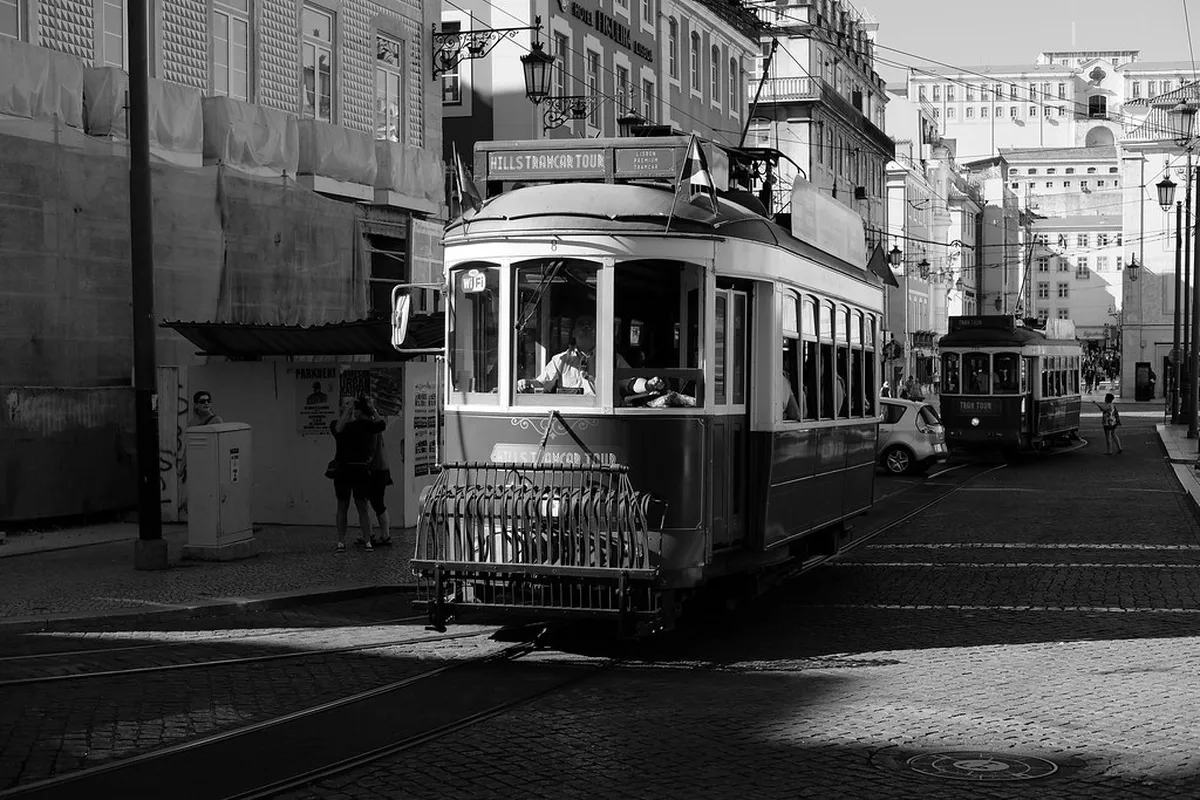
The full end-to-end journey takes 40–50 minutes without delays. Delays are common — the narrow streets of Alfama flood with delivery vehicles and tourist coaches, and a single blocked car can halt the entire line. Digital departure boards at major stops show live times and are more reliable than printed schedules. It is not unusual to wait 20 minutes and then have three trams arrive together.
If you are riding from the cruise terminal, see our dedicated guide on tram 28 from Lisbon cruise port for the fastest way to reach the route from the docks.
Is Riding Tram 28 Still Worth It?
Yes — if you time it correctly. The combination of the Remodelado engineering, the route through five distinct historic districts, and the sheer density of landmarks within a 40-minute ride is hard to replicate any other way. Visit the historic tram 28 Lisbon page for background on the route's 1930s origins.
If you arrive mid-afternoon in July and face a 45-minute queue, skip it and walk the same route on foot. The narrow alleys are worth exploring independently, and you can photograph the trams passing rather than standing inside one. Come back at 07:00 the next morning.
For the best single experience: board at Campo de Ourique at 08:00 heading east, take a window seat on the right side for Alfama views, and hop off at tram 28 attractions like the Miradouro da Graça for sunrise. That combination — empty carriage, correct direction, golden light — is what makes the 28E genuinely memorable.
Frequently Asked Questions
What is the best time of day to ride Tram 28?
The best time is before 9:00 AM or after 7:00 PM. These hours help you avoid the largest crowds. You will have a much better chance of finding a seat.
Where should I board Tram 28 to get a seat?
Board at the terminal stops like Martim Moniz or Campo de Ourique. Starting at the ends of the line ensures you are first in the queue. Most middle stops only have standing room.
How much does a ticket for Tram 28 cost in 2026?
A cash ticket bought from the driver costs 3.10 Euros. Using a pre-paid Viva Viagem card reduces the price significantly. You can buy these cards at any Metro station.
Lisbon is a city best explored with a mix of planning and spontaneity. Riding the yellow trams remains a highlight for many visitors to the Portuguese capital. Check out our guide to Portugal for more historic travel inspiration.
You might even want to plan a longer Lisbon to Porto journey afterward. Whatever you choose, timing your tram ride correctly will make your visit much better. Enjoy the views and the historic charm of this beautiful European city.