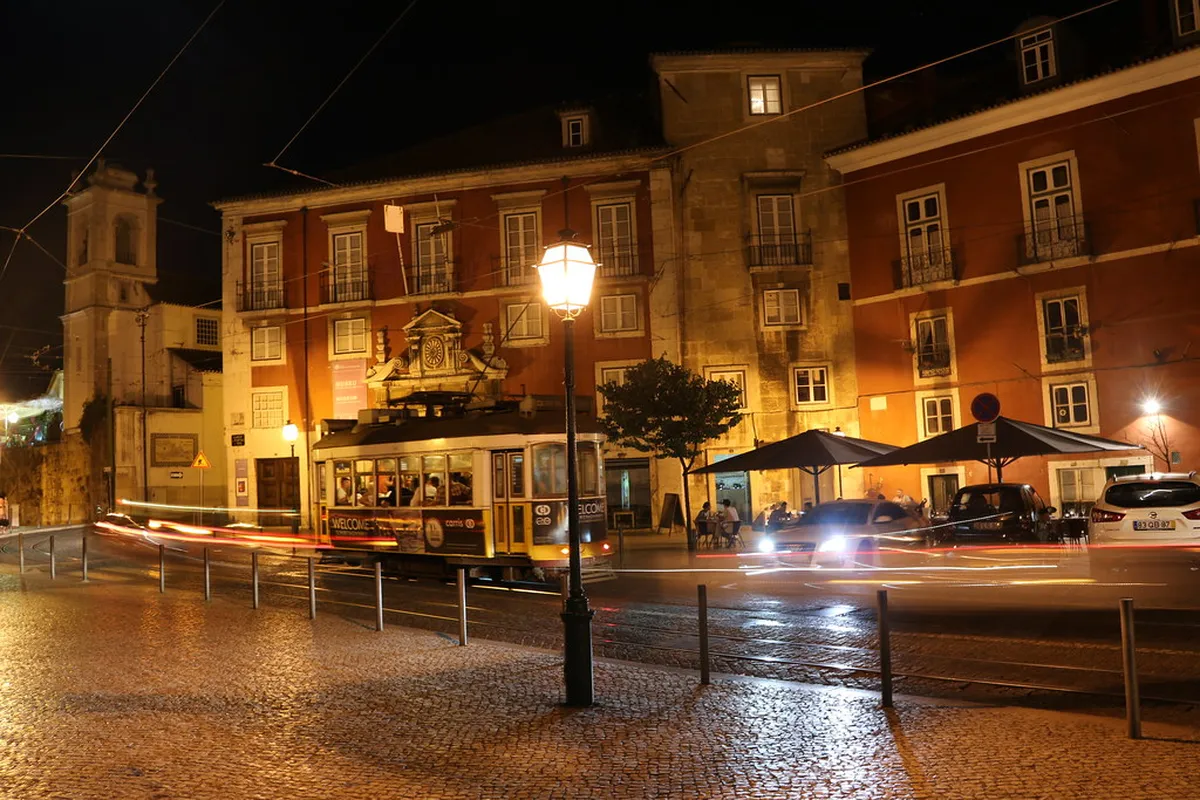
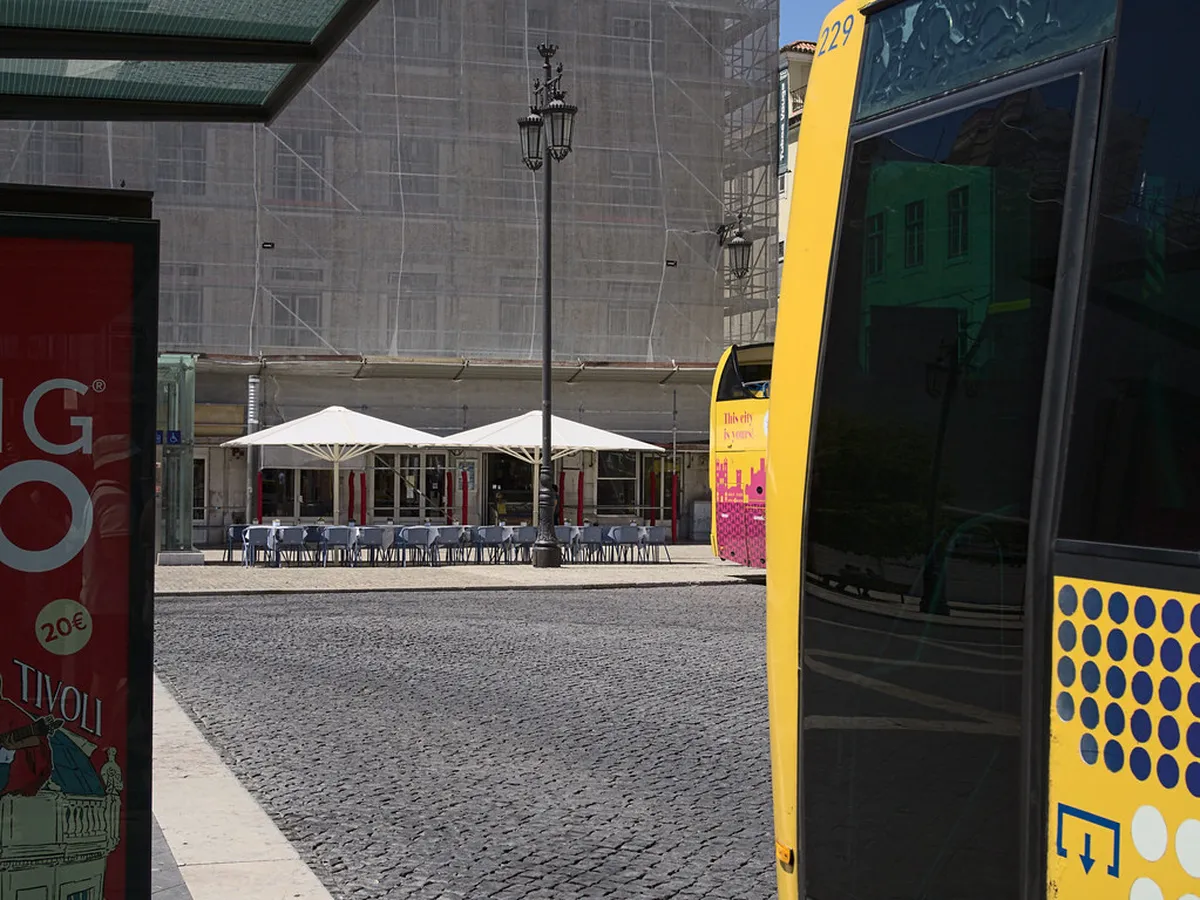
Riding Lisbon's historic yellow Tram 28 is easy to plan badly. The carriage is small, the route is famous, and the queue at Martim Moniz can be longer than the ride itself. Knowing where to board tram 28 is the difference between a calm scenic trip and an hour standing in the sun.
The public 28E line runs between Martim Moniz and Campo de Ourique, beside Prazeres Cemetery, passing Graça, Alfama, Baixa, Chiado, São Bento, and Estrela. It is still normal Lisbon transport, not a museum ride, so commuters, schoolchildren, visitors, and pickpockets all share the same narrow wooden carriage. The best boarding point depends on whether you want the classic route, the best chance of a seat, or the shortest wait.
Quick summary: first-time visitors who want the full east-to-west route should start at Martim Moniz before 9:00. Travelers who care more about getting a seat should start at Campo de Ourique/Prazeres and ride back toward the center.
- Choose Martim Moniz for the traditional start, Metro access, and the immediate climb toward Graça and Alfama.
- Choose Campo de Ourique/Prazeres for shorter queues, better seat odds, and a quieter neighborhood before boarding.
- Choose a middle stop such as Graça, Praça Luís de Camões, or Estrela only if you accept standing and possibly skipping packed trams.
The E28 Tram Route: Martim Moniz to Prazeres
The E28 tram route begins at Martim Moniz, climbs toward Graça, threads through Alfama, drops into Baixa, crosses Chiado and São Bento, then finishes at Campo de Ourique beside Prazeres Cemetery. In the opposite direction, the same line returns from Prazeres to Martim Moniz. Check a tram 28 Lisbon route map before you go, because the route is easier to understand when you can see the hills and one-way turns.
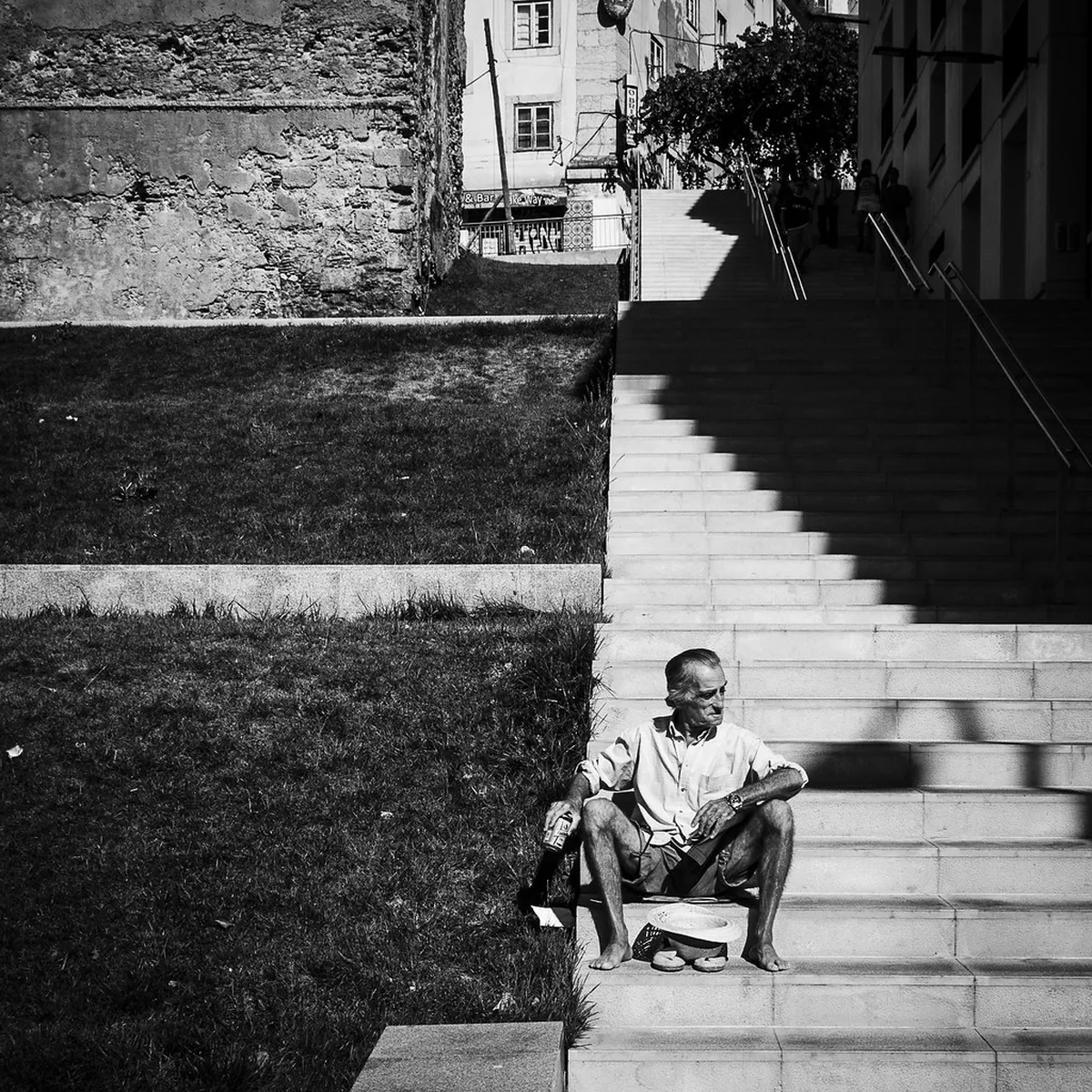
The full ride is about seven kilometers and usually takes 45 to 60 minutes. In 2026, allow 70 minutes when traffic is heavy or when cars block the rails in Alfama. The slow sections are part of the experience: the tram squeezes past tiled buildings, rattles around Sé Cathedral, and opens brief views toward the Tejo from Portas do Sol and Graça.
Only the vintage Remodelado trams can handle this route. Their small bodies, upgraded brakes, and tight turning ability suit gradients and corners that modern articulated trams cannot manage. That technical constraint preserves the historic feel, but it also explains the crowding: each carriage has limited seats and much less standing space than modern tram lines.
For a complete ride, stay on from one terminus to the other instead of hopping off repeatedly. Reboarding at scenic stops is difficult once the day gets busy, and trams often arrive packed. If sightseeing is your main goal, use the ride as orientation, then return on foot to the neighborhoods you want to explore.
Where to Board Tram 28: The Best Starting Points
Martim Moniz is the classic place to board Tram 28 because it is the eastern terminus and sits close to the Green Line Metro. It gives you the dramatic opening climb toward Graça and Alfama, which is what most visitors imagine when they plan the ride. The downside is simple: from mid-morning into late afternoon, this is usually the longest queue on the route.
Campo de Ourique, often shown as Prazeres on tram fronts and stop signs, is the better boarding point if you want a seat. The queue is usually shorter, the atmosphere is more residential, and you can wait near cafes or the market instead of standing in the exposed Martim Moniz plaza. The scenery is still excellent because the tram returns through Estrela, São Bento, Chiado, Baixa, Alfama, and Graça.
The middle-stop strategy works when you only want a short ride. Graça is useful if you are already near the viewpoints, Estrela works well after visiting the basilica, and Praça Luís de Camões is convenient for Chiado or Bairro Alto. The trade-off is that you may need to let several packed trams pass, and you should expect to stand.
| Boarding point | Typical wait | Seat chance | Best use |
|---|---|---|---|
| Martim Moniz | 30 to 90 minutes in busy periods | Good if you reach the front of the queue | First-time riders who want the traditional start |
| Campo de Ourique/Prazeres | 10 to 30 minutes on many days | Best overall | Travelers who want a calmer start and a window seat |
| Graça, Estrela, or Camões | Often short, but unpredictable | Low | Short rides, flexible plans, and visitors already nearby |
Tram 28 Tickets and Fares Explained
The easiest mistake is boarding without a ticket plan. You can buy a single fare on board, but it is the most expensive way to ride and slows the boarding line. For 2026 planning, expect the on-board fare to be around EUR 3.20 to EUR 3.30, with exact pricing best checked close to your trip in a tram 28 Lisbon tickets guide.

A 24-hour public transport pass is usually better value if you will use the Metro, buses, funiculars, Elevador de Santa Justa, or more than one tram. It must be bought before boarding, normally from a Metro station machine, and it costs roughly EUR 7 in current 2026 guidance. The practical benefit is as important as the price: you tap in quickly instead of handling cash in a crowded doorway.
Stored-value cards are useful for visitors staying several days because they reduce the per-ride cost and work across much of Lisbon's transport network. Older travel advice often calls the reloadable card Viva Viagem, while many current machines and signs refer to Navegante. The tourist-focused Lisboa Card can also be worth it if your same day includes paid museums or monuments, but it is not necessary for Tram 28 alone.
Board through the front door and validate immediately at the reader near the driver. Have your card ready before the tram arrives, especially at Martim Moniz and Prazeres where staff may manage the queue tightly. If you are paying on board, use small notes or a contactless bank card where accepted, because drivers are not there to make complex change for large groups.
Using Lisbon Public Transport: Viva Viagem, Navegante, and Lisboa Card
Tram 28 is part of the Carris public transport network, so it works best as one piece of a wider Lisbon day. The Metro is usually the simplest way to reach Martim Moniz, Baixa-Chiado, Cais do Sodré, or a ticket machine before boarding. If you start at Campo de Ourique, plan the approach by bus, taxi, or a walk from Estrela rather than expecting a nearby Metro stop.
The 24-hour transport pass is the cleanest choice for most visitors who want to ride Tram 28 and still move around Lisbon efficiently. It lets you combine the 28E with the Metro, buses, and other trams without thinking about each fare. It also makes it easier to abandon the queue and try again later.
The Lisboa Card is different because it bundles transport with attraction admissions. It can make sense if your Tram 28 day also includes covered museums or monuments. If your only plan is a tram ride, a transport pass or stored-value card is usually simpler.
Major Stops and Sightseeing Highlights
The most useful stops are the ones that let you connect the ride with a walk. In Graça, you are close to Miradouro da Graça and Miradouro da Senhora do Monte. Around Portas do Sol and Santa Luzia, the tram reaches the edge of Alfama for tiled terraces, river views, and steep lanes descending toward the old quarter.
Sé is the stop for Lisbon Cathedral, Saint Anthony Church, and the lower entrance into Alfama. Rua da Conceição is the practical Baixa stop for Praça do Comércio, Rua Augusta, and the flat downtown grid. Praça Luís de Camões works for Chiado, Bairro Alto, Bica, and evening plans, although reboarding can be difficult at night.
Farther west, São Bento gives you the parliament building and quieter streets. Estrela is one of the best places to leave the tram because the basilica and Jardim da Estrela sit directly by the line. For more stop-by-stop planning, use a guide to tram 28 attractions along the route.
- Graça is best for viewpoints and a local hilltop neighborhood.
- Portas do Sol and Santa Luzia are best for Alfama views.
- Sé is best for the cathedral and lower Alfama lanes.
- Praça Luís de Camões is best for Chiado, Bairro Alto, and Bica.
- Estrela is best for the basilica, gardens, and a calmer pause.
How to Avoid Pickpockets on the 28E
Tram 28 is one of the worst places in Lisbon to behave casually with valuables. The line is crowded, visitors are distracted by windows and cameras, and the boarding area creates natural bottlenecks. Read these tram 28 pickpocket safety tips before you ride, especially if you plan to stand near the doors.
The 28E is one of the most pickpocket-active tram lines in Europe. Be most alert when people press in at stops, when the tram brakes sharply on the Alfama hills, and when someone creates a distraction near the exit — these are the moments thieves rely on.
Keep bags in front of your body and never use a back pocket for a wallet or phone. If you are standing, hold a rail with one hand and keep the other hand over your bag zipper. Be most alert when people press in at stops, when the tram brakes sharply, and when someone creates a distraction near the exit.
Do not open your wallet in the queue unless you have to. Prepare your card, ticket, or small fare before the tram arrives, then put everything else away. If the tram is so packed that you cannot control your bag, wait for another departure or choose a less crowded route.
Alternative Tram Routes to Beat the Crowds
If the 28E queue is already unmanageable, Tram 12 is the first fallback to consider. It uses vintage-style cars on a shorter loop through Mouraria and Alfama, giving you some of the same tight streets and steep curves without committing to the full Martim Moniz to Prazeres journey. It is especially useful if your main interest is the old-town tram feeling rather than every stop on the 28E.
Tram 24 is another strong choice for travelers who want a traditional carriage with far fewer crowds. It starts around Praça Luís de Camões and heads toward Campolide through a different set of neighborhoods. It does not replace the Alfama section, but it can be a better ride if comfort matters more than the famous route.
The red tourist tram is the comfort option. It costs more than public transport, but it offers a controlled sightseeing experience, usually with seating and commentary. Compare the trade-offs in this guide to tram 28 vs other Lisbon trams before spending a peak-season hour in the public 28E queue.
Departures, Schedules, and Journey Times
Tram 28 usually runs at short intervals during the main part of the day, but the schedule is less reliable than the frequency suggests. A tram blocked by traffic in Alfama can delay the vehicles behind it, which is why you sometimes wait 20 minutes and then see two or three arrive close together. Use a current tram 28 Lisbon schedule and times page for the service window, but build flexibility into your plan.
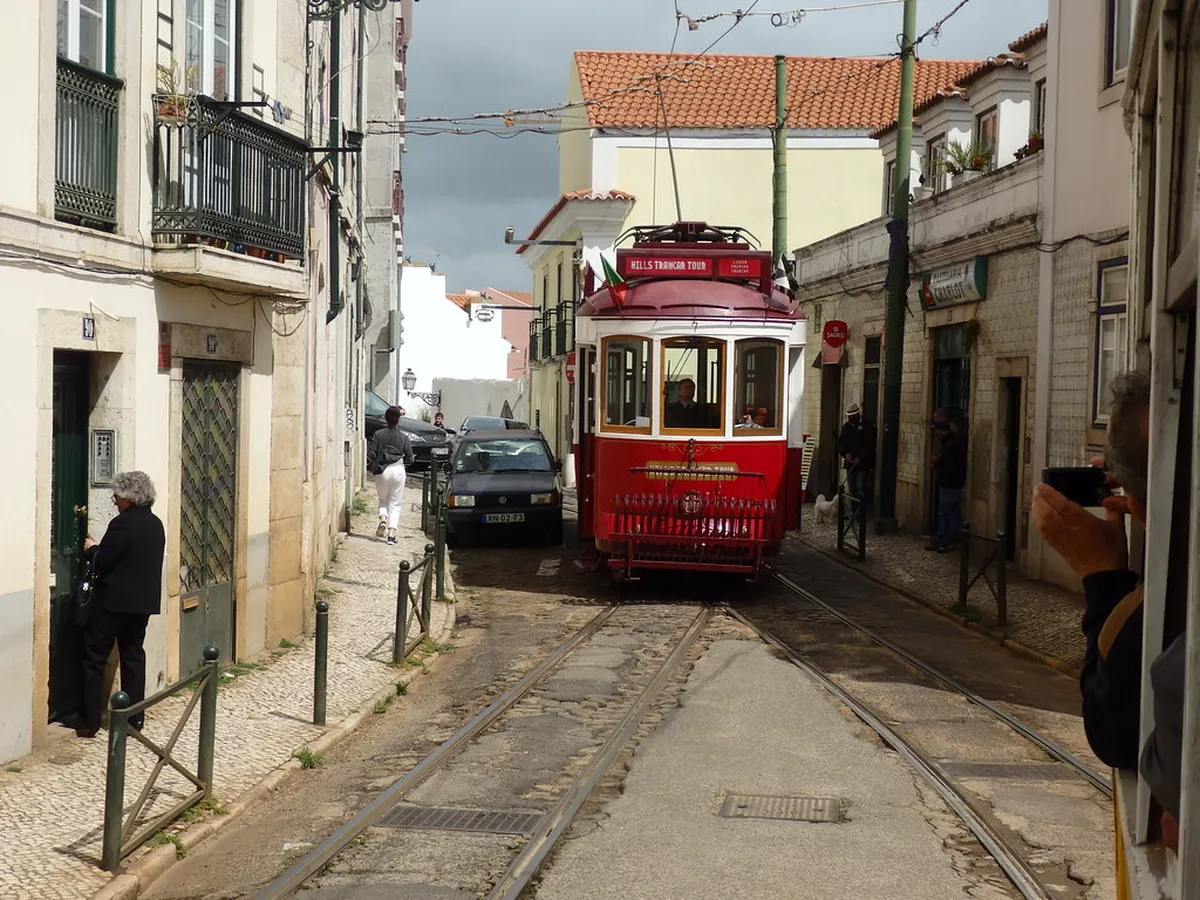
Digital boards at major stops are useful, not perfect. They can become inaccurate when a delivery van, double-parked car, roadworks crew, or traffic pinch point holds the tram between stops. This matters most if you are waiting at a middle stop, where a displayed arrival time does not guarantee enough space to board.
The end-to-end ride normally takes 45 to 60 minutes once you are on board. Add queue time separately: Martim Moniz can push the whole activity beyond two hours in peak periods, while Prazeres is often faster. If you have timed tickets, dinner, a train, or a cruise departure later in the day, ride early or choose a shorter section.
Late service can also change the experience. Some evening trips terminate around Estrela instead of continuing all the way to Prazeres, especially after about 21:30. Always check the destination shown on the front of the tram before boarding, because the sign matters more than what you expected the route to do.
Boarding with Kids, Luggage, and Limited Mobility
The 28E is charming because it is old, but that also makes it awkward for some travelers. The carriage has narrow doors, steps, tight aisles, polished wooden benches, and sharp braking on hills. Families with small children can ride it, but a folded stroller is much easier than a full-size pushchair.
If you are traveling with luggage, do not use Tram 28 as an airport-transfer shortcut or a cruise-port transfer unless your bag is small enough to keep between your feet. The doorway and aisle crowd quickly, and large cases make you a target for frustration as well as theft. For cruise passengers, a taxi or Metro-plus-walk plan is usually more practical before saving Tram 28 for a lighter sightseeing ride.
Travelers with limited mobility should treat the 28E as a historic experience rather than an accessible transport solution. Boarding at the termini gives you more time and space than trying to step up at a middle stop while passengers are exiting. If the goal is simply to see Lisbon's hills without the physical strain, the red tourist tram, taxis, or viewpoint-focused routes may be more comfortable.
Insider Tips for a Better Experience
The best ride is usually the first practical ride of the day. Arrive before 9:00 at Martim Moniz if you want the classic direction, or start at Prazeres after breakfast if you want the calmer seat strategy. Midday is the weakest choice because the line is crowded with visitors while the carriage still has to function as public transport.
Boarding at a terminus (Martim Moniz or Campo de Ourique/Prazeres) gives you the best chance of a seat, since these are the start points where the tram loads fresh. Trams arriving at middle stops such as Graça or Praça Luís de Camões are often already standing-room only by mid-morning.
For a seating hack, ride the quieter western section between Campo de Ourique, Estrela, São Bento, and Praça Luís de Camões. This stretch still gives you the vintage carriage, hills, and neighborhood texture, but it is less dominated by the Martim Moniz boarding surge. It is also easier to pair with Estrela Basilica, Jardim da Estrela, and lunch in Campo de Ourique.
If you get a seat, choose the window side based on the direction and what you care about. The Alfama and cathedral sections are the most atmospheric, while the western side feels more residential and relaxed. If you stand, move away from the front door after validating so new passengers can board and you are not trapped in the highest-theft part of the carriage.
Do not build your entire Lisbon day around hopping on and off the 28E. Ride once for the experience, then walk, use the Metro, or switch to other trams and buses for precise sightseeing. Tram 28 is at its best as a moving introduction to the historic quarters, not as a dependable hop-on-hop-off tour bus.
Frequently Asked Questions
Which where to board tram 28 options fit first-time visitors?
First-time visitors should board at Martim Moniz to experience the full traditional route. This start point is easily accessible via the Metro Green Line and places you right at the beginning of the Alfama climb. Check the best time to ride tram 28 Lisbon to avoid peak queues.
How much time should you plan for the full Tram 28 journey?
You should plan for at least 90 minutes to include both the ride and potential waiting times. The actual transit time from end to end is usually about 50 minutes. However, traffic delays and boarding queues can significantly increase the total time required for this activity.
What should travelers avoid when boarding at Martim Moniz?
Avoid boarding during the middle of the day when queues are at their longest. You should also avoid paying with large bills, as drivers prefer exact change or pre-paid cards. Never leave your bags unattended while waiting in the crowded boarding area to prevent theft.
Is the Red Tourist Tram a better option than the public 28?
The Red Tourist Tram is better if you prioritize comfort and a guaranteed seat over a low price. It follows a similar scenic route but does not allow standing passengers. This makes it a much more relaxing experience for those who want to avoid the crowded public carriages.
Mastering the boarding process for Tram 28 is the key to enjoying one of Lisbon's most famous attractions. Whether you start at Martim Moniz or choose the quieter Campo de Ourique, the views remain equally spectacular. Remember to secure your tickets in advance to save money and time during your journey.
Stay vigilant about your belongings and try to travel during the early morning hours for the best experience. The vintage charm of the Remodelado trams provides a unique window into the history of this beautiful city. By following these expert tips, you can navigate the 28E line with confidence and ease.
Lisbon is a city best seen from the window of a historic tram winding through its ancient streets. Take your time to explore the stops along the way and soak in the local atmosphere. Your ride on Tram 28 will likely be one of the most memorable parts of your Portuguese adventure.