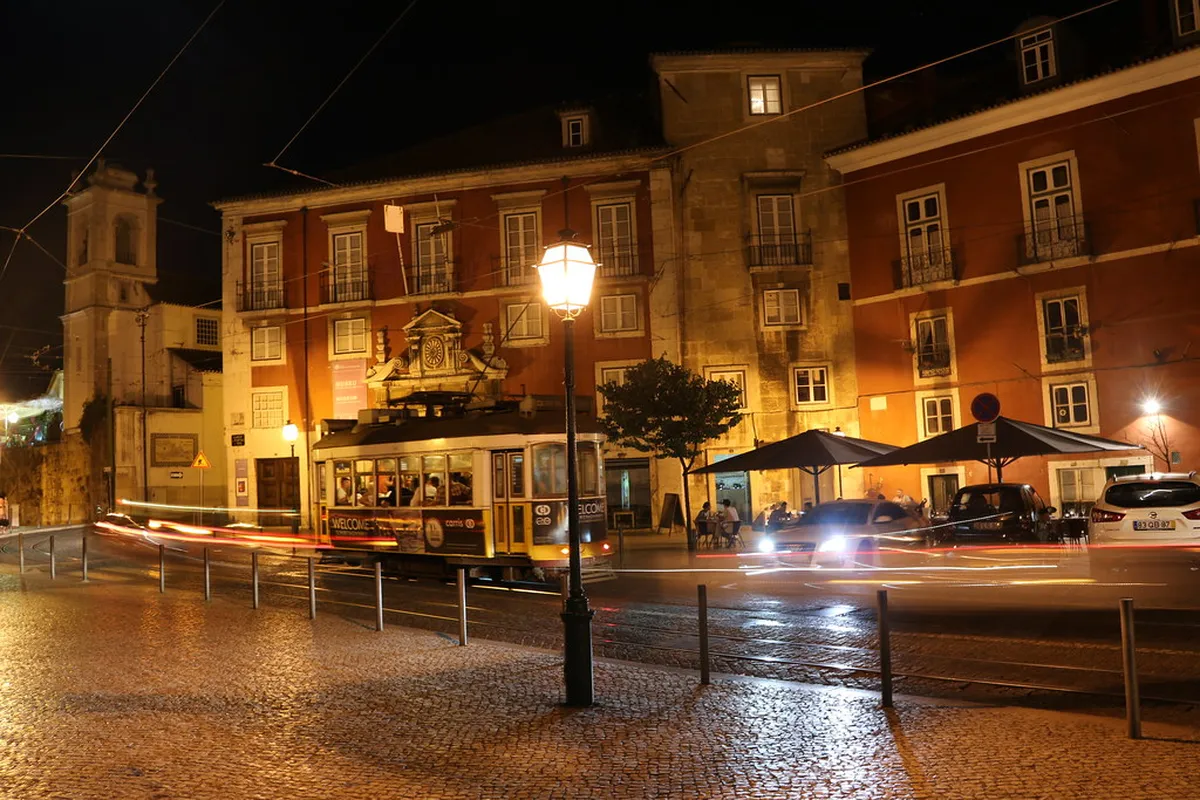
The Tram 28 route map is useful because the 28E is not a simple sightseeing loop. It is a working Carris tram line from Martim Moniz to Prazeres, threading through Graça, Alfama, Baixa, Chiado, São Bento, Estrela, and Campo de Ourique. A good map helps you choose the right direction, stop, fare, and backup plan before the queues build.
This 2026 guide covers the practical ride: fares, boarding strategy, major stops, safety, photo points, alternatives, and the slightly different eastbound and westbound tracks. That matters most when choosing between a full ride and a short Alfama segment. Use it with the full historic tram 28 Lisbon guide if you want deeper context.
The E28 tram route
The E28 runs about 7 km between Martim Moniz and Prazeres, beside Campo de Ourique. The classic westbound ride climbs toward Graça, drops through Alfama past Portas do Sol and Sé, crosses Baixa, then continues through Chiado, São Bento, Estrela, and Campo de Ourique. At Prazeres, passengers normally leave before the tram returns.
The wooden "Remodelado" cars give the route its character. Their short bodies can handle corners and gradients that modern trams cannot, which is why the 28E remains both public transport and a moving tour of Lisbon's older street pattern.
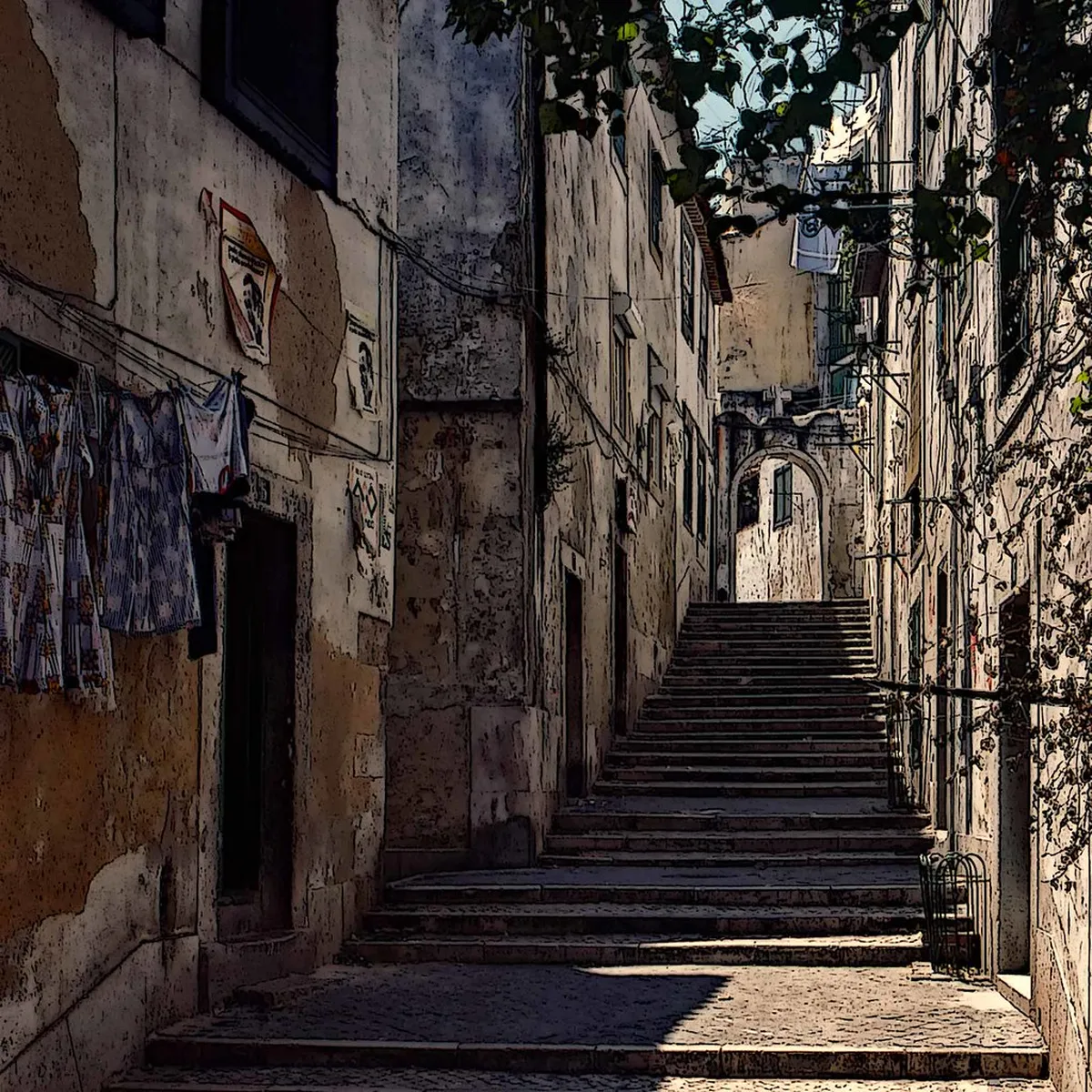
Do not treat the map as a guarantee that every stop will be easy. Some streets are one-way, some stops sit on steep pavements, and the two directions differ in places. For a seat, start early at Martim Moniz; for a shorter midday queue, consider Campo de Ourique or the western section. First-timers can ride end to end once, while time-short travelers should focus on Alfama and Baixa.
Tram 28 Tickets and Fares
The onboard single fare is the least convenient choice. In 2026, current fare references put it at about EUR3.30, paid in cash to the driver or by contactless card at the validator where available. It works for one short ride, but it is poor value if you ride out and back.
Most visitors should use a rechargeable Viva Viagem or Navegante card. Zapping credit makes each tram ride much cheaper, while the 24-hour pass, about EUR7.25 in 2026, is usually best if you will add the metro, funiculars, other trams, or Santa Justa Lift. The Tram 28 tickets guide compares the options in detail.
- Pay onboard only for one quick ride.
- Use zapping for flexible multi-day transport.
- Use the 24-hour pass for a heavy sightseeing day.
- Use the Lisboa Card only if its museum entries justify the price.
Always validate when you board, even with a pass. For current timetables, fare rules, and service notices, verify details with the Carris Official Site.
A rechargeable Viva Viagem or Navegante card makes each tram ride significantly cheaper than paying the onboard single fare. If you plan to mix Tram 28 with the metro, funiculars, or Santa Justa Lift in one day, the 24-hour pass (about EUR 7.25 in 2026) is usually the best value.
Pickpockets on Tram 28
Tram 28 is one of Lisbon's higher-risk public transport lines for pickpocketing because the carriage is narrow, crowded, and full of distracted visitors. The riskiest moments are boarding, leaving, and standing near the doors at Sé, Portas do Sol, Graça, and Rua da Conceição.
Keep your phone, wallet, and passport out of back pockets. Wear backpacks on your front, close every zipper, and move if someone presses unusually close while another person distracts you.
Seats reduce the risk, but they do not make an open bag safe. Use the same habits in the queue at Martim Moniz, and read the Tram 28 pickpocket safety guide before riding with valuables.
The riskiest moments for pickpockets on Tram 28 are boarding, leaving, and standing near the doors at busy stops such as Sé, Portas do Sol, Graça, and Rua da Conceição. Keep your phone, wallet, and passport out of back pockets and wear backpacks on your front.
Alternative tram routes to the E28
The best crowd escape is the E24 from Praça Luís de Camões toward Campolide. It uses the same vintage tram style, passes Bairro Alto and Príncipe Real, and is far less likely to have a tourist queue. Choose it when you want the old-tram atmosphere more than the exact Alfama route.
The E25 is useful for Estrela, Lapa, and western Lisbon. It lacks the tight Alfama curves, but it can be calmer for families, photographers, and anyone who dislikes packed standing rides.
- Choose the E28 for Alfama, Sé, Baixa, Chiado, and Estrela.
- Choose the E24 when queues are long and you want a quieter vintage ride.
- Choose the E25 when Estrela and Lapa matter more than Alfama.
The Tram 28 vs other Lisbon trams guide helps when the Martim Moniz queue looks unreasonable.
Routes and Trips Travel Guide with Maps and Photos
Treat the route map as layers rather than a single line. One layer is the ride, one is the stop sequence, and one is the photo map. The strongest photo areas are the Sé Cathedral curve, Portas do Sol, Santa Luzia, and the tight Alfama streets where the tram nearly brushes tiled facades.
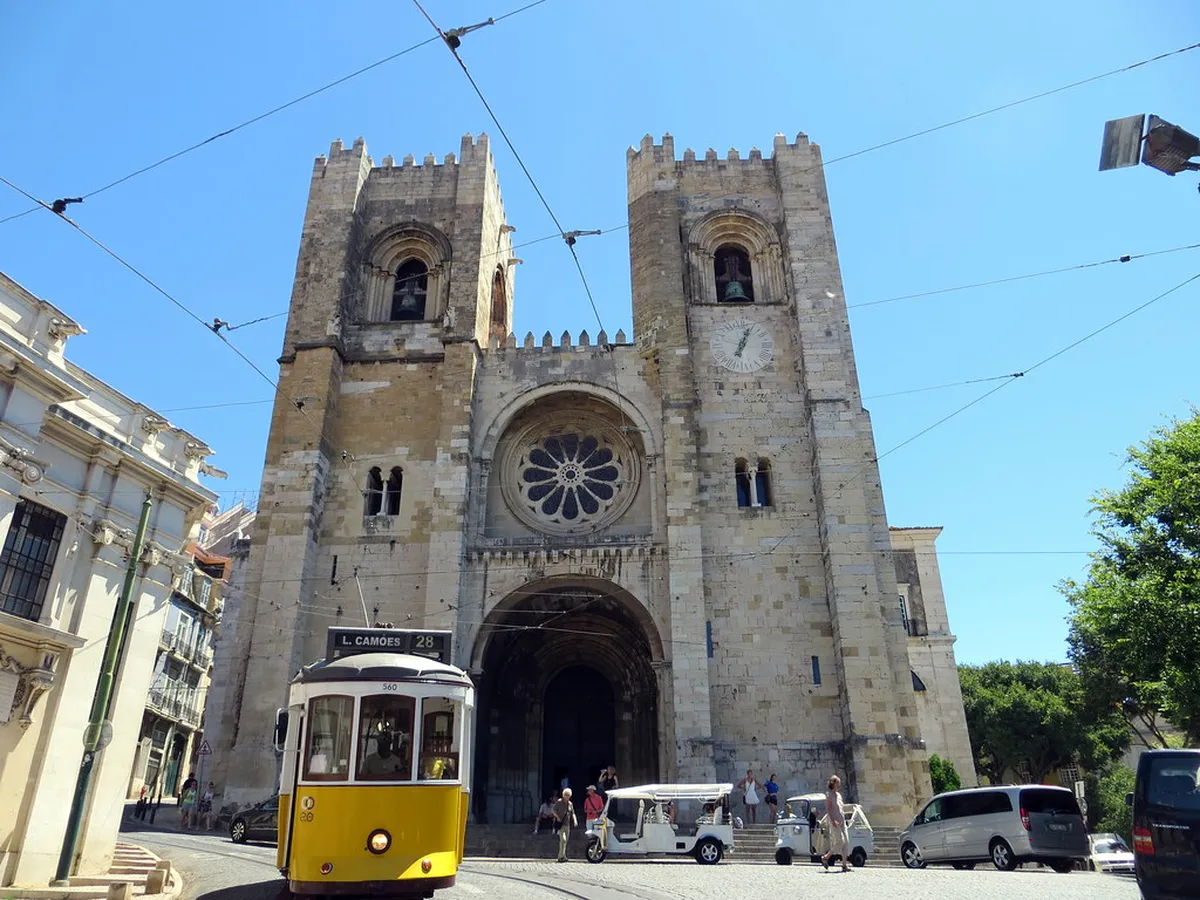
For a cleaner photo, stand outside the tram rather than shooting through glass. The Sé area works well because you can frame the yellow tram against stone walls, especially early in the morning. Late afternoon can be warmer around Alfama, but it is usually busier.
The window seat strategy depends on direction. Leaving Martim Moniz, watch the downhill side near Graça, Portas do Sol, and Sé; from Prazeres, be ready for Estrela and São Bento before the route tightens near Baixa. If photography matters, ride once without getting off, then walk back to the two spots you want to shoot properly.
Top things to See on Tram 28 Route
The most common mistake is stepping off too often. Reboarding mid-route can be difficult because trams arrive full, especially between Praça Luís de Camões and Martim Moniz. Decide which sights are quick stops and which deserve a deeper break.
Portas do Sol and Santa Luzia are quick viewpoint stops. Sé, São Jorge Castle from Portas do Sol, Estrela Basilica, and Graça need more time.
- Portas do Sol is the easiest 15-minute viewpoint over Alfama and the Tagus.
- Sé de Lisboa works for a 30- to 45-minute history stop with St. Anthony's Church nearby.
- São Jorge Castle needs a longer uphill detour and can take about two hours.
- Estrela Basilica and Jardim da Estrela make the best calm pause on the western route.
- Graça is best for local streets, cafes, and Miradouro da Senhora do Monte.
Use the Tram 28 attractions along the route guide to connect the ride with walks through Alfama, Baixa, Chiado, and Estrela.
Using Lisbon Public Transport
Plan Tram 28 as one piece of Lisbon's transport network. The metro is usually faster for Martim Moniz, Baixa-Chiado, or Cais do Sodré, while the tram is better for the historic hills the metro misses. If the queue is long, take the metro or walk to a later stop.
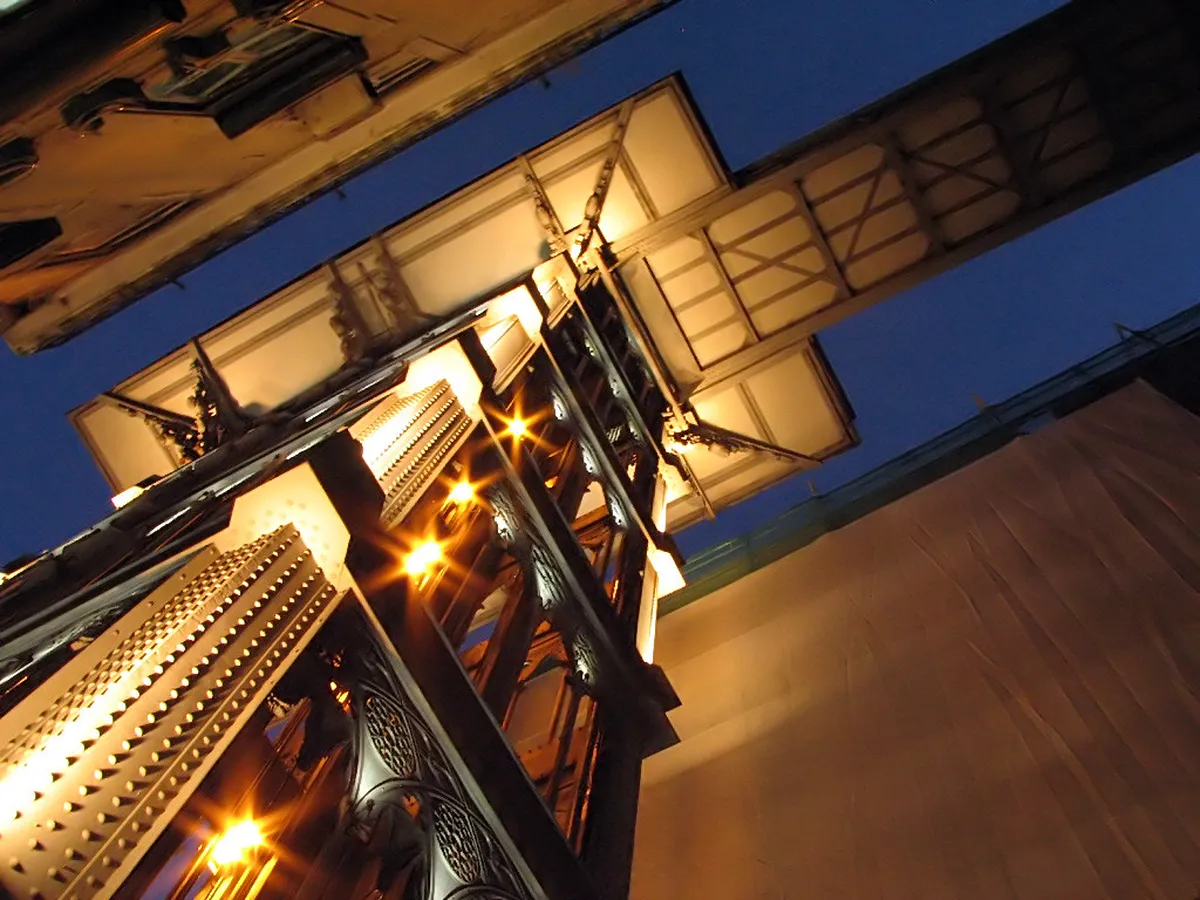
For 2026 planning, compare onboard fare, zapping credit, and the 24-hour pass before you ride. The single fare is convenient but expensive, zapping is flexible, and the pass is strongest when you add a funicular, metro, or second tram.
Regional trips such as Lisbon to Sintra or Lisbon to Cascais need separate planning. Keep Tram 28 for a Lisbon day, not the morning you need an early train. For cruise passengers, a short Alfama segment is safer than a full end-to-end gamble.
Departures and Journey Times
On paper, Tram 28 runs frequently for much of the day. In practice, traffic, parked vehicles, boarding delays, and slow Alfama streets can stretch the ride. The full one-way journey usually takes about 45 to 70 minutes once you are on board.
The digital board paradox is that the wait time can be useful and wrong at the same time. A board may show a tram arriving soon, but a delivery van, double-parked car, or blocked curve can freeze the line. Then several delayed trams may appear together.
The weakest points are the narrow Alfama sections, the Sé approaches, and busy Baixa and Chiado streets. Check the Tram 28 schedule and times, but avoid tight plans around the posted interval.
The best crowd window is before 09:00, with late evening second-best. Mid-morning to late afternoon is hardest, especially during cruise calls and school holidays. If the line is far beyond the stop, switch to the E24, walk part of the route, or return later.
Major Tram 28 Stops
Major stops matter because they shape both the ride and the queue. Martim Moniz is the obvious start, but it is also where many visitors gather. Campo de Ourique and Prazeres are quieter starts in the opposite direction, while Praça Luís de Camões is useful for the western stretch.
For a seat, arrive at a terminal early. To avoid a long queue, board away from Martim Moniz or shorten the ride. The where to board Tram 28 guide gives a fuller stop-by-stop strategy.
- Martim Moniz is best for the classic full ride toward Prazeres before 09:00.
- Graça is best for viewpoints, local cafes, and Miradouro da Senhora do Monte.
- Calçada de São Vicente works for São Vicente de Fora, the National Pantheon, and Feira da Ladra.
- Portas do Sol is best for Alfama views, Santa Luzia, and the castle walk.
- Sé is best for Lisbon Cathedral, St. Anthony's Church, and the iconic tram curve.
- Rua da Conceição is best for Baixa, Rua Augusta, Praça do Comércio, and metro exits.
- Praça Luís de Camões is best for Chiado, Bairro Alto, Bica, and the E24 switch.
- Estrela is best for Estrela Basilica and Jardim da Estrela.
- Campo de Ourique and Prazeres are best for a quieter start and Mercado de Campo de Ourique.
For pastelaria stops, choose a cafe near the stop where you already leave the tram. Graça, Estrela, and Campo de Ourique are better for a seated pause than the crowded Alfama viewpoints.
| Stop | Neighbourhood | Key Landmarks |
|---|---|---|
| Martim Moniz | Mouraria / Baixa edge | Classic boarding point; full route start |
| Graça | Graça | Miradouro da Senhora do Monte; local cafes |
| Calçada de São Vicente | Alfama | São Vicente de Fora; National Pantheon; Feira da Ladra |
| Portas do Sol | Alfama | Alfama and Tagus viewpoint; Santa Luzia terrace |
| Sé | Alfama / Baixa border | Lisbon Cathedral; St. Anthony's Church; iconic tram curve |
| Rua da Conceição | Baixa | Rua Augusta; Praça do Comércio; metro exit |
| Praça Luís de Camões | Chiado | Chiado; Bairro Alto; Bica funicular; E24 interchange |
| Estrela | Estrela | Estrela Basilica; Jardim da Estrela |
| Prazeres / Campo de Ourique | Campo de Ourique | Mercado de Campo de Ourique; quieter boarding point |
Tram 28 on Google Map
A Google Map view is most useful when it separates direction, stops, and attractions. The westbound and eastbound routes can differ around one-way streets, so the stop across the road may not serve the return journey. Zoom in near Baixa, Chiado, and Alfama before walking to a stop.
Use three layers: the line from Martim Moniz to Prazeres, the attraction layer around Sé, Portas do Sol, Graça, Estrela, São Bento, Chiado, and Baixa, and the escape layer with metro stations, the E24, and downhill walking routes.
For photos, mark the Sé Cathedral curve and narrow Alfama streets separately from boarding stops. The best photo spot is not always the best place to board. Still check the destination sign on the front of the carriage before getting on.
The broader Lisbon tram map of all routes helps when Tram 28 stops being the best answer. Often, one 28E segment plus another tram, metro ride, or walk makes a better day than staying on the line end to end.
Frequently Asked Questions
Can I bring large luggage on the Tram 28?
No, you should only bring small bags or backpacks on the vintage trams. These carriages are very narrow and often crowded, making large suitcases impossible to carry safely. For more tips on traveling with gear, see our guide on tram 28 with kids and accessibility.
What is the best time to ride Tram 28 to avoid crowds?
The best time to ride is early in the morning before 9:00 AM or late in the evening after 7:00 PM. During these hours, the queues are much shorter and you have a better chance of securing a seat. Mid-day and afternoon periods are usually the busiest.
Where can I buy tickets for the Tram 28?
You can buy tickets directly from the driver, but this is the most expensive option. It is better to purchase a Viva Viagem card at any metro station or licensed newsagent. These cards offer much lower fares and can be reused throughout your stay in Lisbon.
How long does the full Tram 28 loop take?
A full journey from Martim Moniz to Campo de Ourique typically takes between 45 and 70 minutes. The exact time depends heavily on traffic and the number of passengers boarding at each stop. Always allow extra time for unexpected delays in the narrow Alfama streets.
The best Tram 28 route map is a decision tool, not just a line across Lisbon. Use it to choose your direction, payment method, boarding point, and backup route before you join the queue. In 2026, the smartest plan is still to ride early, validate correctly, protect your valuables, and allow delays.
If the tram is calm, the full Martim Moniz to Prazeres ride is memorable. If it is packed, the Alfama segment, E24 alternative, or a walk between viewpoints may be better. Lisbon's yellow trams are most enjoyable when you treat them as living public transport, not a guaranteed theme-park ride.