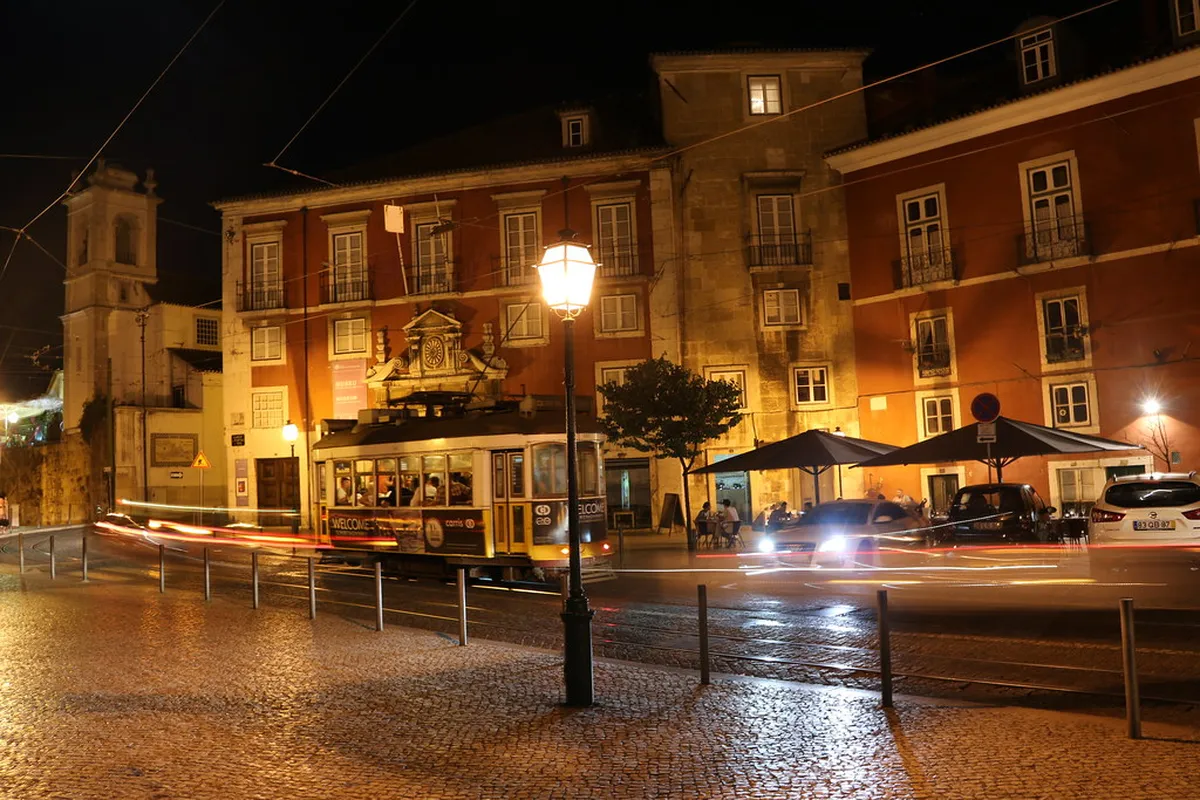
Lisbon's iconic yellow trams are more than just a way to get around the city's steep hills.
They represent a living history that connects the ancient districts of Alfama with the modern riverside of Belém.
Understanding the Lisbon tram map and all routes is essential for any traveler who wants to explore efficiently in 2026.
This guide covers all five active lines, current fares, boarding etiquette, and the practical tricks that separate experienced visitors from frustrated first-timers.
Overview of Lisbon's Tram Network (Remodelado vs. Articulado)
Lisbon operates two entirely different types of trams, and understanding the distinction is the first step to using the network confidently.
The Remodelado trams are the small, classic yellow cars originally built in the 1930s and rebuilt with modern mechanics in the 1990s. They handle steep gradients and sharp turns that no modern long-frame vehicle could navigate. You will find them on the E12, E18, E24, E25, and E28 lines.
The Articulado trams are modern low-floor Siemens units deployed exclusively on the E15. They carry far more passengers than the vintage cars and are fully wheelchair accessible — the only tram in the network with that designation.
All trams are operated by Carris and share the same Viva Viagem fare system. The E stands for "eléctrico," the Portuguese word for electric tram, which you will see on every stop sign and digital board across the city.
Lisbon Tram Route Comparison: All 5 Lines at a Glance
Before diving into each route, here is how the five active lines compare at a glance. This overview helps you decide which tram to board for each part of the city.
- E28 — Martim Moniz to Campo de Ourique (Prazeres). Remodelado. The most scenic route through Alfama, Baixa, Chiado, and Estrela. Heavily crowded 09:00–18:00.
- E15 — Praça da Figueira to Algés. Articulado (modern). Best route for Belém. Flat, fast, and wheelchair accessible. Also congested in peak hours.
- E12 — Martim Moniz loop through Alfama. Remodelado. One-directional clockwise loop. Good alternative when E28 queues are excessive.
- E24 — Praça Luís Camões (Chiado) to Campolide. Remodelado. Quietest historic tram. Serves Príncipe Real and Rato. Rarely crowded.
- E25 — Martim Moniz to Campo de Ourique via Cais do Sodré and Lapa. Remodelado. Least-known tourist route; does not run weekends.
You can find a detailed tram 28 Lisbon route map that shows the full E28 path with every named stop.
| Line | Route | Tram Type | Best For | Crowd Level |
|---|---|---|---|---|
| E28 | Martim Moniz → Prazeres (Campo de Ourique) | Remodelado (vintage) | Scenic Alfama & Chiado sightseeing | Very high (09:00–18:00) |
| E15 | Praça da Figueira → Algés | Articulado (modern) | Belém monuments; wheelchair access | High (peak hours) |
| E12 | Martim Moniz loop through Alfama | Remodelado (vintage) | E28 overflow; ends ~20:00 | Low–Medium |
| E24 | Praça Luís Camões → Campolide | Remodelado (vintage) | Príncipe Real & Rato; crowd-free ride | Low |
| E25 | Martim Moniz → Campo de Ourique via Lapa | Remodelado (vintage) | Lapa & Santos locals; no weekends | Very low |
Route E28: The Historic Hills (Martim Moniz to Campo Ourique)
The E28 is the most famous line because it threads through the heart of Lisbon's oldest neighborhoods over a 7 km route inaugurated in 1914.
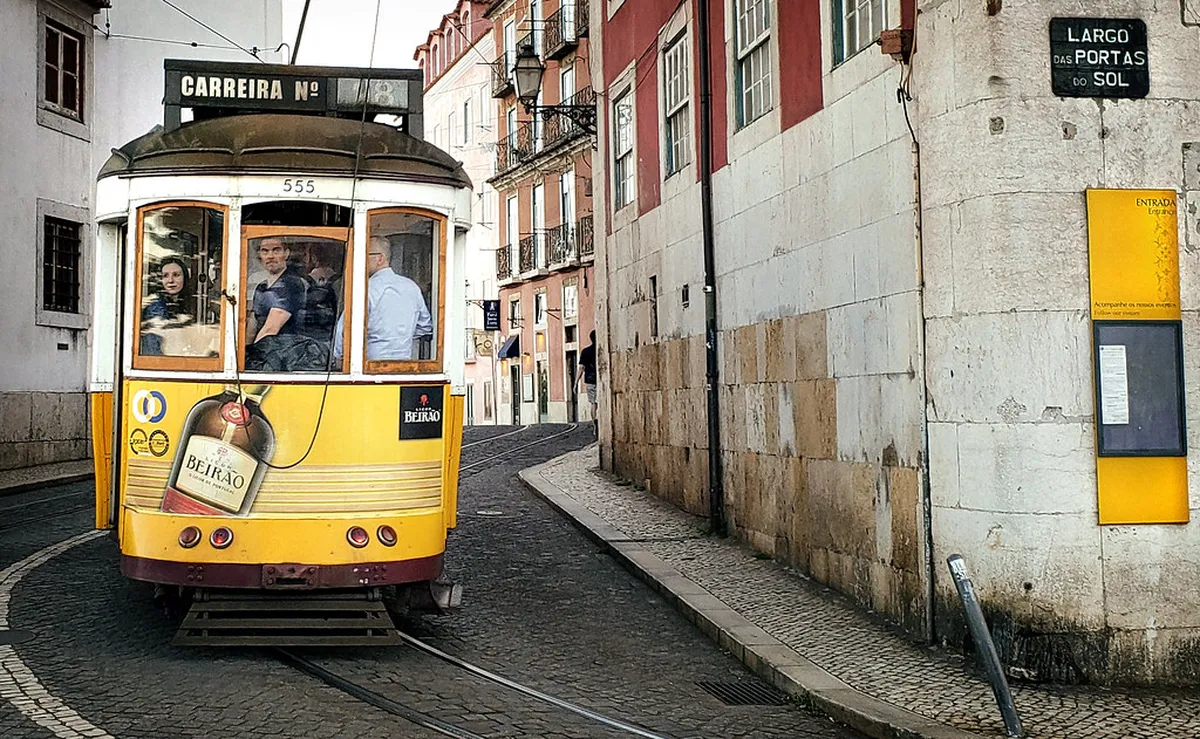
This historic tram 28 Lisbon journey passes the Sé Cathedral, the viewpoints of Graça, and the tight alleyways of Alfama where the tram clears ancient stone walls by centimeters. The entire end-to-end trip takes between 48 minutes and one hour depending on traffic and double-parked cars.
Service runs from approximately 06:00 until just after midnight on weekdays, and until 23:00 on weekends. Average headway is 9 to 12 minutes during the day, though delays are common. After 21:30 the route shortens — it terminates near the Basilica de Estrela rather than continuing to Prazeres, so plan accordingly if you intend to ride the full line in the evening.
The tram carries 20 seated and 38 standing passengers, but during peak hours far more squeeze in. Queues at Martim Moniz can reach 60 to 90 minutes between 10:00 and 18:00. See the Insider Tips section below for how to board without queuing.
Route E15: The Belém Connection (Praça Figueira to Algés)
Travelers heading to the western monuments should board the E15 for a smooth riverside journey that takes roughly 25 minutes to reach Belém from the center.
This line uses modern Articulado vehicles with wide aisles, air conditioning, and onboard ticket machines that accept contactless payment. It is the primary way to reach the Jerónimos Monastery, the Tower of Belém, and the famous pastéis de nata bakeries of the neighborhood. The route passes LxFactory and the Santo Amaro Docks before terminating at Algés.
Because the E15 runs on flat ground along the riverside, it is also affected by summer tourist crowds, particularly between Cais do Sodré and Belém. Pickpockets operate this route as well as the E28 — keep bags secure at all times. Service runs from early morning until approximately 23:00 with consistent headways throughout the day.
Routes E12, E24, and E25: The Secondary Lines
The three secondary routes serve specific neighborhoods and rarely appear in tourist itineraries, but each has practical uses.
E12 runs as a one-directional clockwise loop from Martim Moniz through Mouraria and Alfama. It follows the most scenic section of the E28 and is a useful overflow option when E28 queues are long. Service ends at approximately 20:00.
E24 is the best-kept secret for visitors who want a historic tram ride without the crowds. It connects Praça Luís Camões in Chiado with Campolide via Príncipe Real and the Rato area. Board at the Chiado end, ride north through leafy residential streets, and walk back south through the elegant Príncipe Real neighborhood. Wait times are short and seats are almost always available.
The tram 28 vs other Lisbon trams comparison shows that these secondary routes offer the same vintage experience at a fraction of the wait.
E25 connects Martim Moniz to Campo de Ourique via Cais do Sodré and the affluent Lapa district. It is Lisbon's least-used tram by visitors and does not operate on weekends or public holidays. For travellers staying in Lapa or Santos, it is the only tram that serves the neighborhood and worth knowing.

Major Tram 28 Stops and Sightseeing Highlights
The E28 has nine key stops between Martim Moniz and Prazeres. Each connects to major landmarks within a short walk.
- Martim Moniz — Eastern terminus. Long queues during the day. Views of the castle. Metro connection (Green and Yellow lines).
- Graça — Reached about 12 minutes from Martim Moniz. Access to Miradouro da Graça, Miradouro da Senhora do Monte, and the Church of Graça.
- Largo das Portas do Sol — Best viewpoint stop on the route. Steep descent into the Alfama maze. Museum of Decorative Arts nearby.
- Sé (Cathedral) — Disembark for the Lisbon Cathedral, St. Anthony Church, the Aljube Museum, and the remains of the Roman Theatre.
- Rua da Conceição — Stop for Baixa (downtown). Walk to Rua Augusta, Praça do Comércio, and the Arch.
- Praça Luís de Camões — Chiado and Bairro Alto shopping, bars, and restaurants. Transfer point for E24.
- Estrela — Basilica de Estrela and the shaded Jardim da Estrela park. Evening terminus after 21:30.
- Prazeres (Campo de Ourique) — Western terminus during the day. The Prazeres cemetery is a curiosity. Walk to Mercado de Campo de Ourique for lunch.
At each major stop, yellow digital boards display estimated minutes until the next tram. These are more reliable than printed schedules, though sudden delays from traffic can still make them inaccurate.
Tram Tickets, Fares, and Viva Viagem Cards
Getting tickets right saves a meaningful amount of money. There are three payment options, and two of them are worth avoiding.
On-board single ticket: €3.20 purchased from the driver on Remodelado trams, or from the on-board machine on the E15 Articulado (machine requires exact change). Expensive and inconvenient.
Viva Viagem card with Zapping: Buy the reusable card for €0.50 at any metro station, then load it with credit ("Zapping"). Each tram ride is deducted at €1.61. This is the standard local approach and easily the best value for visitors making more than two journeys. The card works on all trams, buses, and the metro.
24-hour unlimited ticket: €7.00, available at metro station machines. Worth it only if you plan to make six or more journeys in a single day — for example, combining multiple tram routes with metro legs.
The tram 28 Lisbon tickets guide covers the Lisboa Card option, which includes free rides and museum entry for a flat daily rate — useful for heavy museum days.
On Remodelado trams, always board through the front door by the driver and validate your card on the reader. Exit through the rear doors. Ignoring this unspoken rule draws sharp looks from locals and slows boarding for everyone.

Loading Zapping credit onto a Viva Viagem card reduces each tram ride to €1.61 — less than half the €3.20 on-board single fare. The card costs just €0.50 at any metro station and works across all trams, buses, and the metro throughout Lisbon.
Accessibility and Night Service: Two Things Worth Knowing Before You Board
Most tram guides skip these details, but both affect how you plan your day.
Accessibility: Only the E15 is fully wheelchair and stroller accessible. Its low-floor Articulado cars have wide doors and dedicated spaces. Every other route uses the vintage Remodelado trams, which have high entry steps and no ramp. Passengers with mobility limitations, large prams, or heavy luggage should use the E15 or buses for journeys that would otherwise require the E28 or E12.
Night service: The E28's published terminus is Prazeres, but after approximately 21:30 the route shortens to Estrela, cutting the last three stops. The E25 does not run weekends or public holidays. The E12 ends service around 20:00. Only the E15 and E28 (in shortened form) operate reliably into the late evening. If you are planning an after-dinner tram journey, check the live Carris app or the digital boards at your nearest stop before committing to a route.
For real-time tracking, the official Carris app shows live tram positions by stop. Search "Carris" in your app store — it is free and the most reliable source of arrival times, especially when delays push digital board figures out of sync.
Avoiding Pickpockets and Managing Crowds
Crowded trams are a primary target for opportunistic thieves, and the E28 and E15 are the highest-risk routes in the city.
Keep bags zipped and positioned in front of your body. Avoid placing phones in back pockets at boarding surges. Reviewing the tram 28 pickpocket safety tips before you ride is time well spent. The distraction method — someone stumbling into you as the tram lurches — is the most common technique used at crowded stops.
On the Remodelado trams, hold the overhead rails tightly. Braking is sharp and unexpected, and the narrow aisles give very little room to recover your balance. Flat shoes with grip are better than sandals on cobblestone platforms.
The E28 and E15 are the highest-risk routes in Lisbon for pickpockets. The distraction method — someone stumbling into you as the tram lurches — is the most common technique at crowded stops. Keep bags zipped and positioned in front of your body, and avoid placing phones in back pockets during boarding surges.
Insider Tips for a Smooth Lisbon Tram Experience
The single most effective trick for the E28 is reverse boarding. Take the metro to the Prazeres stop in Campo de Ourique and board the E28 at its western terminus. Far fewer tourists wait there, and you will almost certainly get a seat. The tram then runs the full historic route eastbound toward Martim Moniz.
Check the tram 28 Lisbon schedule and times and plan your ride before 09:00 or after 18:00. Those windows give you a realistic chance of boarding without a wait and experiencing the narrow streets at a pace where you can actually look out the window.
If you just want the vintage tram experience without the Alfama crowds entirely, ride the E24 instead. Same wooden interiors, same rattling motion through Lisbon streets, zero queue. It lacks the dramatic hill scenery of the E28 but delivers the atmosphere at a fraction of the stress.
Finally, the best boarding points for tram 28 vary by what you want from the ride. Martim Moniz is for those who want the full eastbound passage from the start; Prazeres is for those who want a seat on the westbound journey.
Staying Near the Tram Line
Staying near the E28 corridor gives you immediate access to Alfama, Chiado, and Estrela without relying on taxis or rideshare.
Hotel Mundial sits directly at the Martim Moniz terminus and is consistently recommended for its rooftop views of the castle. Boutique guest houses in Graça — a residential neighborhood above Alfama — offer some of the best tram-window views in the city. In Chiado, the proximity of the Praça Luís de Camões stop makes it the most convenient base for combining tram travel with evening dining in Bairro Alto.
Whichever area you choose, staying within two blocks of a Remodelado tram line means you have easy access to the hills without the walk. It also helps with the early boarding strategy — being nearby means you can catch the first departure at 06:00 before tourist queues form.
See our Historic Tram 28 Lisbon hub to plan the rest of your ride.
Frequently Asked Questions
Which Lisbon tram route is best for sightseeing?
The E28 route is widely considered the best for sightseeing because it passes through Alfama, Baixa, and Estrela. This line covers many major landmarks and offers the most iconic views of the city. For a quieter experience, the E24 route provides similar historic charm with fewer crowds.
How do I buy tickets for the Lisbon tram?
You can buy tickets directly from the driver for €3.20, but this is the most expensive method. It is better to use a Viva Viagem card with the Zapping option, which reduces the fare to €1.61. These cards are available at all metro stations throughout the city.
Is the Tram 28 worth the wait?
The E28 is worth the wait if you enjoy historic transport and scenic vistas through narrow streets. However, queues at Martim Moniz can exceed one hour during peak tourist season. Consider boarding at the opposite end of the line in Campo de Ourique to save time.
What is the difference between yellow and red trams in Lisbon?
Yellow trams are part of the standard public transport network operated by Carris and accept regular tickets. Red trams are specifically for tourist sightseeing tours and require a separate, more expensive ticket. The yellow trams offer a more authentic local experience at a lower price point.
Navigating the capital using the Lisbon tram map and all routes makes your trip much more enjoyable.
Whether you choose the historic E28 or the modern E15 to Belém, the trams are a vital part of the city.
By loading Zapping credit on a Viva Viagem card, boarding at quieter stops, and checking the Carris app before you head out, you can experience these classic vehicles without the frustration that catches most first-time visitors.
Enjoy the unique rhythm of Lisbon as you ride through the heart of Portugal in 2026.