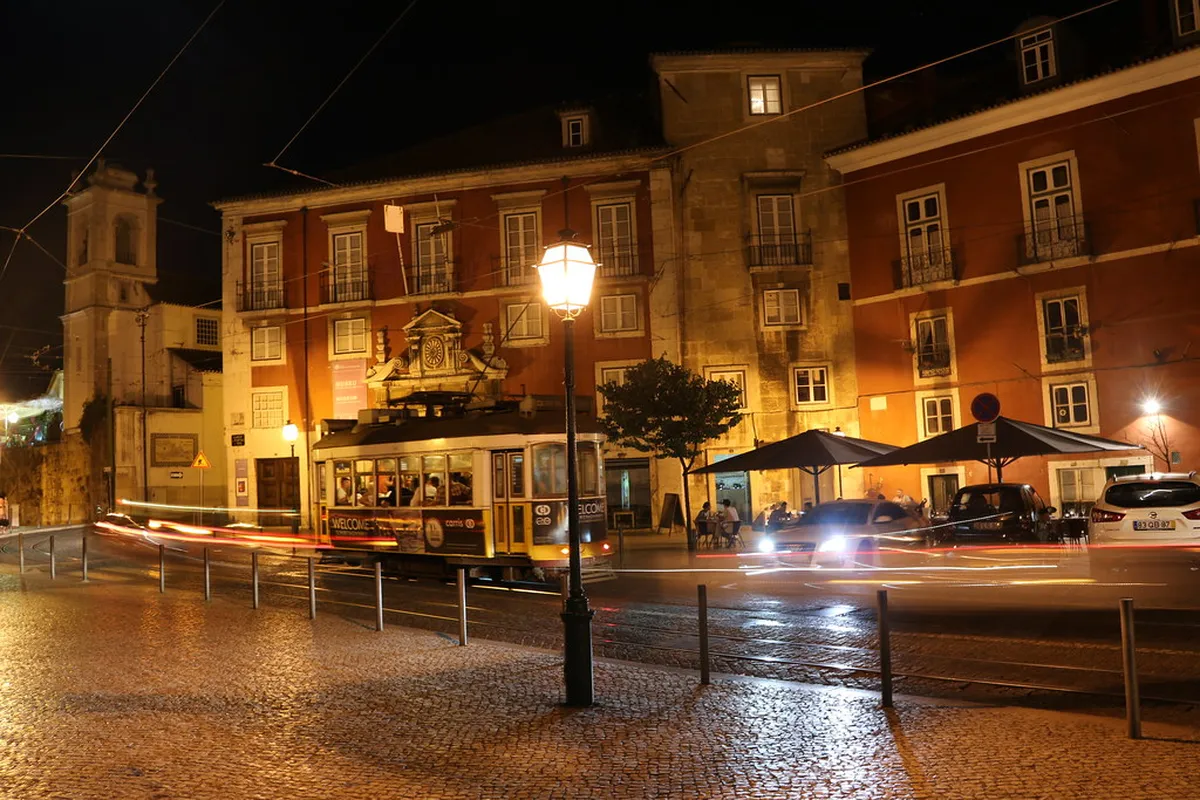
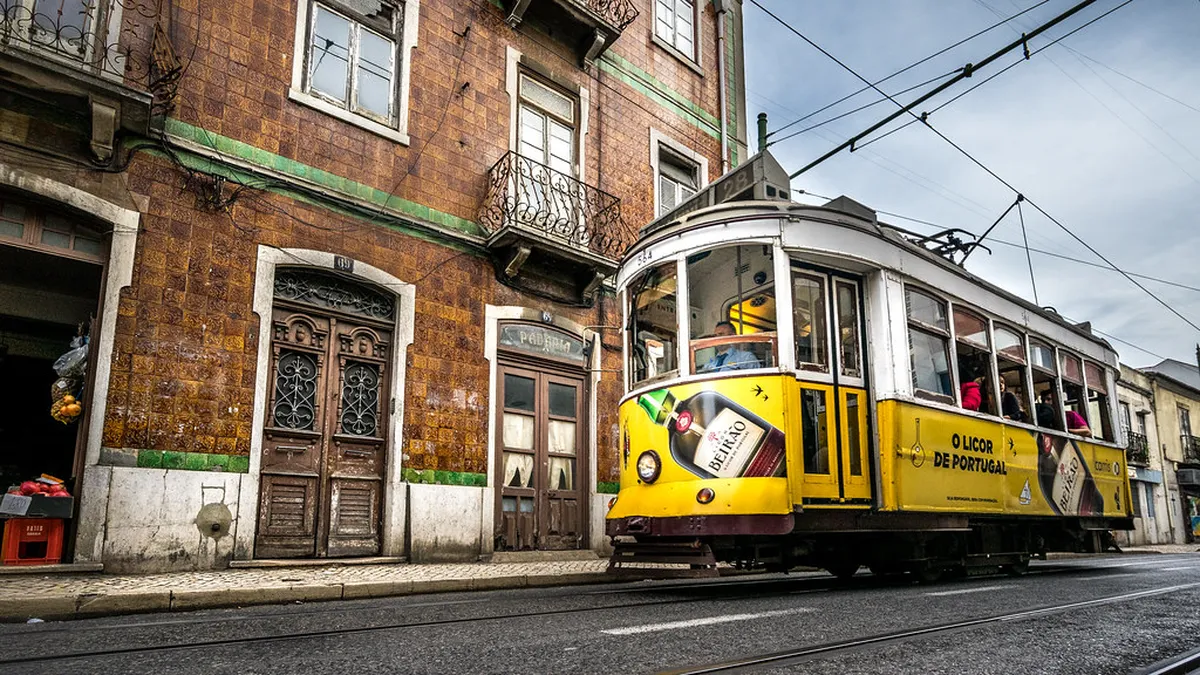
Tram 28, shown on Carris timetables as 28E, is both a public transport line and Lisbon's best-known vintage tram ride. The route links Martim Moniz with Campo de Ourique (Prazeres), crossing Graça, Alfama, Baixa, Chiado, São Bento, and Estrela on narrow streets that modern trams cannot handle.
The tram 28 Lisbon schedule is useful only when you read it with Lisbon traffic in mind. The line runs from early morning until late evening, but delays are common around Alfama, Sé, and Baixa when cars, deliveries, or crowds slow the tracks. In 2026, the smart plan is to know the official hours, use live tracking, and choose your boarding point before joining the queue.
Tram 28 Schedule and Operating Hours
Tram 28 usually starts just before 6:00 from the Martim Moniz side and runs until late evening, with later final trips on weekdays than on many weekends. From Campo de Ourique (Prazeres), the first departures normally begin closer to 6:30. During the main part of the day, expect roughly six trams per hour when service is running normally.

The official interval is often described as about 9 to 12 minutes, but that is an average rather than a promise. The 28E shares streets with cars, delivery vans, pedestrians, and other trams, so a 10-minute wait can become 20 minutes and then two trams may arrive close together. Always check the Carris Official Site before relying on a late connection.
For live tracking in 2026, use the Carris route page or the CARRISway app instead of trusting only the printed timetable at the stop. The digital boards are helpful at terminals, but they can lag when a tram is stuck behind traffic in Alfama. If the app shows a long gap, walk to a Metro, bus, or nearby viewpoint rather than standing in the sun with no clear arrival time.
The least stressful sightseeing rides are before 9:00 and after 20:00. Midday through late afternoon is the busiest period, especially when cruise ships are in port or the weather is mild. If you need a seat, treat the first tram of the morning as the premium departure.
The first tram from Martim Moniz departs just before 6:00, making early-morning the best time to ride with a seat and without queues. If you want to combine sightseeing with a calm journey, board before 9:00 or after 20:00 when crowds thin out significantly.
| Period | First departure (Martim Moniz) | First departure (Prazeres) | Typical frequency | Crowd level |
|---|---|---|---|---|
| Weekday (standard service) | ~06:00 | ~06:30 | Every 9–12 min | Low before 09:00 |
| Weekday (midday peak) | — | — | Every 9–12 min (delays common) | High (12:00–18:00) |
| Weekend / public holiday | ~06:00 | ~06:30 | Every 9–12 min | Very high midday |
| Evening (all days) | — | — | Reduced late service | Low after 20:00 |
Major Tram 28 Stops and Route Map
The 28E route covers about seven kilometers between Martim Moniz and Prazeres. The core sequence is Martim Moniz, Graça, Portas do Sol, Sé, Rua da Conceição, Praça Luís de Camões, São Bento, Estrela, Campo de Ourique, and Prazeres. A detailed tram 28 Lisbon stops guide is useful because some stops are close together and easy to miss from a crowded aisle.
Portas do Sol is the stop for Miradouro das Portas do Sol, Miradouro de Santa Luzia, and the downhill lanes of Alfama. Sé places you beside Lisbon Cathedral, Santo António Church, and the Roman Theatre Museum area. Rua da Conceição works for Baixa, Rua Augusta, Praça do Comércio, and the lower city grid rebuilt after the 1755 earthquake.
Praça Luís de Camões is the practical stop for Chiado, Bairro Alto, A Brasileira, and the Bica funicular. Estrela is the stop for Basílica da Estrela and Jardim da Estrela, while Prazeres gives access to Campo de Ourique, the cemetery, and the neighborhood market. You can view the full path on a Lisbon Portugal Tourism map before boarding.
The tram does not stop at the entrance to Castelo de São Jorge. For the castle, leave at Portas do Sol and expect an uphill walk, or use local bus options if the climb is the main issue. This matters when planning a short ride because the scenic Alfama stretch is not the same as door-to-door transport to every landmark.
Tram 28 Tickets, Fares, and Payment Methods
The most expensive way to ride Tram 28 is to buy a single ticket on board. Carris lists the 2026 onboard electric tram fare at EUR 3.30, while Zapping credit on a Navegante or Viva Viagem-style card reduces a Carris journey to EUR 1.72. A full tram 28 Lisbon tickets guide is worth reading before you reach the stop, because the queue is the wrong place to solve ticket questions.
If you will ride more than once in a day, the 24-hour Carris/Metro ticket is usually the cleanest option. In 2026 it costs EUR 7.25 and covers Carris buses, trams, funiculars, the Santa Justa lift, and the Metro during its validity window. It must be loaded at a Metro station or compatible machine before you board.
On board, enter through the front door and validate immediately at the yellow reader. Bank-card contactless payment may be available at the validator, while cash purchases go through the driver, but visitors should not rely on every payment method working during a crowded boarding rush. Lisboa Card holders still need to scan their card when entering.
Do not skip validation because you are only riding a few stops. Inspectors do check the 28E, and the fine costs far more than a legitimate fare. If you plan to hop off and later re-board with a single ticket, remember that a new ride normally requires a new validation unless your pass or ticket type still covers the journey.
Pickpockets on the 28E: Safety Tips
The 28E is one of Lisbon's best-known pickpocket routes because visitors board with cameras, phones, day bags, and open maps. Crowding is worst at Martim Moniz, Portas do Sol, Sé, and Praça Luís de Camões, where people push toward doors and stop watching their pockets. Read these tram 28 pickpocket safety tips before boarding if you are carrying passports or cards.

Safety alert: wear backpacks on your front, keep phone and wallet out of back pockets, and close every zipper before the tram arrives. The sharp braking and narrow aisle make accidental bumping feel normal, which is exactly why thefts are hard to notice in the moment.
Be most careful during boarding and exiting, not only while the tram is moving. If someone blocks the doorway, drops something, or creates a small disturbance near you, step aside and put one hand on your bag. Use a crossbody bag under your arm instead of a loose tote if you expect to stand.
The safety issue is theft, not violent crime. With basic precautions, Tram 28 is still a normal public line used by residents. The goal is to avoid looking like the easiest target in a packed carriage.
Pickpockets are most active during boarding and exiting at the busiest stops: Martim Moniz, Portas do Sol, Sé, and Praça Luís de Camões. Wear backpacks on your front, close every zipper before the tram arrives, and keep your phone and wallet out of back pockets — the sharp braking and tight aisle make theft hard to notice in the moment.
Alternative Tram Routes to the E28
The 28E is the famous route, but it is not the only way to ride a yellow vintage tram. The 12E uses similar old trams on a shorter central loop that overlaps useful parts of the Alfama experience. The 24E runs from Praça Luís de Camões toward Campolide through Príncipe Real and is often easier to board with a seat.
If your priority is the tram vehicle rather than the full Martim Moniz to Prazeres route, compare options before losing an hour in line. A tram 28 vs other Lisbon trams comparison helps separate the public-route experience from the tourist-tram experience. The red sightseeing tram costs much more, but it normally offers a scheduled visitor product, commentary, and a better chance of sitting.
| Option | Best use | Trade-off |
|---|---|---|
| Public Tram 28E | The classic route through Graça, Alfama, Baixa, Chiado, Estrela, and Prazeres. | Lowest fare, but the longest queues and no audio guide. |
| Tram 12E | A shorter vintage tram ride around the central historic area. | Less complete route, but often easier than waiting for the 28E. |
| Tram 24E | A quieter vintage tram ride through Chiado, Príncipe Real, and Campolide. | It misses Alfama, but seats are much more realistic. |
| Red tourist tram | A visitor-focused ride with commentary and a more predictable setup. | Much higher price, but less pressure from commuter crowds. |
History and Evolution of the Remodelado Trams
Lisbon's electric trams began reshaping city transport in the early twentieth century, and the 28 line began service in 1914. The yellow cars associated with the route are mostly 1930s-style Remodelado trams, kept because they can handle sharp curves, steep gradients, and narrow streets that longer modern trams cannot enter. According to Portugal.com, that mix of function and preservation is central to the line's appeal.
Remodelado means remodeled, not untouched. The trams retain wood interiors, brass details, opening windows, and compact bodies, but their brakes and electrical systems were updated for daily service. That is why the ride feels historic without being a museum exhibit.
The line is still public transport for residents in Graça, Alfama, and Estrela. Treat it as a working route, especially in the morning and evening, when locals may be using it for ordinary trips. The best visitor behavior is simple: board efficiently, move inside, validate quickly, and avoid blocking doors for photos.
Using Lisbon Public Transport: Practical Tips
The Lisbon Metro is the easiest way to reach the Martim Moniz terminal. Use the Green Line, then follow signs to the square and expect the queue to be obvious during visitor hours. For more boarding choices, use the where to board tram 28 Lisbon guide rather than assuming the first stop is always best.
Pro tip: the reverse-route strategy is still the strongest crowd workaround. Take the Metro to Rato and walk or connect onward toward Campo de Ourique, or use a bus or taxi to the Prazeres end, then ride back toward the center. Queues are often shorter there because most first-time visitors start at Martim Moniz.
The vintage 28E trams are not wheelchair accessible. They have steep steps, narrow doors, tight aisles, and limited space for folded strollers or luggage. Travelers with mobility needs should use Metro, buses, taxis, or modern tram lines where available instead of building a day around boarding the 28E.
Large suitcases are a bad match for Tram 28 at any time of day. They block the aisle, annoy commuters, and make you more vulnerable to theft. If you are coming from the airport or a cruise port, drop bags first and treat the tram as a sightseeing ride, not luggage transport.
Departures and Journey Times
A full end-to-end ride normally takes about 48 to 60 minutes. The same journey can run longer in the afternoon if a car blocks the track, if the tram bunches behind another vehicle, or if heavy boarding slows the central stops. Do not schedule a museum entry, dinner booking, or train departure tightly after a Tram 28 ride.
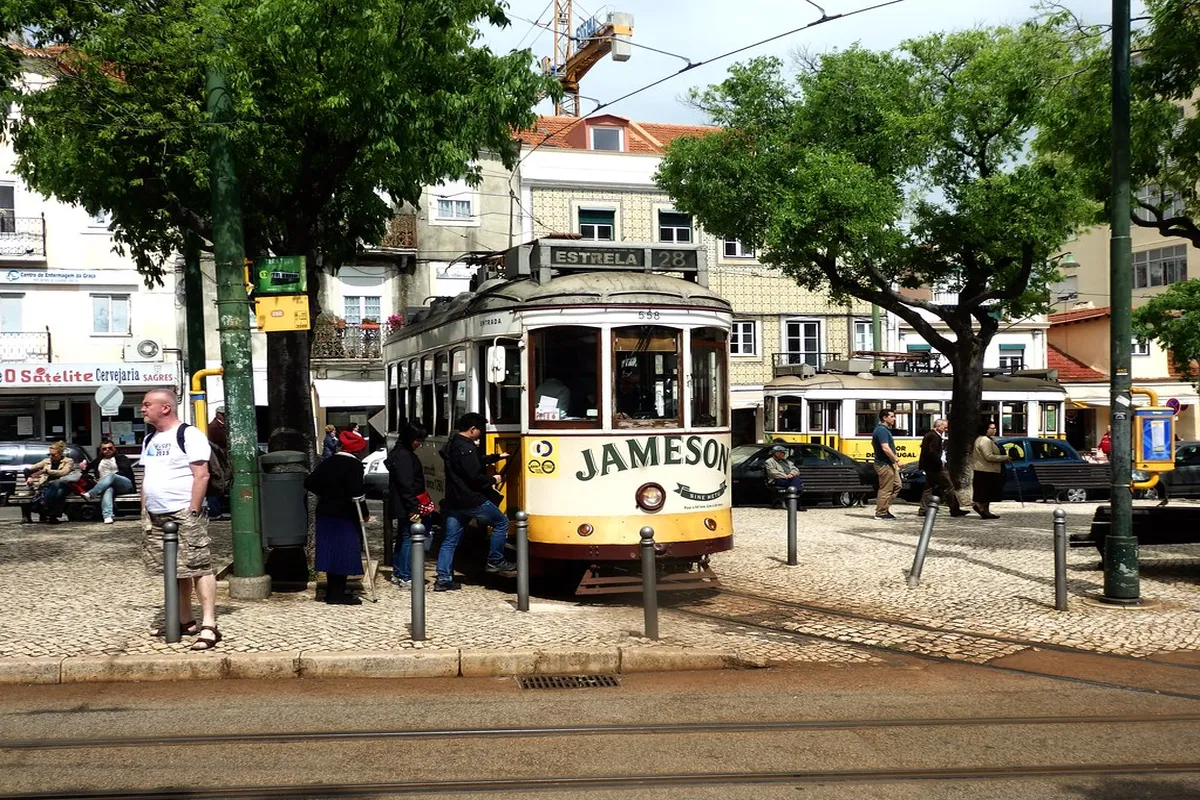
The best short scenic section is between Graça, Portas do Sol, Sé, and Baixa. This stretch gives you the narrow lanes, river glimpses, cathedral views, and steep turns most visitors imagine when they search for the 28E. If the queue is too long, walking part of this route downhill can be just as rewarding.
Late evening rides are often faster and calmer, but the views are different and final departures matter. Check both directions if you plan to return by tram after dinner, because the line may not run as late as the Metro. When in doubt, ride one way and use Metro, bus, or a rideshare for the practical return.
Getting the Most from the Experience (Insider Tips)
The best side depends on direction. Heading from Martim Moniz toward Prazeres, the right side is strong for Sé Cathedral, river glimpses, and several tight street scenes. Heading back from Prazeres toward Martim Moniz, the opposite side often gives better views as the tram descends through the same corridors.
Getting the seat matters more than choosing the perfect side. The best time to ride tram 28 Lisbon is early enough that you can sit by an opening window and actually see the route. Standing in the center of a packed carriage turns the ride into transport, not sightseeing.
Keep arms, phones, and cameras inside the tram. Buildings, poles, parked vehicles, and passing trams can come very close to the windows on the older streets. If you want photos, take them through the open window without leaning out.
The most satisfying plan is to ride uphill, then explore downhill on foot. Use Tram 28 to save your legs on the climb, leave at Portas do Sol or Graça, and walk back through Alfama toward the center. For a broader context on the route, pair this schedule guide with the historic Tram 28 Lisbon pillar guide.
Frequently Asked Questions
How often does Tram 28 run in Lisbon?
The tram typically runs every 9 to 12 minutes throughout the day. However, traffic in the narrow streets of Alfama can cause frequent delays. You should check the Carris Official Site for real-time updates on current vehicle locations.
Where does Tram 28 start and end?
The 28E line starts at Martim Moniz square in the city center. It ends at the Prazeres cemetery in the Campo de Ourique neighborhood. The total route covers approximately seven kilometers and passes through several historic districts.
Can I use the Lisboa Card on Tram 28?
Yes, the Lisboa Card includes free unlimited travel on all Carris trams, including the 28E. You simply need to scan your card on the yellow validation machine when you board. This is a great way to save money if you plan to visit many museums.
What is the best time of day to ride Tram 28 to avoid crowds?
The best time to ride is before 9:00 AM or after 8:00 PM. During these hours, the lines at the terminals are much shorter and you are more likely to find a seat. Midday and early afternoon are the busiest times for tourists.
How do I pay for the tram if I don't have a travel card?
You can buy a single ticket directly from the driver using cash. This is the most expensive option, costing 3.10 Euro. It is better to buy a Viva Viagem card at a Metro station in advance to pay a lower fare.
The tram 28 Lisbon schedule is most useful when paired with realistic expectations. The official timetable tells you when service should run, while live tracking, boarding strategy, and crowd timing decide how pleasant the ride feels. In 2026, the best value comes from loading the right ticket before you queue and avoiding the busiest middle of the day.
Ride the full route if you want the classic experience, or choose the Graça to Baixa section if time is short. Use Prazeres for a calmer boarding attempt, keep valuables secure, and avoid the 28E if accessibility or luggage is a concern. Lisbon's yellow tram is memorable, but it works best when treated as a real city route rather than a guaranteed sightseeing tour.