Exploring the madragoa fishermen quarter history reveals a side of Lisbon that many travelers miss. This district is famous for its narrow alleys and deep connection to the Tagus River. You will find a community that still honors its maritime roots through food and festivals. Walking here in 2026 offers a peaceful break from the busier tourist hubs nearby.
Madragoa is one of the oldest neighborhoods in Lisbon and retains a village-like feel. The streets are lined with colorful tiles and laundry hanging from wrought-iron balconies. Local families have lived in these small houses for many generations. This guide provides the best tips for discovering the secrets of this historic quarter.
The Origins of the Varinas of Lisbon
The madragoa fishermen quarter history cannot be told without understanding where its people came from. At the end of the 18th century, the silting up of the Ria de Aveiro lagoon in central Portugal devastated the coastal communities around Ovar, Esgueira, Murtosa, and Ílhavo. The stagnant waters turned a source of life into an unhealthy swamp and successive epidemics cut the local population in half. Those who survived were forced to seek a new livelihood elsewhere.
The solution was migration to Lisbon, initially seasonal trips by men and later permanent relocation with wives and relatives. The arrival of the railway in the 1870s accelerated the flow. These communities settled in riverside neighborhoods including Madragoa, Santos, and Alfama, where housing was cheap and the Tagus offered familiar work. They lived tightly together, intermarried, and kept their traditions intact for generations.
The neighborhood they built in Madragoa was essentially a transplanted fishing village. Small shacks stored nets and tackle. Worn benches outside doorways served for mending lines. The architecture was purely practical, built by people whose entire identity was shaped by the sea and the river.
Ovarinos, Varinos and Varinas
Regardless of their precise hometown, the migrants from the Aveiro region were collectively called ovarinos, after the town of Ovar. Over time the O was dropped and they became known as varinos (men) and varinas (women). The name stuck even as the community grew to include people from well beyond Ovar itself. The shortening of the name also had the unintended effect of obscuring their geographic origins from later generations.
The word varino had two other meanings that reveal how deeply the community shaped Lisbon's river economy. A varino was also a flat-bottomed cargo boat from the Ria de Aveiro that sailed the Tagus alongside frigates and traditional Lisbon vessels. The same word described a type of sleeveless cape worn by the men — it protected against the cold without restricting arm movement during heavy loading and unloading work.
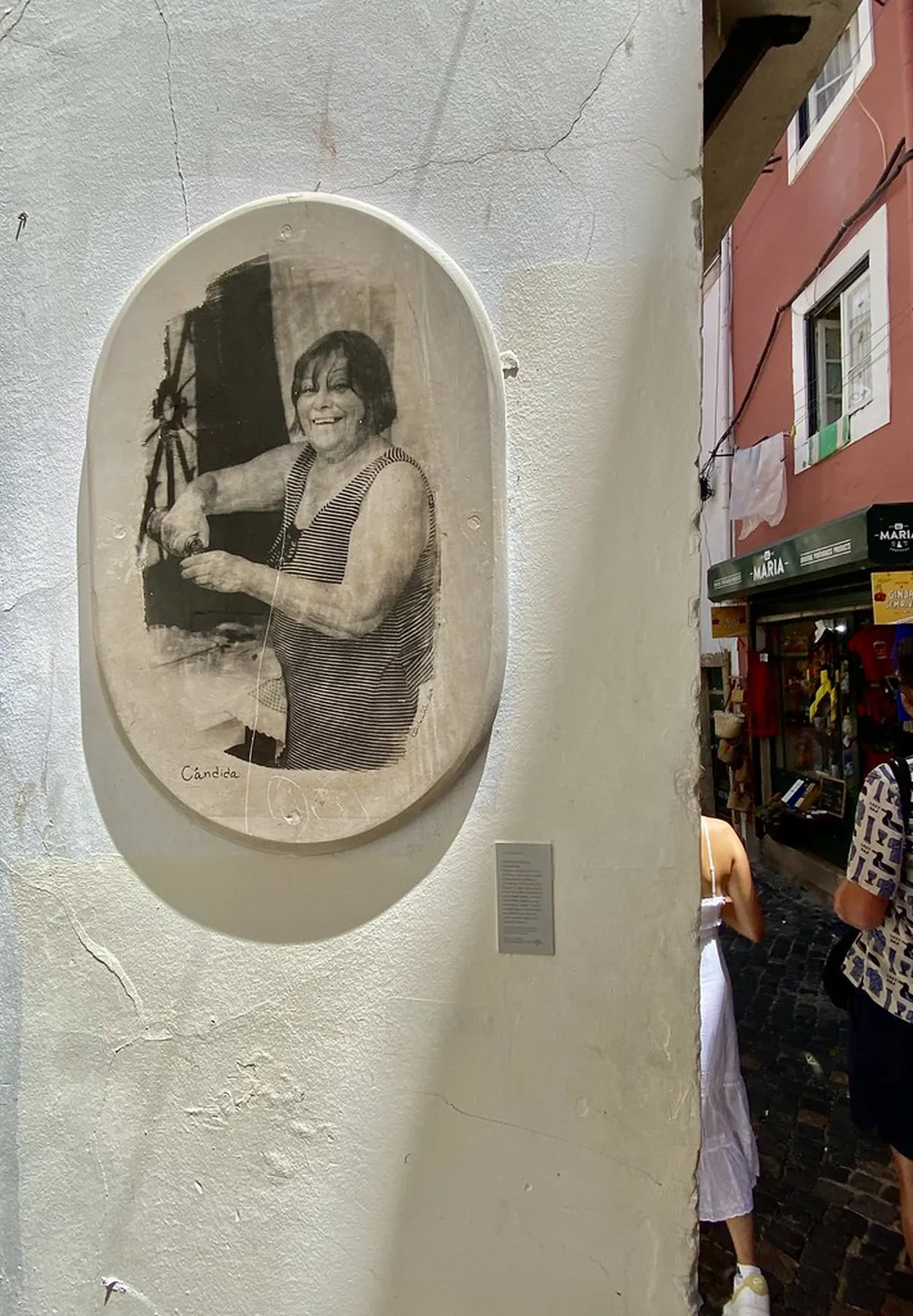
The women, the varinas, became far more visible than their husbands. They were the ones who took the fish from the docks each morning and carried it through the streets of the city, announcing each species in a loud, sung call that Lisbon residents learned to recognize as part of the city's daily rhythm. You can still see their memory everywhere in Madragoa today — in painted tiles, in murals, and in the plaques on the older residential streets.
Their Unique Attire and Cultural Presence
The costume of the varinas was both functional and unmistakable. They wore brightly coloured cotton blouses, long wide skirts, and striped aprons. Around the hips they tied a cloth sash, which helped support the skirt's weight and adapted to their silhouette — including during pregnancy. On their heads sat a woolen scarf and a felt hat with a small upturned brim designed to catch drips from the fish basket resting above. They were almost always barefoot, supplementing with wooden clogs in winter alongside a thick woolen shawl crossed at the chest and tied at the back to keep arms free.
Their presence on the street was more than noticed — it was notorious. They moved with absolute confidence, occupying public space that Lisbon's bourgeoisie considered theirs. The loud calls announcing hake, mackerel, mullet, sardines, and horse mackerel were sung rather than shouted, and the rhythm of their voices became part of the city's soundscape. Elegant Lisbon reacted with a mixture of disdain and fascination. Tourists were captivated.
Beyond selling fish, the varinas also ran back and forth on narrow planks unloading all kinds of cargo from boats: salt, coal, vegetables, cereals. The heavy loads balanced on their heads demanded extraordinary posture and physical strength. They carried this work with what contemporaries described as elegance and pride. You can learn more about their representations in the MNAC varinas collection (museuartecontemporanea.gov.pt).
Challenges and the Barefoot Prohibition
The varinas walked barefoot for practical reasons — shoes slowed them down on the wet dock planks and were an unnecessary expense. But in 1928, two years after the May 28 coup brought Portugal's authoritarian Estado Novo era into being, the government banned barefoot walking in the city. The motivation was image: the regime wanted Lisbon to project an appearance of modern civility, and barefoot fishwives did not fit that vision.
The varinas had a characteristically irreverent response. Rather than buy individual shoes, pairs of women shared a single mule (wooden sandal) between them. When a police officer appeared, one woman would quickly sit down, hide her bare foot under her skirt, and display the required footwear on the other foot. The other woman did the same. It was a street-level act of collective resistance that became part of the folklore of the neighborhood and is one of the details no walking tour will tell you.
They also faced legal harassment for other reasons. They could not stop walking or set up a fixed stall because that would compete with licensed shopkeepers who had the right to complain to the authorities. They were blamed for blocking foot traffic, for the smell of fish in the streets, and for the waste left from gutting. Condemned to keep moving, they perfected their sung calls to draw customers out of their houses and down to the street.
Must-See Madragoa Fishermen Quarter History Sites
The heart of the madragoa fishermen quarter history lies in its humble residential architecture. Most buildings survived the great earthquake because they were built on solid rock. You can still see the original stone foundations in many of the lower taverns. These small eateries serve fresh fish caught daily by local workers.
Look for the traditional tiles that decorate the facades of the older homes. Each pattern often represents the specific era when the house was built. Visitors often enjoy the small shrines dedicated to saints that protect sailors. These religious markers are a common sight on the corners of the steepest streets.
The neighborhood feels very different from the Alfama oldest neighborhood despite their shared age. Madragoa is flatter near the river but gets much steeper as you move inland. It remains a quiet area where you can hear the sound of the river breeze. Plan to visit in the late afternoon to see the golden light on the stone.
Museums, Art, and Culture in Madragoa
The Museu da Marioneta (Puppet Museum) is the neighborhood's most significant cultural institution. It is housed in the restored Convent of Bernardas, a 17th-century building on Rua da Esperança. The collection covers puppets from across the world alongside dedicated Portuguese exhibits, including shadow puppets and traditional regional marionettes. Entry costs around €5 and the building's tiled cloister alone justifies the stop. Closed Mondays.
Modern street art has also found a home among the ancient walls of Madragoa. Many murals depict scenes of fishing boats and the varinas carrying their baskets. These pieces create a visual bridge between the working-class past and the creative present of the city. The smaller lanes branching off Rua da Madragoa reward slow walking — new murals appear regularly and are not signposted.
Cultural memory in this quarter is also carried through fado. Madragoa produced several well-known fadistas whose voices captured the weight of the river life. Several of the quarter's older taverns still host small, informal fado sessions on weekend evenings. These are nothing like the ticketed tourist performances in Alfama — they start late and depend entirely on who shows up.
Parks, Gardens, and Outdoor Spots in Madragoa
Tapada das Necessidades is a green oasis located just a short walk from the quarter. This park was once a royal hunting ground and features many exotic plant species from Portugal's former colonies. It offers a quiet escape for travelers who want to avoid the city noise. Entry is free and it is a perfect spot for a relaxing afternoon picnic.
The park includes a large circular greenhouse that is a favorite for photographers. You might see peacocks roaming freely near the small ponds and fountains. It is best to visit during spring when the flowers are in full bloom. The gates close at sunset so plan your visit accordingly.
Walking along the riverfront provides another way to enjoy the local outdoors. The path connects Madragoa to other historic areas along the Tagus bank. You can watch the large ships pass by as you enjoy the cool water air. Benches are available every few meters for those who need a rest.
Family-Friendly and Budget-Friendly Options in Madragoa
Families will find Madragoa to be a very welcoming and safe environment. The lack of heavy car traffic makes it easier to walk with young children. Many local cafes offer simple meals that are both tasty and very affordable. A full lunch for a family often costs significantly less than in the city center.
Budget travelers can experience the madragoa fishermen quarter history for free by simply walking the streets. The neighborhood is an open-air museum of traditional Portuguese life and culture. You do not need a ticket to admire the beautiful tile work or the river views. It is one of the best ways to experience the real Lisbon without spending much money.
Consider visiting the local markets to see where residents buy their groceries. The prices for fresh fruit and bread are very reasonable for visitors. This is a great way to support the local economy during your trip. Most vendors are friendly and happy to help you find the best items.
LX Factory: A Trendy Place for Designers
LX Factory sits under the Ponte 25 de Abril on Rua Rodrigues de Faria, a short walk southwest of Madragoa along the riverfront. The complex occupies a 19th-century textile factory that was repurposed as a creative hub. It now houses independent fashion designers, record shops, bookstores, restaurants, and a weekly Sunday market that runs from around 10:00 to 18:00.
The Sunday market at LX Factory is the main draw for visitors in 2026. It brings together local producers, vintage clothing sellers, ceramics makers, and street food vendors. Entry to the market and the factory grounds is free. Individual shops and restaurants charge their own prices — a meal at one of the better restaurants runs €15–€25 per person.
It is best visited on Sunday morning before midday, when the market is lively but not yet crowded with afternoon tour groups. Weekday visits are quieter and better for browsing the permanent shops. The factory complex is open every day; most units open around 10:00 and close by 20:00 on weekdays, later on weekends.
How to Plan a Smooth Madragoa Attractions Day
Reaching the neighborhood is easy if you use Tram 25. This route takes you through some of the most scenic parts of the city. It is often less crowded than the more famous Tram 28 route. Buy your tickets in advance to save money on the fare.
Wear shoes with good grip because the old cobblestones can be quite slippery. The hills in this area are steep and require a bit of physical effort. Bring a bottle of water especially if you are visiting during the summer months. Many shops close for a couple of hours in the middle of the day.
- Start at Cais do Sodré and walk the riverfront path to Madragoa — about 20 minutes on flat ground
- Visit the Puppet Museum on Rua da Esperança in the morning (closed Mondays, opens 10:00)
- Have lunch at one of the tascas on Rua das Madres — grilled fish and house wine typically under €12
- Walk to Tapada das Necessidades in the afternoon before the gates close at sunset
- End at LX Factory on Sunday for the market, or take the riverfront path back to Cais do Sodré on other days
Worn Steps, Hidden Patios, Unexpected Views
The pátios of Madragoa are unique communal spaces shared by several families. They were built to provide housing for the many workers moving to the city. You can often find these hidden courtyards behind unassuming wooden gates. They are filled with potted plants and the sounds of daily life.
Stone steps worn smooth by centuries of use lead to secret viewpoints. These paths offer glimpses of the river between the tall, narrow buildings. Many of these spots are perfect for watching the sunset over the bridge. Always be respectful of the residents who live in these quiet corners.
Finding these hidden gems requires curiosity and slow walking. Do not be afraid to explore the smaller alleys that branch off the main road. You might discover a tiny chapel or a beautifully tiled fountain. These small details are what make the quarter so rewarding for visitors who take their time.
Madragoa and Graça districts: Authenticity and calm
Both Madragoa and Graça are known for their authentic and traditional atmosphere. While Madragoa is linked to the river and shaped by the varinas' maritime world, Graça sits high on a hill with a history of monasteries and royal patronage. They both offer a look at the local life that still thrives in Lisbon. You will find family-run shops and traditional taverns in both areas.
The Graça hilltop history is filled with stories of monks and royalty. It features some of the best viewpoints for watching the sunset over the city. Madragoa offers a more intimate experience with its narrow streets and patios. Both districts are perfect for travelers who want to escape the main crowds.
Many visitors find that exploring both on the same day gives a complete picture of old Lisbon. Start in Madragoa in the morning when the light is on the river, then climb to Graça in the afternoon for the panoramic views. The contrast between a river neighborhood built by migrants and a hilltop neighborhood shaped by religious orders says a great deal about how Lisbon grew.
Frequently Asked Questions
What is the history of the varinas in Madragoa?
The varinas were female fishmongers who became symbols of Lisbon's working class. They originally came from the Ovar region to work in the capital. You can read more about the origin of varinas (ncultura.pt) and their unique cultural impact on the city.
Is Madragoa safe for tourists to visit?
Yes, Madragoa is considered very safe for visitors during the day and evening. It is a residential neighborhood with a strong sense of community. Like any city area, just stay aware of your surroundings in quiet alleys at night.
How do I get to the Madragoa quarter?
The best way to reach Madragoa is by taking Tram 25 from the city center. You can also take several bus lines or walk along the riverfront from Cais do Sodré. The walk takes about twenty minutes and is very scenic.
What are the best things to do in Madragoa?
Top activities include visiting the Puppet Museum and exploring the hidden patios. You should also enjoy a meal of fresh grilled fish at a local tavern. Walking the narrow streets to admire the tile work is a must-do experience.
Madragoa remains a vital part of the city's history and cultural identity. Its quiet streets and friendly people offer a unique experience for every traveler. You will leave with a better understanding of the local maritime traditions. Plan your visit to this charming quarter to see the real soul of Lisbon.
The madragoa fishermen quarter history is waiting to be discovered by curious visitors. From the hidden patios to the grand museums, there is something for everyone here. Take your time and enjoy the slow pace of life in this historic area. It is a journey through time that you will remember for years to come.
For the wider context, see our Lisbon oldest neighborhoods historical guide.
For related Lisbon old-quarter deep-dives, see our Alfama: Lisbon's Oldest Neighborhood and Mouraria — Lisbon's Moorish Quarter guides.